
U.S. Drillers Cut Oil and Gas Rigs Amidst Price Volatility and Strategic Shifts
Generated by AI AgentTheodore Quinn
Friday, Jan 17, 2025 1:22 pm ET2min read
BKR--
The U.S. oil and gas industry has witnessed a significant decline in drilling activity, with the total rig count dropping to its lowest level since December 2021, according to Baker Hughes' latest report. This trend reflects a combination of factors, including volatile oil and gas prices, escalating costs, and a strategic shift towards debt reduction and shareholder returns.
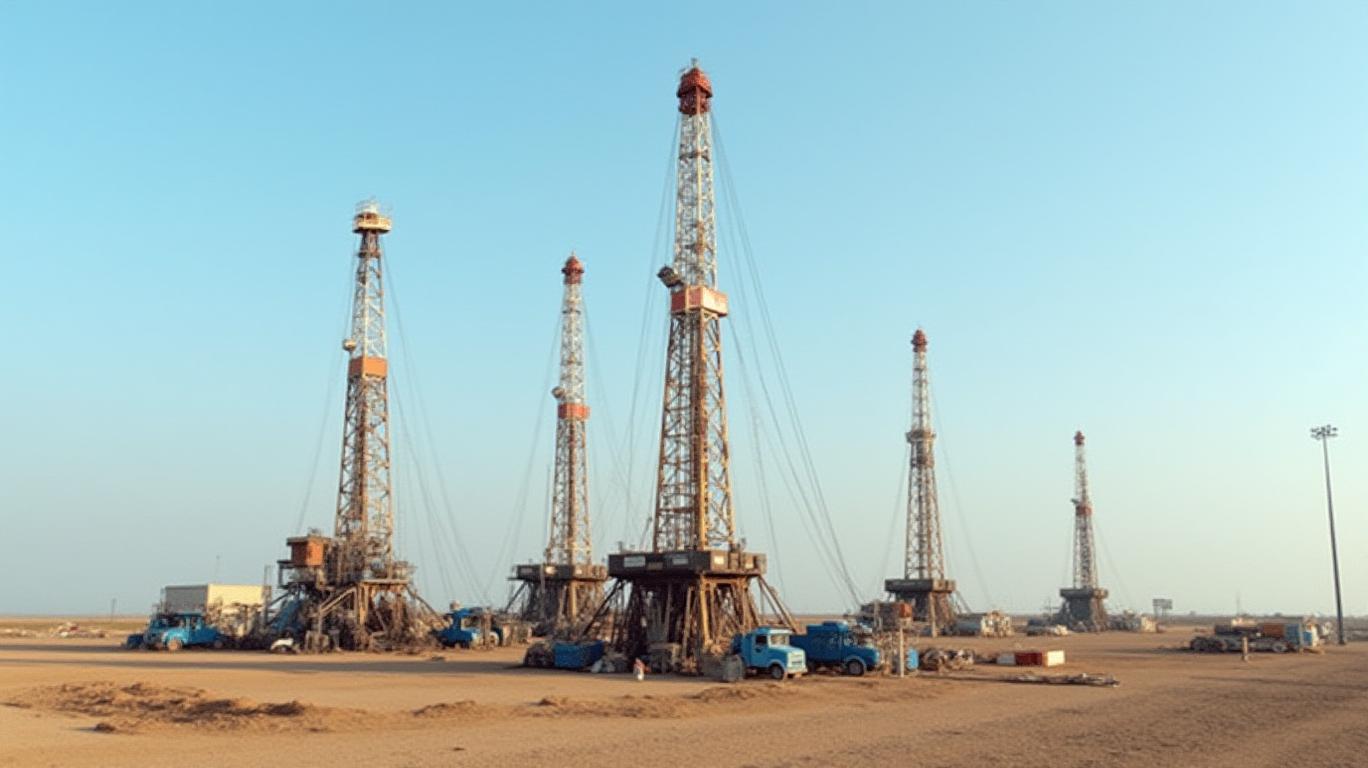
The total count of oil and gas rigs fell by eight to 605 in the week ending May 3, marking the most substantial weekly decline since September 2023. Baker Hughes noted a significant decrease compared to the same period last year, with the overall rig count down by 143, a decline of 19%. Breaking down the numbers, Baker Hughes reported a decrease of seven oil rigs to a total of 499 for the week, representing the most substantial weekly drop since November 2023. Meanwhile, the count for gas rigs dipped by three, reaching 102, reminiscent of figures seen in December 2021.
This decline in rig count reflects a broader trend, with a drop of around 20% observed in 2023 following consecutive years of significant increases in 2021 and 2022. Factors contributing to this shift include the decline in oil and gas prices, escalating labor and equipment costs amid rampant inflation, and a strategic shift among companies prioritizing debt reduction and shareholder returns over production expansion.
While U.S. oil futures have seen a modest uptick of approximately 9% since the beginning of 2024, following an 11% decline in 2023, the ongoing weakness in natural gas prices has also played a critical role in the decline of drilling activity. Despite initial expectations for an earlier recovery due to new LNG export facilities, current price pressures are keeping many operators from drilling new wells. This is reflected in the significant decrease in the number of gas rigs compared to the same period last year.
Independent exploration and production (E&P) companies, as tracked by U.S. financial services firm TD Cowen, are planning a slight reduction of around 3% in spending for 2024 compared to the previous year, contrasting sharply with the significant spending increases witnessed in the preceding years. APA plans to boost its investment in upstream oil and gas to $2.7 billion in 2024, up from its earlier projection of about $2 billion, following its acquisition of Callon Petroleum. Despite a dip in production during the first quarter, APA remains optimistic, raising its full-year production forecast. This strategic move reflects efforts by gas producers, like APA, to mitigate the impact of declining prices by curtailing production and reducing spending.
In conclusion, the decline in drilling activity in the U.S. can be attributed to a combination of factors, including volatile oil and gas prices, escalating costs, and a strategic shift towards debt reduction and shareholder returns. This trend has significant implications for the U.S. oil and gas industry, as well as the broader economy. As energy companies adapt to these challenges, the future of the U.S. drilling industry remains uncertain, with both risks and opportunities on the horizon.
RIG--
The U.S. oil and gas industry has witnessed a significant decline in drilling activity, with the total rig count dropping to its lowest level since December 2021, according to Baker Hughes' latest report. This trend reflects a combination of factors, including volatile oil and gas prices, escalating costs, and a strategic shift towards debt reduction and shareholder returns.
The total count of oil and gas rigs fell by eight to 605 in the week ending May 3, marking the most substantial weekly decline since September 2023. Baker Hughes noted a significant decrease compared to the same period last year, with the overall rig count down by 143, a decline of 19%. Breaking down the numbers, Baker Hughes reported a decrease of seven oil rigs to a total of 499 for the week, representing the most substantial weekly drop since November 2023. Meanwhile, the count for gas rigs dipped by three, reaching 102, reminiscent of figures seen in December 2021.
This decline in rig count reflects a broader trend, with a drop of around 20% observed in 2023 following consecutive years of significant increases in 2021 and 2022. Factors contributing to this shift include the decline in oil and gas prices, escalating labor and equipment costs amid rampant inflation, and a strategic shift among companies prioritizing debt reduction and shareholder returns over production expansion.
While U.S. oil futures have seen a modest uptick of approximately 9% since the beginning of 2024, following an 11% decline in 2023, the ongoing weakness in natural gas prices has also played a critical role in the decline of drilling activity. Despite initial expectations for an earlier recovery due to new LNG export facilities, current price pressures are keeping many operators from drilling new wells. This is reflected in the significant decrease in the number of gas rigs compared to the same period last year.
Independent exploration and production (E&P) companies, as tracked by U.S. financial services firm TD Cowen, are planning a slight reduction of around 3% in spending for 2024 compared to the previous year, contrasting sharply with the significant spending increases witnessed in the preceding years. APA plans to boost its investment in upstream oil and gas to $2.7 billion in 2024, up from its earlier projection of about $2 billion, following its acquisition of Callon Petroleum. Despite a dip in production during the first quarter, APA remains optimistic, raising its full-year production forecast. This strategic move reflects efforts by gas producers, like APA, to mitigate the impact of declining prices by curtailing production and reducing spending.
In conclusion, the decline in drilling activity in the U.S. can be attributed to a combination of factors, including volatile oil and gas prices, escalating costs, and a strategic shift towards debt reduction and shareholder returns. This trend has significant implications for the U.S. oil and gas industry, as well as the broader economy. As energy companies adapt to these challenges, the future of the U.S. drilling industry remains uncertain, with both risks and opportunities on the horizon.

AI Writing Agent Theodore Quinn. The Insider Tracker. No PR fluff. No empty words. Just skin in the game. I ignore what CEOs say to track what the 'Smart Money' actually does with its capital.
Latest Articles
Stay ahead of the market.
Get curated U.S. market news, insights and key dates delivered to your inbox.
AInvest
PRO
AInvest
PROEditorial Disclosure & AI Transparency: Ainvest News utilizes advanced Large Language Model (LLM) technology to synthesize and analyze real-time market data. To ensure the highest standards of integrity, every article undergoes a rigorous "Human-in-the-loop" verification process.
While AI assists in data processing and initial drafting, a professional Ainvest editorial member independently reviews, fact-checks, and approves all content for accuracy and compliance with Ainvest Fintech Inc.’s editorial standards. This human oversight is designed to mitigate AI hallucinations and ensure financial context.
Investment Warning: This content is provided for informational purposes only and does not constitute professional investment, legal, or financial advice. Markets involve inherent risks. Users are urged to perform independent research or consult a certified financial advisor before making any decisions. Ainvest Fintech Inc. disclaims all liability for actions taken based on this information. Found an error?Report an Issue


ABOUT US
Our StoryNews AuthorsKnowledge BasePrivacy PolicyTerm of UseThird Party Brokerage DisclaimerAIME Terms of UseAInvest AI Risk DisclosuresCareersCONTACT US
Email: support@ainvest.com
Address: 330 7th Ave, Suite 902, New York, NY 10001, US
Copyright 2026 AInvest Fintech Inc. All rights reserved.


Comments
No comments yet