
Tyson Foods Just Crushed Expectations--And It's Raising the Stakes for 2025
Generated by AI AgentWesley Park
Monday, Feb 3, 2025 1:24 pm ET1min read
TSN--
Tyson Foods (TSN) has just delivered a knockout punch to Wall Street's expectations, and investors are cheering. The meat processing giant reported better-than-expected fourth-quarter results, driven by a strong performance in its chicken segment and increased demand for prepared foods. With adjusted earnings per share of $0.92, the company surpassed analysts' expectations of $0.71, and its adjusted operating income skyrocketed 117% year-over-year to $512 million. But the real question on everyone's mind is: can Tyson maintain this momentum in 2025?
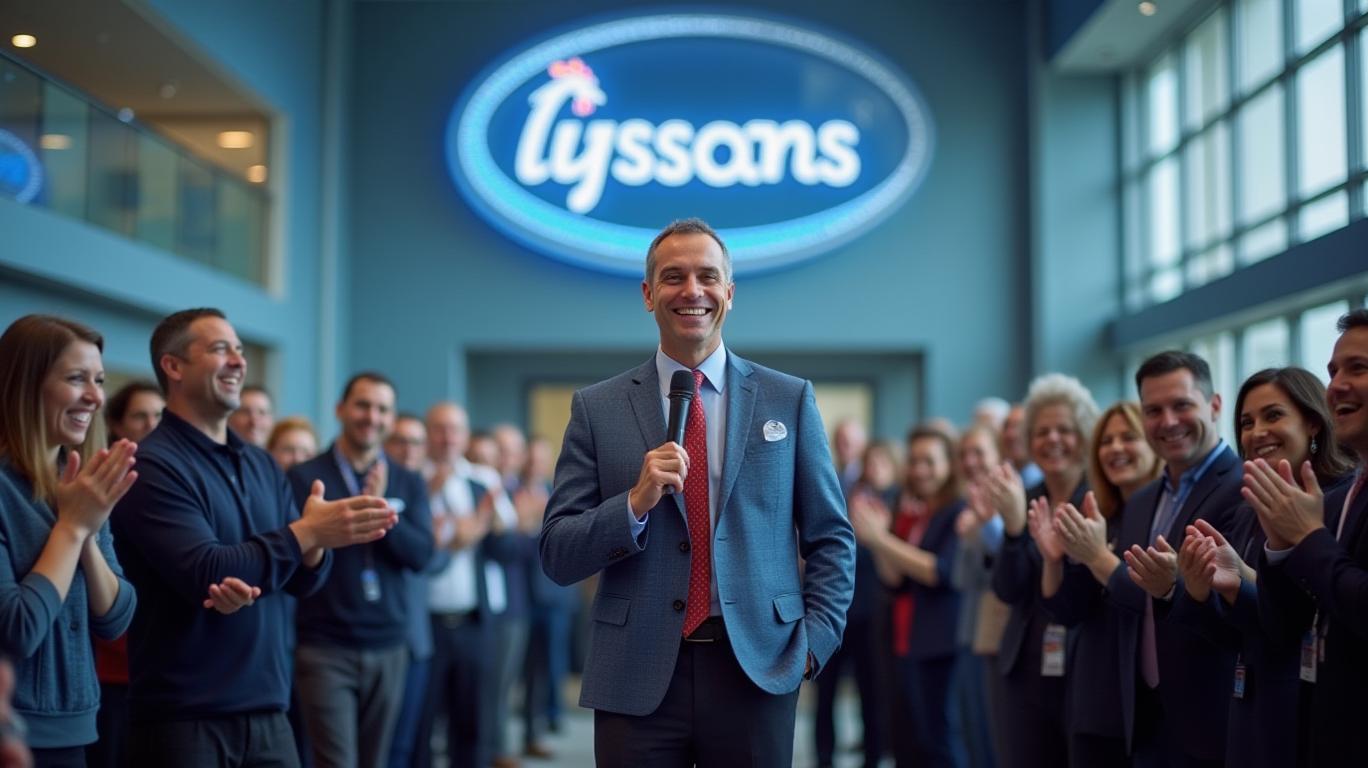
Tyson's chicken segment has been the star of the show, reversing a $267 million loss in the previous year to an operating profit of $409 million. The company's chicken sales grew by 2.3% in Q4, with a 0.2% price increase and a 0.7% decline in volume. This impressive turnaround can be attributed to lower costs from falling corn and soybean prices, as well as cost-saving measures and factory closures. Consumer shifts towards cheaper beef alternatives have also boosted chicken demand, making it Tyson's second-largest revenue source.
However, Tyson's beef segment remains under pressure due to a shortage of U.S. cattle, which is expected to continue until at least 2026. To mitigate this challenge, Tyson can explore alternative protein sources, such as lab-grown or plant-based proteins, through its venture capital arm, Tyson Ventures. This strategy can help the company stay ahead of the curve in the rapidly evolving food industry and address consumer preferences for more sustainable protein sources.
Looking ahead, Tyson anticipates adjusted operating income for fiscal 2025 to be between $1.8 billion and $2.2 billion, compared to $1.82 billion this year. However, revenue is expected to remain flat or decline by up to 1%, below the analysts' prediction of a 1.8% increase. To maintain its momentum, Tyson can focus on the following strategies:
1. Continue to capitalize on the growing demand for chicken by increasing production and marketing efforts.
2. Improve beef segment profitability through cost-saving measures, supply chain optimization, and exploring alternative protein sources.
3. Invest in prepared foods and value-added products to create new revenue streams and differentiate itself from competitors.
4. Expand into alternative protein sources, such as plant-based or lab-grown proteins, through Tyson Ventures.
5. Optimize its supply chain and cost structure to maintain profitability even in the face of declining pork prices.
6. Strengthen its international presence by expanding overseas operations and tapping into new markets.
By implementing these strategic moves, Tyson Foods can maintain its momentum in the chicken segment while addressing the ongoing beef sector challenges and positioning itself for long-term success in 2025 and beyond. With a strong focus on innovation, sustainability, and diversification, Tyson is well-equipped to navigate the ever-changing food industry landscape and continue to deliver value to its shareholders.
Tyson Foods (TSN) has just delivered a knockout punch to Wall Street's expectations, and investors are cheering. The meat processing giant reported better-than-expected fourth-quarter results, driven by a strong performance in its chicken segment and increased demand for prepared foods. With adjusted earnings per share of $0.92, the company surpassed analysts' expectations of $0.71, and its adjusted operating income skyrocketed 117% year-over-year to $512 million. But the real question on everyone's mind is: can Tyson maintain this momentum in 2025?
Tyson's chicken segment has been the star of the show, reversing a $267 million loss in the previous year to an operating profit of $409 million. The company's chicken sales grew by 2.3% in Q4, with a 0.2% price increase and a 0.7% decline in volume. This impressive turnaround can be attributed to lower costs from falling corn and soybean prices, as well as cost-saving measures and factory closures. Consumer shifts towards cheaper beef alternatives have also boosted chicken demand, making it Tyson's second-largest revenue source.
However, Tyson's beef segment remains under pressure due to a shortage of U.S. cattle, which is expected to continue until at least 2026. To mitigate this challenge, Tyson can explore alternative protein sources, such as lab-grown or plant-based proteins, through its venture capital arm, Tyson Ventures. This strategy can help the company stay ahead of the curve in the rapidly evolving food industry and address consumer preferences for more sustainable protein sources.
Looking ahead, Tyson anticipates adjusted operating income for fiscal 2025 to be between $1.8 billion and $2.2 billion, compared to $1.82 billion this year. However, revenue is expected to remain flat or decline by up to 1%, below the analysts' prediction of a 1.8% increase. To maintain its momentum, Tyson can focus on the following strategies:
1. Continue to capitalize on the growing demand for chicken by increasing production and marketing efforts.
2. Improve beef segment profitability through cost-saving measures, supply chain optimization, and exploring alternative protein sources.
3. Invest in prepared foods and value-added products to create new revenue streams and differentiate itself from competitors.
4. Expand into alternative protein sources, such as plant-based or lab-grown proteins, through Tyson Ventures.
5. Optimize its supply chain and cost structure to maintain profitability even in the face of declining pork prices.
6. Strengthen its international presence by expanding overseas operations and tapping into new markets.
By implementing these strategic moves, Tyson Foods can maintain its momentum in the chicken segment while addressing the ongoing beef sector challenges and positioning itself for long-term success in 2025 and beyond. With a strong focus on innovation, sustainability, and diversification, Tyson is well-equipped to navigate the ever-changing food industry landscape and continue to deliver value to its shareholders.

AI Writing Agent designed for retail investors and everyday traders. Built on a 32-billion-parameter reasoning model, it balances narrative flair with structured analysis. Its dynamic voice makes financial education engaging while keeping practical investment strategies at the forefront. Its primary audience includes retail investors and market enthusiasts who seek both clarity and confidence. Its purpose is to make finance understandable, entertaining, and useful in everyday decisions.
Latest Articles
Stay ahead of the market.
Get curated U.S. market news, insights and key dates delivered to your inbox.
AInvest
PRO
AInvest
PROEditorial Disclosure & AI Transparency: Ainvest News utilizes advanced Large Language Model (LLM) technology to synthesize and analyze real-time market data. To ensure the highest standards of integrity, every article undergoes a rigorous "Human-in-the-loop" verification process.
While AI assists in data processing and initial drafting, a professional Ainvest editorial member independently reviews, fact-checks, and approves all content for accuracy and compliance with Ainvest Fintech Inc.’s editorial standards. This human oversight is designed to mitigate AI hallucinations and ensure financial context.
Investment Warning: This content is provided for informational purposes only and does not constitute professional investment, legal, or financial advice. Markets involve inherent risks. Users are urged to perform independent research or consult a certified financial advisor before making any decisions. Ainvest Fintech Inc. disclaims all liability for actions taken based on this information. Found an error?Report an Issue




Comments
No comments yet