
TWT's New Tokenomics Model: Reshaping DeFi Incentives and User Behavior


 Aime Summary
Gamified Utility and Engagement: A New Paradigm
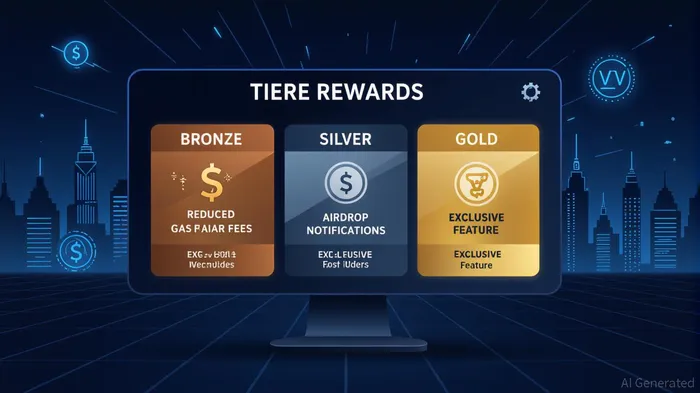
TWT's updated model prioritizes user participation through a tiered loyalty system-Bronze, Silver, and Gold-where benefits like reduced gas fees, airdrops, and early access to features are unlocked via TWT accumulation or staking. This gamified approach directly ties token utility to active engagement, incentivizing long-term holding and reducing selling pressure. For instance, FlexGas, a strategic integration, allows users to pay transaction fees with TWT, further embedding the token into daily usage. By aligning token value with ecosystem activity, Trust Wallet mirrors broader industry trends seen in platforms like Lido DAOLDO-- and Coinbase, which emphasize functional utility over speculative value.
Scarcity and Liquidity Dynamics: Balancing Supply and Demand
TWT's tokenomics also leverage scarcity to drive value. A landmark 2020 burn event eliminated 88.9 billion tokens, reducing circulating supply and reinforcing a deflationary narrative. While this contrasts with inflationary models like Ontology's phased liquidity mechanisms, it aligns with projects such as AstarASTR-- Network, which prioritize controlled supply dynamics. However, over 40% of TWT's supply was already in circulation by 2020, raising questions about the effectiveness of liquidity incentives compared to newer protocols. Analysts argue that TWT's success hinges on sustained user participation; without it, the token's utility and price potential may remain constrained.
Cross-Chain Integration and Ecosystem Expansion
Trust Wallet's partnerships, such as with Ondo Finance, are expanding TWT's utility beyond DeFi. By integrating real-world assets like U.S. Treasury bonds into blockchain ecosystems, TWT bridges traditional finance and decentralized platforms. This cross-chain interoperability notNOT-- only diversifies use cases but also positions TWT as a gateway for institutional adoption. Meanwhile, Trust Wallet's 210 million users and growing total value locked in Earn products underscore its role in onboarding the next billion Web3 users.
Expert Analysis and Market Projections
Experts highlight TWT's potential to disrupt DeFi incentives by shifting focus from speculative trading to active participation. A report by Bitget notes that TWT's tiered model could stabilize liquidity and reduce volatility, contrasting with projects reliant on automated buybacks. Price projections suggest TWT might reach $5.13 in 2025, driven by its cross-chain capabilities and deflationary mechanisms. However, challenges persist, including regulatory ambiguities and competition from established players like LidoLDO-- and Coinbase.
Investor Perspectives and Risk Assessment
Investors view TWT as a foundational asset for DeFi's future, particularly given Trust Wallet's dominance in the Binance ecosystem and its role as a launchpad for emerging projects. The token's utility in gas-less transactions, advanced trading tools, and security features further enhances its appeal. Yet risks remain: regulatory scrutiny could delay adoption, and the model's reliance on user engagement introduces volatility. A balanced approach-leveraging TWT's utility while hedging against regulatory and competitive risks-is critical for long-term positioning.
Strategic Positioning for Investors
For investors, TWT's tokenomics model represents both an opportunity and a test of DeFi's maturation. The token's success depends on its ability to sustain user engagement, navigate regulatory landscapes, and expand cross-chain utility. Those willing to adopt a long-term horizon may benefit from TWT's deflationary mechanisms and growing ecosystem, while short-term traders should monitor market sentiment and macroeconomic trends.
In conclusion, TWT's reimagined tokenomics model exemplifies how thoughtful design can reshape DeFi incentives and user behavior. By prioritizing utility, scarcity, and gamification, Trust Wallet is not just adapting to market demands-it's setting a new standard for token-driven ecosystems.

Blending traditional trading wisdom with cutting-edge cryptocurrency insights.
Latest Articles
Stay ahead of the market.
Get curated U.S. market news, insights and key dates delivered to your inbox.






Comments
No comments yet