
TWT's New Tokenomics Model: Reshaping DeFi Incentives and Capital Efficiency


 Aime Summary
Structural Innovations: Utility as a Catalyst for Demand
At the core of TWT's 2025 overhaul is a shift from speculative incentives to utility-driven demand. The token now serves as a multipurpose asset within the Trust Wallet ecosystem, enabling users to pay gasGAS-- fees, access premium services like Trust Premium, and earn loyalty rewards through staking or accumulation according to the TWT litepaper. For instance, the Trust Premium tiered rewards system allows users to unlock benefits such as reduced swap fees and early access to features like Trust Alpha by holding or staking TWTTWT--. This gamified approach creates a direct link between token value and ecosystem activity, incentivizing long-term engagement rather than short-term trading.
The deflationary framework further strengthens this model. A 2020 token burn event eliminated 88.9 billion TWT (40% of the total supply), creating scarcity and signaling the project's commitment to value retention. Unlike traditional token burns, which often lack user participation, TWT's burn strategy is complemented by ongoing incentives that encourage users to lock tokens for rewards, effectively reducing circulating supply organically. 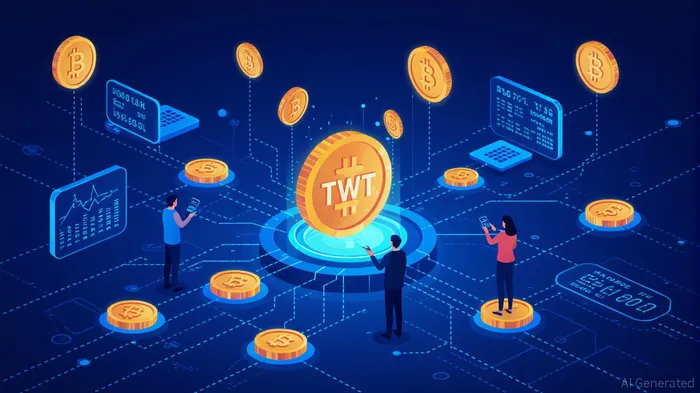 This dual mechanism-burns combined with utility-driven demand-positions TWT as a token with intrinsic value, a critical factor in an era where DeFi projects increasingly prioritize real-world use cases over speculative hype according to DeFi education.
Capital Efficiency and DeFi Incentives: A New Paradigm
TWT's tokenomics also address capital efficiency, a cornerstone of DeFi's appeal. By allowing users to stake TWT as collateral in DeFi protocols or leverage it for gas payments via features like FlexGas, the token reduces the need for users to hold multiple assets for different purposes. This interoperability not only lowers entry barriers for new users but also enhances the token's liquidity, as its utility spans both on-chain and off-chain activities.
Comparative analysis with other DeFi tokens highlights TWT's unique approach. For example, Hyperliquid's HYPE token relies on automated buybacks funded by trading fees to reduce supply and align incentives. While effective, this model depends heavily on consistent fee revenue. In contrast, TWT's focus on organic growth-through user retention and cross-chain adoption-creates a more resilient economic model. By tying token value to ecosystem usage rather than purely to trading volume, TWT mitigates risks associated with market volatility and liquidity shocks.
Broader Implications for DeFi Adoption
The success of TWT's model lies in its ability to address two critical pain points in DeFi: liquidity and user stickiness. Analysts project that TWT could reach $5.13 by 2025, driven by its deflationary supply and utility-driven incentives. However, the token's long-term viability hinges on its capacity to expand beyond its current use cases. For instance, integrating TWT into cross-chain liquidity pools or real-world asset (RWA) protocols could further diversify its demand drivers, mirroring strategies employed by projects like EigenLayerEIGEN-- and Ondo.
That said, challenges remain. Over 40% of TWT's supply was already in circulation prior to the 2020 burn, raising concerns about liquidity constraints if demand outpaces supply. To mitigate this, Trust Wallet must continue innovating-perhaps by introducing yield-bearing TWT derivatives or expanding its partnership ecosystem. The token's future also depends on its ability to adapt to regulatory shifts and technological advancements, such as the rise of modular blockchains and AI-driven DeFi analytics.
Conclusion: A Blueprint for Sustainable Tokenomics
TWT's 2025 tokenomics model represents a significant step toward sustainable DeFi incentives. By prioritizing utility, scarcity, and user engagement, it offers a blueprint for how tokens can evolve beyond speculative paradigms to become foundational assets in decentralized ecosystems. While risks such as liquidity constraints persist, the model's emphasis on organic growth and cross-chain integration positions TWT as a strong contender in the next phase of DeFi's evolution. For investors, the key takeaway is clear: tokens that align value creation with user behavior-rather than market speculation-are likely to dominate the DeFi landscape in the years ahead.

Blending traditional trading wisdom with cutting-edge cryptocurrency insights.
Latest Articles
Stay ahead of the market.
Get curated U.S. market news, insights and key dates delivered to your inbox.






Comments
No comments yet