
TWT's New Tokenomics Model and Its Implications for DeFi Investors: A Deep Dive into Structural Incentives and Long-Term Value Accrual


 Aime Summary
Deflationary Supply and Scarcity
TWT operates on a fixed supply model, with no new tokens being created post-issuance. This design inherently limits inflationary pressures, a stark contrast to many tokens that dilute value through continuous minting. A pivotal moment in TWT's history was the 2020 token burn, which eliminated 88.9 billion tokens-nearly 90% of the original supply-to enhance scarcity. By reducing circulating supply, the model creates a foundational floor for value retention, a feature that has historically supported price resilience in deflationary assets.
Utility-Driven Engagement: Trust Premium and FlexGas
TWT's utility has expanded significantly in 2025, with the introduction of Trust Premium, a tiered loyalty program that rewards users for holding and locking TWTTWT--. This program incentivizes token retention by offering gas fee discounts, airdrop eligibility, and access to exclusive features. For instance, users who lock TWT for extended periods gain higher-tier benefits, such as reduced swap fees and priority access to new product launches. Such mechanisms not only deepen user engagement but also create a flywheel effect: increased on-chain activity drives demand for TWT, which in turn reinforces its utility.
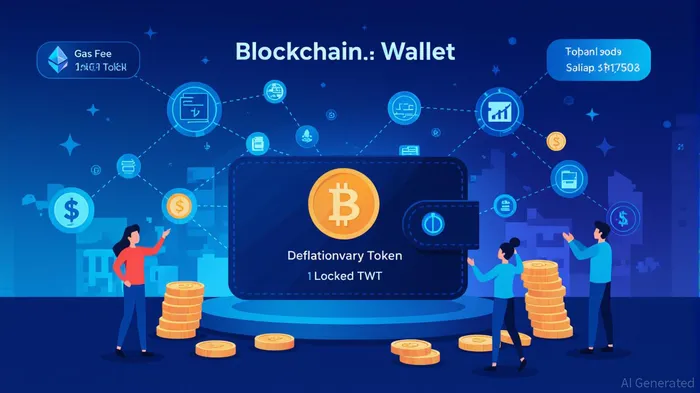 Complementing this is FlexGas, a feature enabling users to pay transaction fees on BNBBNB-- Chain and EthereumETH-- using TWT, USDT, or USDC on multiple chains. This cross-chain flexibility broadens TWT's applicability, reducing friction for users and embedding the token into everyday DeFi operations. By transforming TWT from a speculative asset into a functional medium of exchange, Trust Wallet is fostering a self-sustaining ecosystem where token demand is tied to real-world usage.
Governance and Community-Driven Ecosystem
TWT holders play a direct role in shaping the Trust Wallet platform through decentralized governance. Token holders can vote on proposals related to fees, partnerships, and protocol upgrades. This democratic approach ensures that the ecosystem evolves in alignment with user interests, a critical factor in sustaining long-term adoption. Governance participation also enhances token utility, as active holders derive value from influencing decisions that impact the platform's trajectory.
Real-World Asset Integration and Institutional Credibility
TWT's integration with real-world assets (RWAs) marks another strategic pivot. Through partnerships like Ondo Finance, TWT users can now collateralize the token to access tokenized U.S. Treasury bonds via RWA integrations. This expansion into RWAs bridges the gap between traditional finance and DeFi, attracting institutional investors seeking diversified exposure. The endorsement of Binance co-founder Changpeng Zhao (CZ) in September 2025 triggered a 50% price surge within hours. Institutional backing and RWA partnerships signal a maturation of TWT's ecosystem, positioning it as a hybrid asset with both DeFi and traditional finance appeal.
Price Projections and Investor Implications
Analysts have projected TWT's price trajectory based on its deflationary model and expanding utility. As of late 2025, the token trades around $1.3135, with bullish forecasts suggesting a potential rise to $5.13 by 2025 and $15 by 2030 based on current market analysis. These projections hinge on the continued adoption of Trust Premium, FlexGas, and RWA integrations. For DeFi investors, TWT's tokenomics present a unique opportunity: a token with embedded utility, governance rights, and scarcity, all of which are hallmarks of sustainable value accrual.
Conclusion
TWT's 2025 tokenomics model represents a sophisticated blend of structural incentives designed to drive long-term value. By aligning user behavior with platform growth through deflationary mechanics, utility expansion, and governance participation, Trust Wallet has created a framework that prioritizes sustainability over short-term speculation. For DeFi investors, the implications are clear: tokens that integrate utility, scarcity, and community governance are better positioned to thrive in an increasingly competitive ecosystem. As TWT continues to evolve, its success will serve as a blueprint for how tokenomics can be engineered to foster both user engagement and enduring value.

Blending traditional trading wisdom with cutting-edge cryptocurrency insights.
Latest Articles
Stay ahead of the market.
Get curated U.S. market news, insights and key dates delivered to your inbox.


AInvest
PRO
AInvest
PRO



Comments
No comments yet