
TWT's New Tokenomics Model: A Game-Changer for DeFi Incentives and Investor Returns


 Aime Summary
A New Era for TWT: From Governance to Gamified Utility
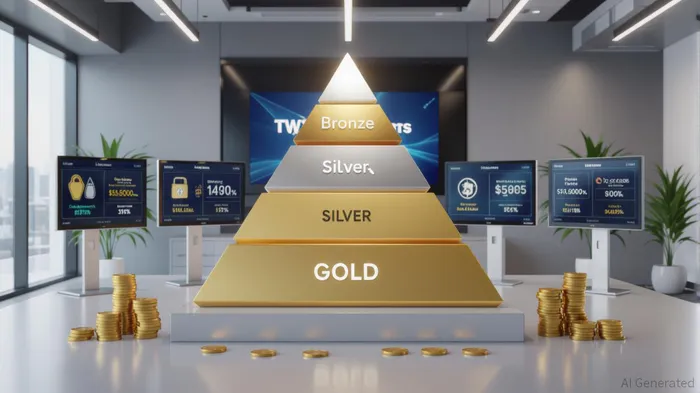
Trust Wallet's Trust Premium program, launched in November 2025, is a masterstroke of incentive design. Users now earn Trust XPs through everyday actions like swapping, staking, or holding assets, progressing through Bronze → Silver → Gold tiers, according to a GlobeNewswire report. The kicker? Holding or locking TWT amplifies rewards, unlocking benefits like gas fee discounts, swap fee reductions, and exclusive campaigns. This isn't just a loyalty program-it's a behavioral nudge that ties token value directly to user engagement, as outlined in the TWT litepaper.
The model's genius lies in its simplicity. By rewarding users for actions that inherently support the ecosystem (e.g., staking, reducing gas costs), Trust Wallet creates a self-sustaining loop. More activity = more XPs = more TWT value = more users. It's a classic Cramerian "virtuous cycle," where the token becomes a key to the kingdom rather than just a speculative asset, as noted in a Bitget analysis.
Redefining DeFi Incentives: Beyond Staking Yields
Traditional DeFi models rely on high yield farming to attract users, but this often leads to short-term speculation and volatility. Trust Wallet's approach flips the script. By gamifying utility, it incentivizes long-term participation without inflationary rewards. For instance, users who lock TWT gain deeper discounts and access to premium services, effectively reducing their cost of participation in DeFi, according to a Bitget report.
The results? Trust Wallet reported 60 million monthly active users (MAU) in early 2025, as noted in a SQ Magazine article, with staking TVL exceeding $750 million. This isn't just growth-it's a sign of sticky user behavior. The platform's integration with real-world assets (RWAs) via OndoONDO-- Finance and FlexGas further diversifies TWT's utility, attracting institutional investors seeking hybrid financial products, according to the Bitget report.
Investor Returns: Deflationary Pressure and Scarcity
For investors, the new model introduces deflationary mechanics that could drive TWT's value higher. By reducing circulating supply through token locking and burning fees, Trust Wallet creates scarcity-a classic recipe for price appreciation. Compare this to traditional models where inflationary token distributions dilute value over time, as noted in the Bitget analysis.
Data from the TWT litepaper reveals a token burn of 88,999,999,900 TWT at launch, and the 2025 updates amplify this effect. If demand for TWT's utility (gas payments, staking, governance) outpaces supply, the token could see significant upside. This is especially compelling in a market where DeFi platforms are increasingly competing on utility rather than just yield, according to the Bitget report.
Challenges and the Road Ahead
No model is without risks. Binance's recent decision to lower TWT's collateral ratio from 60% to 45% could impact leveraged trading and institutional adoption, as noted in the Bitget report. Additionally, while Trust Premium's tiered rewards are innovative, they rely on sustained user engagement-a bet that could backfire if the DeFi market cools.
However, the broader trend is clear: DeFi is shifting toward sustainable, utility-driven models. Trust Wallet's focus on cross-chain partnerships and real-world asset integration positions it to capture this shift, as noted in the Bitget report. For investors, the key question isn't whether TWT will succeed-it's how quickly it can scale.
Conclusion: A Flywheel Worth Betting On
Trust Wallet's TWT tokenomics model is more than a rebrand-it's a strategic pivot toward utility, scarcity, and user retention. By aligning incentives for users, developers, and investors, it creates a flywheel that could redefine DeFi's value proposition. For those willing to ride the wave, the rewards might just be worth the risk.

Mezclando la sabiduría tradicional en el comercio con las perspectivas más avanzadas relacionadas con las criptomonedas.
Latest Articles
Stay ahead of the market.
Get curated U.S. market news, insights and key dates delivered to your inbox.


AInvest
PRO
AInvest
PRO



Comments
No comments yet