
TWT's 2025 Tokenomics Overhaul: Structural Supply Reduction and Long-Term Value Implications


 Aime Summary
Structural Supply Reduction: A Dual-Track Approach
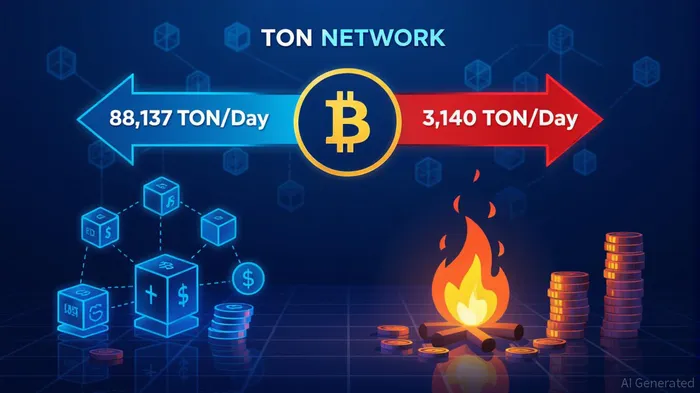
At the core of TON's 2025 tokenomics is a dual-track strategy to manage supply dynamics. The TONTON-- Foundation mints 88,137 new tokens daily while simultaneously burning 3,140 tokens, creating a net positive supply but with a controlled rate of expansion. This approach contrasts with traditional inflationary models, where unchecked minting dilutes token value. By introducing a fixed supply ceiling and a predictable burn schedule, TON aligns with broader industry trends emphasizing scarcity as a value driver.
The burn mechanism is further reinforced by user-driven activity. For instance, the FlexGas feature allows users to pay transaction fees across multiple blockchains using TWTTWT--, USDT, or USDCUSDC--. This not only enhances the token's real-world utility but also creates a natural burn pathway as fees are converted into TON and destroyed. Such mechanisms ensure that token utility and scarcity are interlinked, fostering a virtuous cycle of demand and value retention.
Utility-Driven Incentives: The Trust Premium Program
A pivotal component of TON's tokenomics is the Trust Premium program, a tiered rewards system designed to incentivize user engagement. By linking token utility to activities such as daily check-ins, swaps, and wallet funding, the program creates a direct correlation between user participation and token demand. Accumulating or locking TON tokens accelerates the accrual of Trust XP, unlocking benefits like reduced gas fees and early access to new products.
This gamified incentive structure mirrors successful models in traditional finance, where loyalty programs and tiered rewards drive customer retention. By aligning user behavior with token value, TON reduces the risk of speculative dumping and encourages long-term holding. For investors, this represents a shift from purely speculative value creation to a more sustainable, utility-based model.
Economic Model Resilience and Institutional Integration
The rebrand from TWT to TON also reflects a strategic pivot toward institutional integration. The introduction of daily minting and burning mechanisms provides transparency and predictability, traits that institutional investors increasingly prioritize in crypto assets. Furthermore, the gamified incentive system-designed to align user engagement with token value-addresses a long-standing criticism of crypto tokenomics: the lack of real-world utility.
This evolution is not isolated. As noted in broader industry analysis, 2025 has seen a surge in tokenomics frameworks prioritizing controlled supply and utility-driven value creation (https://quecko.com/tokenomics-design-in-2025-building-sustainable-crypto-economies). TON's approach positions it to capitalize on this trend, particularly as institutional adoption accelerates and regulatory clarity emerges.
Implications for Long-Term Value Accrual
The structural supply reduction and utility-driven incentives in TON's tokenomics have profound implications for long-term value. By creating a controlled supply environment, the token's scarcity is preserved, which, in economic theory, should drive upward pressure on price as demand increases. Simultaneously, the Trust Premium program and FlexGas feature ensure that demand is not purely speculative but rooted in tangible use cases.
However, risks remain. The success of this model hinges on sustained user adoption and the effectiveness of burn mechanisms. If transaction volumes or user engagement stagnate, the net supply reduction could be insufficient to offset broader market volatility. Additionally, regulatory shifts in 2025 could impact the token's utility across jurisdictions.
Conclusion: A Model for Sustainable Crypto Value
TWT's 2025 tokenomics overhaul represents a sophisticated attempt to reconcile scarcity, utility, and sustainability. For investors, the rebranded TON offers a compelling case study in how structural supply reduction can be leveraged to create long-term value. While the model is not without risks, its alignment with industry trends and institutional preferences positions it as a noteworthy asset in a maturing crypto landscape. As with any investment, due diligence on adoption metrics and regulatory developments will remain critical.

Blending traditional trading wisdom with cutting-edge cryptocurrency insights.
Latest Articles
Stay ahead of the market.
Get curated U.S. market news, insights and key dates delivered to your inbox.






Comments
No comments yet