
U.S. Turns to Venezuela for Fertilizer Amid Iran War Disruptions
 Aime Summary
The U.S. is exploring alternative fertilizer sources, including Venezuela and Morocco, to counter supply chain disruptions caused by the U.S.-Israeli conflict with Iran.
, a key global trade route for nitrogen-based fertilizers like urea.
The U.S. has expanded sanctions waivers on Venezuela to encourage investment in its energy and petrochemical sectors, enabling fertilizer exports to the U.S.
The U.S. is pivoting to non-traditional sources like Venezuela and Morocco in a bid to ease fertilizer supply constraints caused by the Iran war. These efforts are meant to support American farmers who are already bearing the brunt of soaring prices and reduced availability of nitrogen-based fertilizers such as urea. The situation has drawn comparisons to the early stages of the in 2022, where similar disruptions led to price volatility and food security concerns. For now, U.S. farmers face a volatile fertilizer market, .
Why Is the U.S. Seeking Fertilizer from Venezuela and Morocco?
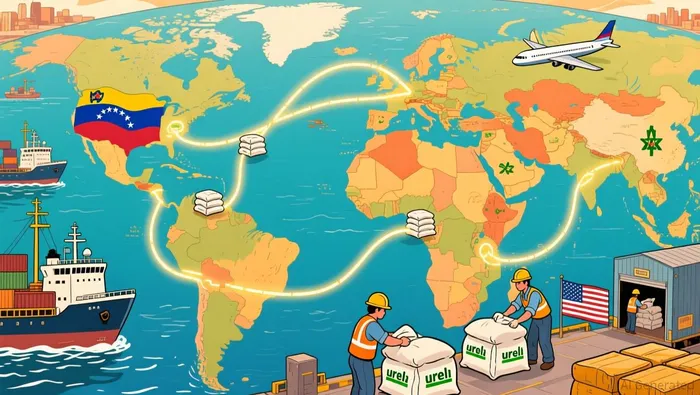
The U.S. is diversifying its fertilizer supply chain in response to the ongoing war with Iran, which has disrupted shipping through the Strait of Hormuz. This critical shipping route is a major artery for global fertilizer exports, and its closure has led to a . To mitigate the risk, the Trump administration is leveraging existing relationships with countries like Venezuela and Morocco. These efforts are being framed as an "insurance policy" against further supply disruptions, especially during the critical spring planting season.
Venezuela, despite its economic and political challenges, has been granted expanded sanctions waivers to boost its fertilizer production and exports. This aligns with broader U.S. economic strategy to reduce dependency on volatile global markets and support domestic agriculture. Morocco, another key player in the fertilizer market, is being considered as an alternative supplier due to its stable production and trade policies.
What Are the Investment Implications for U.S. Farmers and the Fertilizer Market?
The sharp rise in fertilizer prices is placing additional pressure on U.S. farmers, especially those planting in the Northern Hemisphere during the spring. Retail prices for key fertilizers like urea, , . For context, , signaling a sustained upward trend. The American Farm Bureau Federation is currently in discussions with the White House and USDA to explore short-term and long-term solutions, including military escorts for cargo vessels and policy adjustments to ease supply chain bottlenecks.
From an investment standpoint, this volatility affects more than just fertilizer producers. The ripple effects can be felt across the agriculture sector, including seed companies, equipment manufacturers, and agribusinesses. Investors should monitor policy shifts, such as potential tax reforms or subsidies for alternative suppliers, which could impact both domestic and international fertilizer companies. Additionally, geopolitical stability in the Middle East and any developments in the Strait of Hormuz will remain crucial factors in the coming months.
What Should Investors Watch for in the Coming Weeks?
Investors should keep a close eye on several key factors. First, the ongoing conflict in the Middle East and its impact on the Strait of Hormuz will determine the longevity of supply chain disruptions. If tensions escalate further, we could see additional price spikes or emergency government interventions. Second, the U.S. government's ability to secure alternative supplies from Venezuela and Morocco will shape the domestic fertilizer landscape. Any delays or policy setbacks in this area could prolong price volatility.
Third, market participants should monitor the effectiveness of the American Farm Bureau Federation's proposed solutions, such as military escorts and trade policy adjustments. These measures could signal a broader shift in U.S. agricultural and trade strategy, with implications for global fertilizer markets. Finally, keep an eye on the U.S. agricultural planting calendar and the response of farmers to higher fertilizer costs. Any widespread reduction in planting or shift to lower-input crops could have long-term implications for global food supply chains.
As the situation evolves, the U.S. fertilizer market is likely to remain under pressure for the remainder of 2026. Investors with exposure to agribusiness, energy, or trade-related sectors should factor in these geopolitical and economic risks into their portfolio strategies.

Stay ahead of the market.
Get curated U.S. market news, insights and key dates delivered to your inbox.


AInvest
PRO
AInvest
PRO



Comments
No comments yet