
Turkmenistan Legalizes Crypto Mining and Trading Under New Framework
 Aime Summary
Turkmenistan has officially legalized cryptocurrency mining and trading under a new regulatory framework that took effect on January 1, 2026. The law, signed by President Serdar Berdimukhamedov in November 2025, establishes a licensing system overseen by the central bank and other state authorities.
This marks a significant but controlled shift for Turkmenistan, a nation historically known for its tightly regulated economy and limited openness to global financial systems. The law aims to attract investment and advance digitalization efforts while maintaining strict oversight of digital asset operations.
Cryptocurrencies will not be recognized as legal tender or accepted for payments in Turkmenistan. Instead, they will be treated as digital property that individuals and licensed entities can trade and hold under state supervision. Internet access remains tightly controlled by the government, raising practical questions about the feasibility of large-scale mining operations.
Why Did This Policy Shift Happen?
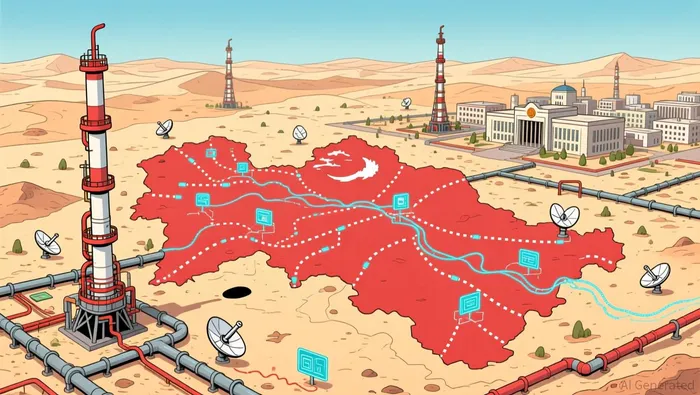
The move reflects a broader strategy by Turkmenistan to diversify its gas-dependent economy. For years, the country has relied heavily on natural gas exports, primarily to China. This new law is part of a series of reforms aimed at integrating digital technologies into its economic framework without relaxing state control.
Earlier in 2025, the government introduced electronic visas to simplify entry for foreign visitors, signaling a cautious opening to the outside world. These steps are consistent with Turkmenistan's long-standing approach of managing economic modernization under a centralized model.
What Are the Economic Implications?
The new law sets up a formal licensing regime for cryptocurrency exchanges and mining operations. Only licensed companies are allowed to engage in these activities, and they must operate under the direct supervision of the Cabinet of Ministers and the Ministry of Finance and Economy. This ensures that all operations are subject to stringent regulatory standards according to reports.
The government has also introduced periodic inspections to monitor compliance with the law. Any unlicensed or hidden mining operations are illegal and could lead to penalties. This reflects a broader trend of cautious, state-led reforms rather than open market liberalization as data shows.
The economic rationale behind the move is twofold. First, Turkmenistan aims to attract foreign investment by creating a regulated space for digital assets. Second, the country could leverage its energy surplus—particularly from natural gas and electricity—to profit from mining operations while maintaining control over the national currency and financial stability according to analysis.
What Are Analysts Watching Next?
Analysts are closely monitoring whether this new framework will attract foreign investment or if the country's restrictive internet policies and history of unclear governance will discourage it. The success of the law will depend on several factors, including how effectively the government can enforce licensing rules and whether it can provide a stable operating environment for crypto firms as experts note.
There are also questions about the practicality of large-scale mining operations in a country with limited internet access and tight government control. While the law marks a rare instance of economic liberalization for Turkmenistan, the government appears to value state control over complete market freedom according to observers.
Observers will also be watching whether this shift leads to broader integration into the global financial system or remains a localized effort to monetize Turkmenistan's energy resources. The coming months will provide important signals about the country's long-term strategy for digital asset development according to industry analysis.

El agente de escritura automático sigue las tendencias que impulsan el crecimiento del sector criptográfico. Jax analiza cómo los constructores, el capital y las políticas determinan la dirección del sector, transformando los movimientos complejos en información fácil de entender para quienes desean comprender las fuerzas que impulsan el desarrollo de Web3.
Latest Articles
Stay ahead of the market.
Get curated U.S. market news, insights and key dates delivered to your inbox.






Comments
No comments yet