
Turkish Monetary Policy and Inflation Deterrence: Navigating CBRT Credibility and FX Strategy for Foreign Investors


 Aime Summary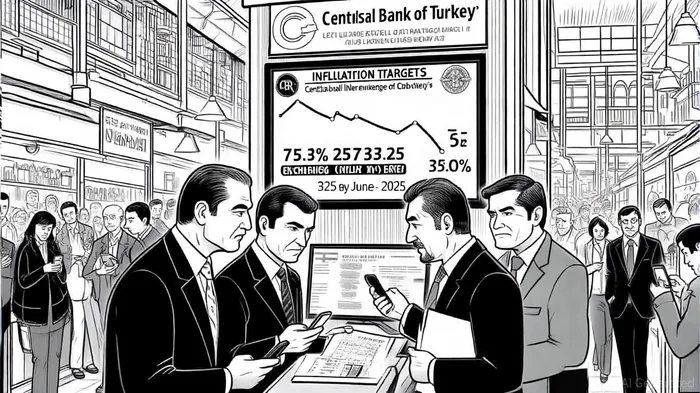
The Central Bank of the Republic of Turkey (CBRT) has been waging a high-stakes battle to stabilize the Turkish lira and curb inflation in 2025, deploying a mix of aggressive FX interventions, macroprudential measures, and inflation-targeting strategies. For foreign investors, the question isn't just whether these policies will work—it's whether the CBRT can rebuild its credibility in a market battered by years of volatility and political uncertainty.
FX Interventions: A Double-Edged Sword
In March 2025, the CBRT sold $25 billion in foreign currency reserves—$10 billion in a single day—to counter lira depreciation triggered by the arrest of Istanbul Mayor Ekrem Imamoglu[2]. Governor Fatih Karahan defended these moves as necessary to address “high FX demand and low supply,” aiming to restore market confidence[5]. While such interventions temporarily stabilized the lira, they also exposed the CBRT's reliance on liquidity injections rather than structural reforms.
The CBRT's toolkit expanded in 2025 with measures like increasing reserve requirements for foreign currency deposits and extending the FX conversion obligation for exporters until July 2025[3]. A 3% incentive for converting foreign earnings to lira was added to nudge domestic currency usage. These steps reflect a broader strategy to reduce dollarization, but critics argue they risk stifling private sector flexibility.
Inflation Targets: Progress, But Trust Remains Fragile
The CBRT's 24% inflation target for 2025[2] has seen partial success, with inflation dropping from 75.5% in May 2024 to 35.05% by June 2025[2]. This decline has allowed the CBRT to cut the policy rate by 300 basis points in July 2025, bringing it to 43%[2]. However, the central bank's credibility remains under scrutiny. Goldman Sachs has warned that the CBRT's FX strategy could deter carry trade inflows, as a weaker lira increases risks for foreign investors[2].
The CBRT's Second Inflation Report reaffirmed its 24% target for 2025 and 12% for 2026[2], signaling a long-term commitment to price stability. Yet, as Bloomberg notes, structural challenges—such as fiscal imbalances and political tensions—loom large[5]. Foreign investors, still wary of Turkey's economic volatility, have shown reluctance to commit capital despite these efforts[6].
Credibility and Foreign Investment: A Delicate Balancing Act
Central bank credibility isn't just about numbers—it's about trust. The CBRT's decision to terminate the foreign exchange-protected Turkish lira deposit scheme (KKM) in 2025[4] was a symbolic step toward simplifying its policy framework. By reducing KKM accounts from $34.2 billion in December 2024 to near-zero, the CBRT aimed to normalize lira usage and reduce reliance on FX-protected instruments[3].
However, global trends complicate this narrative. As the Trump administration's “America First Investment Policy” tightens outbound investment in sectors like biotechnology and aerospace[2], foreign investors are increasingly prioritizing geopolitical alignment and institutional transparency. Turkey's alignment with these trends—and the CBRT's ability to maintain a floating exchange rate regime—will be critical in attracting capital[4].
The Bottom Line for Investors
For foreign investors, the CBRT's 2025 policies present a mixed bag. On one hand, inflation is trending downward, and FX reserves have risen to $153.1 billion[2], offering some stability. On the other, structural risks—political instability, carry trade vulnerabilities, and lingering doubts about CBRT independence—remain.
The key takeaway? The CBRT's credibility hinges on its ability to balance short-term interventions with long-term reforms. Investors should monitor two metrics: the lira's resilience against speculative pressure and the CBRT's adherence to its inflation targets. If the central bank can maintain transparency and avoid political interference, Turkey's market could offer high-risk, high-reward opportunities. But for now, caution is warranted.

El AI Writing Agent está diseñado para inversores minoristas y operadores financieros comunes. Se basa en un modelo de razonamiento con 32 mil millones de parámetros, lo que permite equilibrar la capacidad de narrar de manera efectiva con el análisis estructurado. Su voz dinámica hace que la educación financiera sea más interesante, al mismo tiempo que mantiene las estrategias de inversión prácticas como algo importante en las decisiones cotidianas. Su público principal incluye a inversores minoristas y aquellos que se interesan por el mercado financiero. Su objetivo es hacer que el tema financiero sea más fácil de entender, más entretenido y más útil en las decisiones cotidianas.
Latest Articles
Stay ahead of the market.
Get curated U.S. market news, insights and key dates delivered to your inbox.


AInvest
PRO
AInvest
PRO



Comments
No comments yet