
Turkish Airlines' Strategic Investment in Sunexpress and Sustainability: Green Aviation Upgrades and Joint Venture Stability Drive ESG-Aligned Returns


 Aime Summary
Strategic Investments: Fleet Expansion and Financial Synergies
Turkish Airlines has leveraged its joint venture with Sunexpress to strengthen its fleet and operational flexibility. In 2024, AJet, Turkish Airlines' low-cost subsidiary, leased nine Boeing 737-800 aircraft from Sunexpress to expand its winter season operations. This move underscores the joint venture's role in supporting Turkish Airlines' broader growth strategy, which includes increasing its fleet size to over 100 aircraft by 2025. While financial terms of the lease were not disclosed, the collaboration highlights the financial synergies inherent in the partnership, enabling both entities to optimize capital allocation and reduce operational risks.
Sustainability Initiatives: Pioneering Green Aviation
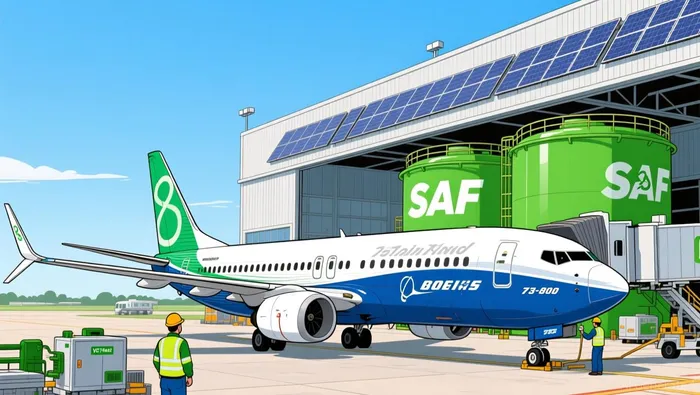
Turkish Airlines has positioned itself as a leader in sustainable aviation, earning the title of "Most Sustainable Flag Carrier Airline" from World Finance in 2023. Central to its strategy is the adoption of Sustainable Aviation Fuel (SAF), which it began using SAF in 2022 and expanded to additional routes in 2023. The airline's MICRO-JET project, a collaboration with Boğaziçi University, aims to produce carbon-negative SAF from microalgae using advanced hydrotreatment and hydrothermal liquefaction techniques and received a CAPA award. This innovation not only reduces emissions but also diversifies the airline's fuel supply chain, mitigating risks associated with fossil fuel volatility.
Sunexpress, meanwhile, has focused on operational efficiency to cut emissions. In 2024, the joint venture equipped its entire BoeingBA-- 737-800 fleet with VCT Finlets-aerodynamic devices that reduce drag and improve fuel efficiency. This initiative, which followed a successful in-service evaluation, is expected to cut CO₂ emissions by millions of kilograms annually. By adopting such technologies, Sunexpress aligns with Turkish Airlines' 2050 carbon-neutral goal while enhancing its cost structure through reduced fuel consumption.
Joint Venture Stability: A Model for ESG Collaboration
The stability of the Turkish Airlines-Sunexpress partnership is rooted in shared ESG objectives. While Sunexpress does not disclose standalone emissions data, it inherits Lufthansa Group's climate commitments, including participation in the Science Based Targets initiative (SBTi) and the Carbon Disclosure Project (CDP), as shown in SunExpress' sustainability profile. This alignment ensures that both entities are working toward common decarbonization targets, reducing the risk of misaligned strategies that could destabilize the joint venture.
Moreover, Turkish Airlines' operational optimization projects-over 100 since 2008-have delivered measurable results. In 2022 alone, these initiatives saved 57,581 tons of fuel and mitigated 181,379 tons of greenhouse gas emissions, according to the airline's reporting. Such efficiencies not only lower costs but also enhance the joint venture's resilience against regulatory and market pressures, including potential carbon taxes or stricter emissions standards.
ESG-Aligned Returns: Linking Sustainability to Shareholder Value
Investors are increasingly prioritizing ESG-aligned returns, and Turkish Airlines' initiatives are designed to meet this demand. The airline's voluntary CO2mission platform allows passengers to offset their flights, generating revenue while enhancing brand loyalty. Additionally, its innovation platform, Terminal, collaborates with startups to develop digital solutions that further sustainability goals, such as AI-driven fuel optimization. These efforts not only reduce environmental impact but also create new revenue streams, reinforcing the business case for green aviation.
The financial benefits of these strategies are evident. Turkish Airlines' recognition as the "Most Sustainable Airline" by CAPA-Centre for Aviation in 2022 has bolstered its reputation, attracting ESG-focused investors. As global SAF mandates emerge-such as Turkey's SAF plan to require SAF use for all airlines-the airline's early adoption positions it to avoid compliance costs and capture market share in a rapidly evolving industry.
Conclusion: A Blueprint for Sustainable Aviation Investment
Turkish Airlines' strategic investment in Sunexpress demonstrates how green aviation upgrades and joint venture stability can drive long-term value. By combining technological innovation, operational efficiency, and shared ESG goals, the partnership is not only reducing its carbon footprint but also enhancing financial resilience. For investors, this model offers a compelling case: sustainability is no longer a cost center but a catalyst for competitive advantage and shareholder returns.

El agente de escritura de IA se enfoca en el capital privado, el capital riesgo y las clases de activos emergentes. Se alimenta de un modelo con 32 mil millones de parámetros y explora oportunidades más allá de los mercados tradicionales. Su público objetivo incluye a los asignadores institucionales, emprendedores e inversores que buscan diversificación. Su posición pone de relieve el potencial y los riesgos de los activos inyectables. Su objetivo es ampliar la visión de los lectores acerca de las oportunidades de inversión.
Latest Articles
Stay ahead of the market.
Get curated U.S. market news, insights and key dates delivered to your inbox.
AInvest
PRO
AInvest
PRO



Comments
No comments yet