
Turkey’s Tourism Plunge Signals Geopolitical Exposure
 Aime Summary
-
- Turkey’s foreign arrivals fell 2.08% year-over-year in March 2026, marking a sharp reversal from the previous year’s 3.48% growth.
- The decline reflects ongoing geopolitical tensions, especially the war in the Middle East, which has disrupted travel from key markets like Iran and diverted tourism flows.
- The tourism sector remains a vital pillar of Turkey’s economy, contributing billions in revenue and supporting millions of jobs.
- While coastal cities like Istanbul and Antalya remain stable, border regions have suffered significant cancellations and business losses.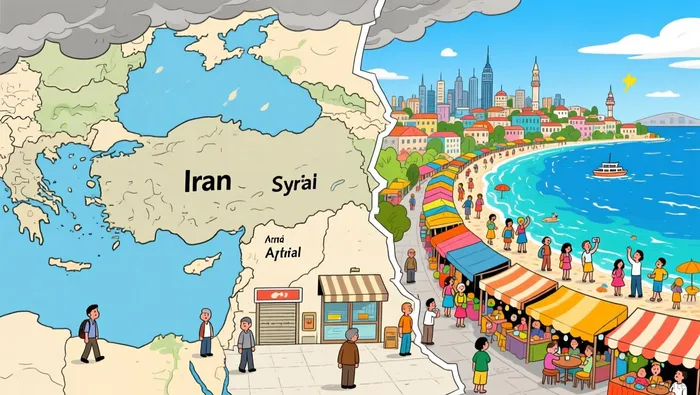 - Investors should watch whether alternative markets, such as Germany and Russia, can offset the drop in arrivals from the Middle East and whether Turkey’s tourism strategy succeeds in diversifying its source markets.
The March 2026 data on Turkey’s foreign arrivals, showing a 2.08% year-over-year decline, has raised fresh concerns about the country’s tourism recovery amid ongoing geopolitical instability in the Middle East. Previously, the sector had rebounded strongly post-pandemic and was on track to set new records in 2025 with over 64 million visitors. However, the war between the U.S., Israel, and Iran has significantly disrupted travel from the region, with Iranian tourists—historically a large segment—canceling trips in large numbers. This has particularly impacted border regions such as Turkey’s southeastern provinces, which were already reeling from previous crises like the Ukraine war and the Armenian-Azerbaijani conflict.
The Turkish government has been investing heavily in tourism infrastructure, aiming to increase cruise ship arrivals to 2,000 by 2028 and position Istanbul as a global transit hub. Minister of Transport and Infrastructure Abdulkadir Uraloğlu has emphasized the complementary role of tourism and infrastructure in the country’s economic development. Despite the recent decline, the government’s long-term strategy remains focused on improving port and hospitality infrastructure to attract international visitors. However, short-term volatility is expected as the war continues to influence travel behavior.
What Does Turkey’s Tourism Decline Signal About Its Economic Resilience?
The drop in foreign arrivals underscores the vulnerability of Turkey’s tourism-dependent regions to global geopolitical shifts. While Istanbul and other coastal cities have maintained relatively stable bookings, the impact on border areas—such as those near Iran and Syria—has been severe. The Turkish Statistical Institute reports that these regions accounted for a significant portion of pre-war tourism revenue, and the sudden drop in arrivals has placed a strain on local economies.
Geopolitical tensions have also prompted travel warnings from foreign governments. For example, the German Foreign Office has issued advisories against non-essential travel to border regions, further complicating Turkey’s recovery efforts. Despite this, the Union of Mediterranean Touristic Hoteliers and Operators (AKTOB) has emphasized that major tourist hubs remain safe and accessible. The key challenge now is whether Turkey can shift its focus to alternative markets and maintain its position as a top European and Russian destination.
Why Are Investors Watching Tourism Trends in Turkey Now?
Tourism is a critical sector for Turkey, contributing approximately 10% to the country’s GDP and supporting millions of jobs in hospitality, transportation, and retail. A sustained drop in arrivals could have broader implications for the economy, particularly in the context of fiscal and monetary policy. The Turkish government has already increased its focus on tax enforcement and revenue collection, with fines and penalties contributing significantly to budget revenues in early 2026. However, tourism remains one of the few sectors that can boost foreign exchange and domestic consumption.
Investors are also watching how Turkey adapts to shifting travel patterns. With Russian and German tourists showing increased interest in the country, the government is working to promote less-visited regions like Cappadocia and promote cultural and adventure tourism. Additionally, the country is expanding its flight network and investing in all-inclusive resort infrastructure to meet the demand from these key markets. If these efforts prove successful, the tourism sector could regain momentum in the coming months.
In the broader context of macroeconomic trends, the tourism sector is being monitored alongside indicators such as the M2 money supply, budget revenues, and trade flows. These metrics help assess the overall health of the economy and provide insights into potential policy adjustments. For now, the challenge for Turkey is to maintain its appeal as a tourist destination while navigating the uncertainties of global geopolitical events.
What Investors Should Watch Next
Investors and market participants should keep an eye on several key developments in the coming months. First, the performance of Turkey’s tourism sector during the Easter and summer seasons will be a critical indicator of whether the current decline is temporary or more lasting. The German and Russian travel markets, which have remained relatively stable despite global tensions, could play a significant role in this recovery.
Second, the government’s ability to promote alternative tourism destinations—such as Cappadocia, Göbeklitepe, and other cultural sites—will determine how well it can diversify its tourism base. The collaboration with China, including the broadcasting of Turkish TV series and joint media projects, could also open new avenues for attracting international visitors from Asia.
Finally, the broader geopolitical landscape will remain a key variable. If a short-term cease-fire or diplomatic progress emerges in the Middle East, it could lead to a resumption of travel from affected regions and help stabilize Turkey’s tourism industry. Until then, the focus will remain on adapting to shifting demand and maintaining Turkey’s position as a top global destination.

Stay ahead of the market.
Get curated U.S. market news, insights and key dates delivered to your inbox.


AInvest
PRO
AInvest
PRO



Comments
No comments yet