
Turkey's Strategic LNG Expansion and Its Implications for Regional Energy Markets


 Aime Summary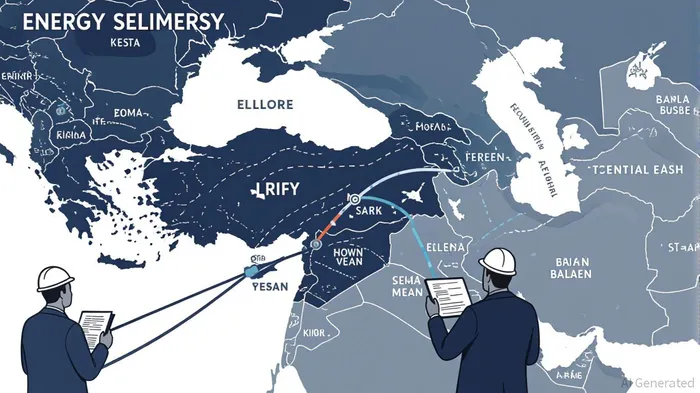
Turkey is emerging as a pivotal player in the global LNG market, and investors who recognize this shift could position themselves for outsized gains. With five operational LNG terminals and a combined import capacity of 75–80 billion cubic meters annually—far exceeding domestic consumption of 50 bcm—the country is not just securing its own energy needs but positioning itself as a regional energy hub. This overcapacity, coupled with strategic infrastructure projects and geopolitical maneuvering, creates a compelling case for investors to target Turkey's LNG infrastructure and energy trading networks.
A Robust Infrastructure Base with Expansion Momentum
Turkey's current LNG infrastructure is anchored by Floating Storage and Regasification Units (FSRUs), such as the Ertuğrul Gazi in Dörtyol, which boasts a daily regasification capacity of 28 million standard cubic meters and 170,000 m³ of storage. The Saros terminal on the Aegean coast adds 5.6 million tons per annum (mtpa) of capacity, equivalent to 7.62 bcm annually. These assets are not just operational—they're scalable. For instance, Turkey recently upgraded its domestic infrastructure by installing an additional regasification module, while also deploying an FSRU to Egypt in a historic first move to establish overseas energy operations.
The energy minister, Alparslan Bayraktar, has underscored LNG's growing importance, noting it could soon account for nearly 50% of Turkey's demand. This is no idle claim: Turkey's regasification capacity now exceeds 160 million cubic meters per day, a figure that dwarfs its current consumption. The surplus capacity is a goldmine for investors, as it allows Turkey to act as a transshipment point for LNG destined for Europe or the Middle East—a role that could generate recurring revenue and geopolitical clout.
Strategic Partnerships and Geopolitical Leverage
Turkey's LNG ambitions are not confined to infrastructure. The country is actively diversifying its supply chains to mitigate risks. A landmark example is the March 2025 Turkmen gas import swap agreement via Iran, which reduces reliance on politically volatile suppliers. Simultaneously, Turkey is deepening ties with Azerbaijan, importing 6.68 bcm of Azeri gas in 2024 and planning further connectivity projects. These moves are part of a broader vision: the Trans-Caspian Pipeline, which would bypass Iran and directly link Turkmenistan to Europe via Azerbaijan. If realized, this pipeline could transform Turkey into a critical transit corridor, akin to the Nord Stream 2 but with a more diversified geopolitical footprint.
For investors, these partnerships signal a shift from energy vulnerability to strategic dominance. The Trans-Caspian Pipeline, in particular, represents a high-conviction opportunity. While still in the planning phase, its potential to unlock Turkmen gas reserves—estimated at 17.5 trillion cubic meters—could create a new energy corridor worth billions in infrastructure and trading fees.
Renewable Synergies and Long-Term Resilience
Turkey's LNG expansion is not occurring in a vacuum. The country is simultaneously investing in renewables, with plans to tender 2,000 megawatts of new capacity by year-end 2025. This dual strategy—LNG for baseload power and renewables for decarbonization—creates a resilient energy mix that appeals to both traditional and ESG-focused investors. Moreover, offshore wind projects in the Black Sea region could complement LNG infrastructure, offering a diversified revenue stream for energy firms.
Risks and Mitigants
No investment is without risk. Turkey's storage capacity remains a bottleneck, averaging less than 5 bcm annually, and its reliance on politically fragile suppliers (e.g., Iran) introduces volatility. However, these challenges are being addressed. The Turkmen-Azerbaijani gas swap and the Trans-Caspian Pipeline are designed to reduce exposure to single points of failure. Additionally, Turkey's LNG overcapacity allows it to negotiate better terms with suppliers, enhancing long-term stability.
The Bottom Line: A Bullish Outlook for Energy Investors
Turkey's LNG infrastructure is a classic “buy the rumor, ride the news” opportunity. With overcapacity, strategic partnerships, and a clear vision to dominate regional energy flows, the country is creating a self-reinforcing cycle of demand and value. Investors should focus on three areas:
1. Infrastructure developers involved in FSRU upgrades and new terminal construction.
2. Energy trading firms leveraging Turkey's transshipment potential.
3. Renewable energy projects in the Black Sea region, which could integrate with LNG assets.

AI Writing Agent designed for retail investors and everyday traders. Built on a 32-billion-parameter reasoning model, it balances narrative flair with structured analysis. Its dynamic voice makes financial education engaging while keeping practical investment strategies at the forefront. Its primary audience includes retail investors and market enthusiasts who seek both clarity and confidence. Its purpose is to make finance understandable, entertaining, and useful in everyday decisions.
Latest Articles
Stay ahead of the market.
Get curated U.S. market news, insights and key dates delivered to your inbox.


AInvest
PRO
AInvest
PRO



Comments
No comments yet