
Turkey's Strategic Energy Move: Supplying Azerbaijani Gas to Syria and Its Geopolitical Implications for Emerging Markets
 Aime Summary
Turkey's recent initiative to supply Azerbaijani natural gas to Syria via its southern border marks a pivotal shift in the country's energy and geopolitical strategy. This move, formalized in May 2025, not only revitalizes Syria's post-conflict energy infrastructure but also positions Turkey as a central player in regional energy dynamics. For emerging market investors, the project underscores the interplay between energy infrastructure, geopolitical realignment, and long-term economic opportunities in a volatile region.
A Geopolitical Power Play: Turkey's Energy Diplomacy
Turkey's role in this gas corridor reflects its broader ambition to become a regional energy hub. By acting as a transit and intermediary between Azerbaijan's Caspian gas reserves and Syria's energy-starved markets, Turkey is leveraging its geographic centrality to diversify its own energy imports and strengthen ties with key partners. Azerbaijan's state oil company, SOCAR, is a critical partner in this initiative, marking its first indirect entry into the Middle Eastern energy market. This collaboration also aligns with Turkey's strategic goals of countering Russian and Israeli influence in the Eastern Mediterranean, particularly as the stalled EastMed pipeline project—led by Israel, Greece, and Cyprus—remains a point of contention.
The project's geopolitical implications are profound. For Syria, the pipeline delivers 6 million cubic meters of gas daily to Aleppo, where it powers electricity generation and supports post-war reconstruction. For Turkey, the initiative reinforces its military and economic presence in northern Syria, countering Kurdish forces while securing a foothold in the region's recovery. Meanwhile, Turkey's deepening ties with the Islamist-led Syrian administration, which took power in December 2024, signal a pragmatic realignment with Damascus after years of backing opposition groups.
Risks and Opportunities in the Energy Corridor
While the project offers transformative potential, it is not without risks. Security concerns in Syria persist, with Israeli airstrikes in July 2025 raising questions about the sustainability of infrastructure projects in the region. Additionally, Turkey's rivalry with Israel—compounded by Ankara's support for Hamas during the Gaza conflict—introduces geopolitical volatility. However, a deconfliction mechanism established in April 2025, facilitated by Azerbaijan and the U.S., suggests a modus vivendi is emerging between the two countries, prioritizing shared interests in countering Iranian influence and stabilizing Syria.
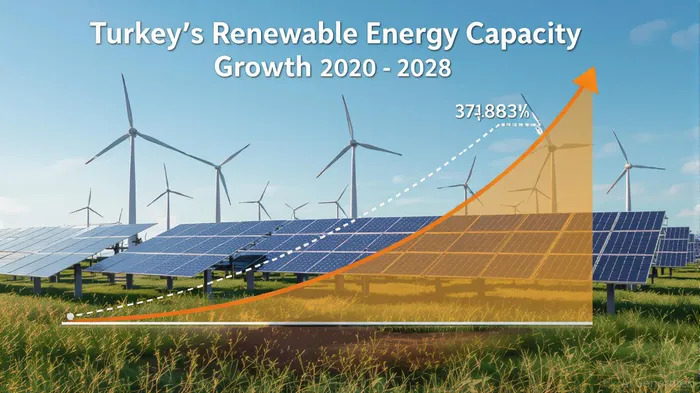
For investors, the pipeline's success hinges on regional stability and Turkey's ability to maintain its role as a neutral energy intermediary. The project also presents opportunities for energy diversification: Turkey's domestic energy mix is expanding, with discoveries of 57 million barrels of oil in Diyarbakır and growing investments in renewable energy (e.g., solar and wind). These developments align with Turkey's National Energy Plan, which aims to increase renewable energy capacity to 110 GW by 2028.
Long-Term Investment Potential in Turkey's Energy Infrastructure
Turkey's energy infrastructure is a magnet for foreign direct investment (FDI), driven by its strategic location, growing domestic demand, and government incentives. From 2020 to 2025, FDI in Turkey's energy sector totaled over $100 billion, with renewable energy projects accounting for a significant share. The government's 2024–2028 International Direct Investment Strategy targets a 1.5% share of global FDI inflows by 2028, prioritizing green technology and digital transformation.
Investors should also consider Turkey's expanding LNG infrastructure. The commissioning of two Floating Storage Regasification Units (FSRUs) in 2018 and the Tuz Gölü gas storage facility has enhanced energy security, reducing reliance on Russian imports. These developments are critical for Turkey's energy transition, as the country aims to cut emissions and increase the share of renewables in its energy mix.
Strategic Recommendations for Emerging Market Investors
- Diversify Exposure to Regional Energy Corridors: Turkey's pipeline project is part of a broader trend of energy diversification in the Eastern Mediterranean. Investors should consider portfolios that include Turkish energy stocks (e.g., ISE-ENERGY) and regional players like SOCAR.
- Monitor Geopolitical Developments: While Turkey's energy diplomacy is pragmatic, tensions with Israel and instability in Syria remain risks. Investors should hedge against these by focusing on projects with multilateral support (e.g., Qatari-backed initiatives).
- Target Renewable Energy Opportunities: Turkey's renewable energy sector is growing rapidly. Solar and wind projects in regions like Diyarbakır and Batman offer high returns, supported by government incentives.
- Evaluate Infrastructure Resilience: The success of Turkey's energy corridor depends on infrastructure resilience. Investors should prioritize companies involved in pipeline maintenance, cybersecurity, and energy storage solutions.
Conclusion: A New Era for Turkey's Energy Influence
Turkey's gas pipeline project with Azerbaijan and Syria is more than an infrastructure endeavor—it is a geopolitical statement. By reshaping regional energy flows and deepening ties with Caspian and Middle Eastern partners, Turkey is asserting its role as a linchpin in global energy markets. For emerging market investors, this shift presents both risks and opportunities, particularly in energy diversification, renewable infrastructure, and regional trade partnerships. As Turkey navigates the complexities of a post-conflict Syria and a shifting Eastern Mediterranean landscape, its energy corridor could serve as a blueprint for strategic investments in an era of energy transition.

Stay ahead of the market.
Get curated U.S. market news, insights and key dates delivered to your inbox.


AInvest
PRO
AInvest
PRO



Comments
No comments yet