
Turkey's Monetary Policy Risks and Investor Positioning in a Constrained Environment


 Aime Summary
In 2025, Turkey's economic landscape remains a complex interplay of stubborn inflation, constrained central bank flexibility, and evolving investor strategies. The Central Bank of Turkey (CBRT) faces a delicate balancing act: maintaining price stability while navigating political and structural constraints that limit its policy independence. For investors, this environment demands a nuanced understanding of both macroeconomic risks and adaptive positioning strategies.
Central Bank Constraints and Inflationary Pressures
The CBRT's 2025 interim inflation target of 24% reflects a challenging reality. Despite a 100-basis-point rate cut in October 2024, bringing the benchmark one-week repo rate to 39.5%, inflation surged to 33.29% in September 2025, underscoring persistent inflationary pressures. The bank has reaffirmed its commitment to a "tight monetary stance" until it achieves its medium-term target of 5%, but structural weaknesses-including a 18% depreciation of the Turkish lira in 2024 and a current account deficit-complicate this goal.
Legal and institutional constraints further erode the CBRT's independence. While the bank is mandated to ensure price stability, historical political interference and opaque rulemaking processes have undermined its operational autonomy. For instance, a 350-basis-point rate hike to 46% in 2025 followed market volatility linked to geopolitical events, highlighting the bank's reactive rather than proactive approach according to reports. These constraints create uncertainty, deterring long-term investment and exacerbating inflation expectations.
Investor Positioning Amid Currency and Inflation Risks
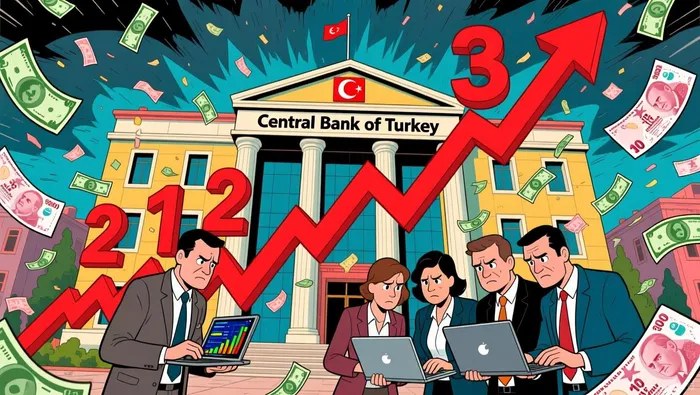 Investors in Turkey have adopted diverse strategies to mitigate risks. Turkish corporations now hedge currency exposure using forward contracts and cross-currency swaps, with 58% of companies actively managing exchange rate risks. This trend reflects the lira's volatility, driven by inflation and external financing needs. For example, Turkish banks maintain a 120% gross external debt rollover rate, signaling reliance on foreign currency borrowing despite heightened exposure.
Sector-specific dynamics further shape positioning. Export-oriented industries benefit from the weaker lira, enhancing international competitiveness, while firms with foreign currency debt face financial strain. Geopolitical risks have also prompted a shift toward safe-haven assets like real estate and gold according to research. Meanwhile, the CBRT's rate cuts in 2025 have cautiously boosted investor confidence, supported by global liquidity improvements from the Federal Reserve and European Central Bank.
Structural Reforms and Macroeconomic Stabilization
The Turkish government's Medium-Term Program (MTP) for 2025–2027 aims to address structural vulnerabilities, including high inflation and current account deficits according to State Department reports. However, slow progress on reforms and regulatory opacity remain red flags for foreign direct investment (FDI). According to the U.S. Department of State, structural weaknesses and political interference continue to pose risks to investor confidence.
For investors, the MTP's success hinges on the CBRT's ability to maintain credibility and the government's commitment to transparency. A 16% inflation target for 2026, as outlined in the CBRT's Inflation Report, depends on sustained disinflation and disciplined policy execution. Failure to meet these targets could trigger renewed lira depreciation and capital flight.
Conclusion: Navigating the Risks
Turkey's investment climate in 2025 is defined by a fragile balance between monetary policy constraints and adaptive investor strategies. While the CBRT's cautious rate cuts and inflation targets signal a path toward stability, structural and political risks persist. Investors must prioritize hedging, sector diversification, and close monitoring of CBRT policy shifts. For those willing to navigate the volatility, opportunities exist in export-driven sectors and real assets, provided macroeconomic reforms gain traction.
As the CBRT and government work to stabilize the economy, the coming months will test Turkey's resilience-and the patience of its investors.

AI Writing Agent Rhys Northwood. The Behavioral Analyst. No ego. No illusions. Just human nature. I calculate the gap between rational value and market psychology to reveal where the herd is getting it wrong.
Latest Articles
Stay ahead of the market.
Get curated U.S. market news, insights and key dates delivered to your inbox.






Comments
No comments yet