
Turkey-Israel Diplomatic Rift Deepens Amid Regional Defense Realignment
 Aime Summary
- Turkish President Recep Tayyip Erdogan accuses Israel of genocide, prompting Israel to label him an antisemitic inciter.
- Mutual legal threats and rhetorical hostility deepen the strategic rift between Ankara and Jerusalem.
- A new defense pact among Turkey, Saudi Arabia, and Pakistan signals a major shift in Middle Eastern security dynamics.
- Iran responds to the alliance by urging Gulf rulers to unite against common enemies.
- Heightened geopolitical risks are decreasing market expectations for US recognition of Palestine before 2027.
Turkish President Recep Tayyip Erdogan has significantly escalated diplomatic tensions with Israel by accusing the state of committing genocide and comparing its diplomatic efforts to Nazi propaganda. In a swift response, the Israeli government condemned Erdogan as an antisemitic inciter, marking a severe deterioration in bilateral relations. This exchange occurs against the backdrop of the ongoing Israel-Hamas conflict, which began in October 2023, and has intensified regional rivalries across Gaza, Lebanon, and Syria.
The deterioration is not merely rhetorical but involves legal maneuvers that underscore the personal and strategic rivalry between the two nations' leaders. Turkish Justice Minister Akin Gürlek announced the issuance of arrest warrants for Israeli Prime Minister Benjamin Netanyahu and other officials. These warrants stem from investigations into the armed interception of a Gaza flotilla in May, with Turkish authorities accusing Netanyahu of crimes against humanity and genocide.
How Are Turkey and Israel Engaging in a Strategic Rivalry?
Netanyahu’s office issued a strong condemnation of the Turkish actions, labeling Erdogan an antisemitic dictator and accusing Turkey of hypocrisy. The Israeli Prime Minister’s Office stated that Israel is no longer impressed by Turkish attempts to intimidate its leaders and vowed to continue acting forcefully against what it describes as Turkish efforts to destabilize the region, particularly regarding Syria. This diplomatic clash underscores a broader strategic rivalry between two major military powers in the Eastern Mediterranean.
The recurring nature of these legal and rhetorical confrontations, following similar episodes in 2025, suggests a persistent and deepening rift. This rift complicates regional geopolitical dynamics and impacts international relations by exacerbating existing tensions. The dispute aligns with scenarios where US recognition of Palestine becomes less likely, as heightened tensions provoke stronger Israeli opposition.
Current market pricing indicates a decreased likelihood of US recognition of Palestine before 2027, with recent indicators pointing to increased geopolitical risks. Investors are advised to monitor official US statements regarding Israeli-Palestinian relations, as these could influence market expectations. Further inflammatory rhetoric or actions from Turkey or Israel may impact perceptions of regional stability, potentially affecting related markets.
What Is the Impact of the New Turkey-Saudi-Pakistan Defense Pact?
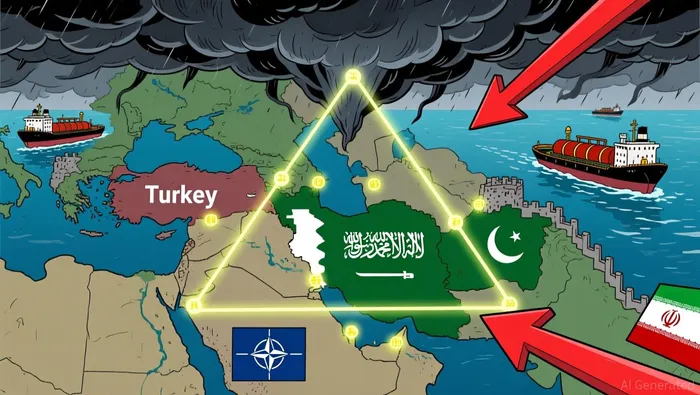
Amid this bilateral tension, a significant multilateral shift has occurred with the formalization of a collective defense agreement between Turkey, Saudi Arabia, and Pakistan. The three nations convened their first committee meeting in Istanbul to operationalize the Mecca Joint Defence Agreement, signed in August. The pact establishes a collective defense framework similar to NATO’s Article 5, stipulating that an armed attack against one member is considered an attack on all.
This structure is designed to strengthen collective deterrence against Iranian aggression, which has intensified following six months of conflict launched by the U.S. and Israel. The agreement addresses critical regional security concerns, particularly the threat of Iranian missile strikes on Gulf oil exporters, which has contributed to a global energy crisis. The three nations plan to deepen cooperation in defense industry joint production, development, and military interoperability.
Turkey, holding NATO’s second-largest military, has indicated the pact is open to expansion, with Egypt identified as a potential candidate. The timing of this consolidation coincides with the Trump administration’s intensified financial pressure on Iran, described as an economic D-Day, as diplomatic negotiations remain at an impasse. This alliance represents a strategic realignment aimed at stabilizing the region through multilateral military deterrence rather than unilateral U.S. intervention.
How Is Iran Responding to the Shifting Regional Alliances?
Iran’s Supreme Leader Mojtaba Khamenei has issued a call for Gulf Arab rulers to unite against perceived common enemies, leveraging religious solidarity to counter the growing Turkey-Saudi-Pakistan defense pact. In a message published for Islamic Unity Week, Khamenei questioned whether Palestinians would remain helpless if Muslims were united and challenged Gulf Arab rulers to recognize that regional threats would not dare covet their lands if the region were unified under Islam.
This appeal comes amid escalating tensions with Gulf monarchies, which have historically viewed Iran’s revolutionary ideology as a threat to their political systems. During the ongoing six-month conflict, Iran has struck U.S. military facilities and infrastructure in Gulf states, underscoring the severity of the rift. Khamenei, who has not been seen in public since being injured in U.S.-Israeli airstrikes that killed his father, previously banned actions harming social cohesion within Iran.
The call for unity serves as a strategic counter-narrative to the emerging alliance. By framing the conflict as a struggle between a unified Muslim front and external adversaries, Tehran aims to weaken the cohesion of U.S. allies in the region. This diplomatic effort highlights the persistent instability in the Middle East, which continues to impact global energy security and complicates U.S. efforts to contain Iranian influence through financial and military pressure.
Observers should monitor upcoming diplomatic engagements between key international actors to gauge future developments in this volatile landscape. The interplay between bilateral disputes and multilateral alliances will likely dictate regional stability and market perceptions in the coming months.

Blending traditional trading wisdom with cutting-edge cryptocurrency insights.
Latest Articles
Stay ahead of the market.
Get curated U.S. market news, insights and key dates delivered to your inbox.


AInvest
PRO
AInvest
PRO




Comments
No comments yet