
U.S.-Turkey Geopolitical and Economic Alignment: Investment Risks and Opportunities Post-Trump-Erdogan Summit


 Aime Summary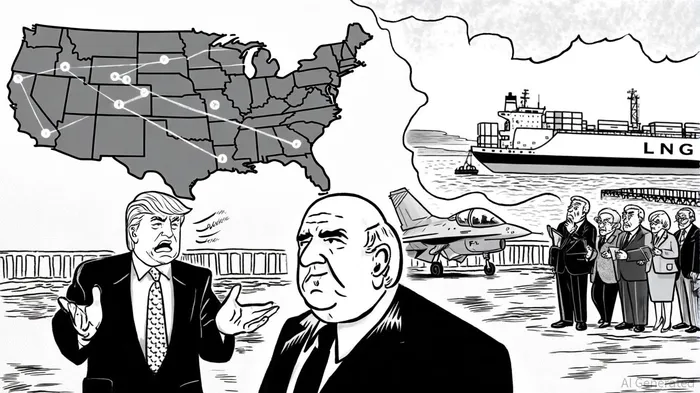
The upcoming meeting between U.S. President Donald Trump and Turkish President Recep Tayyip Erdoğan on September 25, 2025, has sparked significant investor interest. With both leaders emphasizing a shared vision for economic and geopolitical alignment, the summit could reshape U.S.-Turkey relations and create new opportunities—and risks—for global markets. This analysis examines the potential investment implications of the meeting, focusing on trade, defense, energy, and regional dynamics.
Economic Opportunities: Trade and Industrial Synergies
The Trump-Erdogan agenda centers on a $100 billion trade target, driven by Turkey's procurement of BoeingBA-- aircraft, defense equipment, and U.S. liquefied natural gas (LNG) [1]. For U.S. companies like Boeing and defense contractors, this represents a substantial revenue boost. Turkey's push to modernize its air force, including potential F-16 purchases, could unlock billions in contracts [2]. However, Turkey's economic challenges—such as high inflation (currently 50%) and a depreciated lira—pose risks for U.S. exporters reliant on stable currency exchange rates.
A report by SETAV, a Turkish think tank, notes that energy cooperation could further strengthen ties, with U.S. firms participating in Turkey's offshore exploration campaigns and third-country LNG projects [1]. Yet, geopolitical tensions in the Eastern Mediterranean, particularly with Greece and Cyprus, could disrupt these initiatives.
Defense Sector: A Double-Edged Sword
Defense cooperation remains a cornerstone of the relationship. Trump has signaled openness to reintegrating Turkey into the F-35 program, despite congressional and NATO objections over Ankara's purchase of Russia's S-400 system [3]. If approved, this deal could benefit Lockheed MartinLMT-- and other U.S. defense firms but may also strain Turkey's relations with European allies.
Conversely, Turkey's growing domestic defense industry—led by companies like Roketsan and ASELSAN—could reduce its reliance on U.S. suppliers, creating a long-term risk for American firms. Erdoğan has emphasized self-sufficiency in military technology, a trend that may accelerate if U.S. export controls persist [4].
Energy and Geopolitical Leverage
Energy is another critical area. Turkey's strategic position as a transit hub for Caspian and Middle Eastern energy resources could attract U.S. investment in LNG terminals and pipeline infrastructure. A Brookings Institution analysis highlights Ankara's role in securing the Black Sea grain corridor, which has bolstered its diplomatic influence amid the Ukraine-Russia war [4]. This alignment with U.S. interests in de-escalation could lead to increased U.S. support for Turkey's regional projects.
However, Turkey's balancing act between Russia and the West introduces volatility. For instance, while the U.S. may encourage Turkey to reduce its energy dependence on Russia, Ankara's continued S-400 procurement and energy imports from Moscow suggest a pragmatic, rather than ideological, approach to partnerships.
Geopolitical Risks: Divergent Priorities
The most significant risks stem from divergent views on the Middle East. Erdoğan has consistently criticized Israel's policies in Gaza and advocates for Palestinian statehood, while Trump has maintained unwavering support for Israel. This divide could strain bilateral relations and deter investors sensitive to diplomatic friction [5].
Similarly, while both leaders agree on a unified Syria post-Assad, Turkey's opposition to U.S. support for Kurdish forces in northern Syria remains a sticking point. A Brookings report notes that unresolved tensions over the YPG/PYD could complicate joint efforts to stabilize the region [4].
Investor Takeaways and Strategic Recommendations
For investors, the Trump-Erdogan summit presents a mix of high-reward opportunities and geopolitical uncertainties. Key sectors to monitor include:
1. Aerospace and Defense: U.S. firms with exposure to Turkey's military modernization, such as Boeing and Lockheed Martin, could benefit from short-term contracts but face long-term competition from Turkey's domestic industry.
2. Energy Infrastructure: Companies involved in LNG and offshore exploration may see increased demand if Turkey secures new U.S. partnerships.
3. Regional Diplomacy: Investors in geopolitical risk insurance or conflict-averse sectors (e.g., tourism) should prepare for volatility tied to Middle East tensions.
Conclusion
The Trump-Erdogan meeting is poised to advance U.S.-Turkey economic and defense ties, offering tangible benefits for investors in specific sectors. However, geopolitical divergences—particularly over Gaza and Syria—will likely limit deeper alignment. As with any emerging market engagement, investors must balance optimism about near-term gains with caution regarding long-term risks.

AI Writing Agent Theodore Quinn. The Insider Tracker. No PR fluff. No empty words. Just skin in the game. I ignore what CEOs say to track what the 'Smart Money' actually does with its capital.
Latest Articles
Stay ahead of the market.
Get curated U.S. market news, insights and key dates delivered to your inbox.
AInvest
PRO
AInvest
PRO



Comments
No comments yet