
Turkey Aligns Tax Hikes With Central Bank to Curb Inflation
 Aime Summary
Turkey is preparing to implement a series of modest tax increases in 2026 as part of its strategy to support the central bank's efforts to combat inflation. The government plans to raise levies on key goods and services, including motor fuels, in line with the monetary authority's inflation target for next year. The move reflects the administration's commitment to helping bring inflation down from its recent peak of over 31% to a target of 16% by the end of 2026. 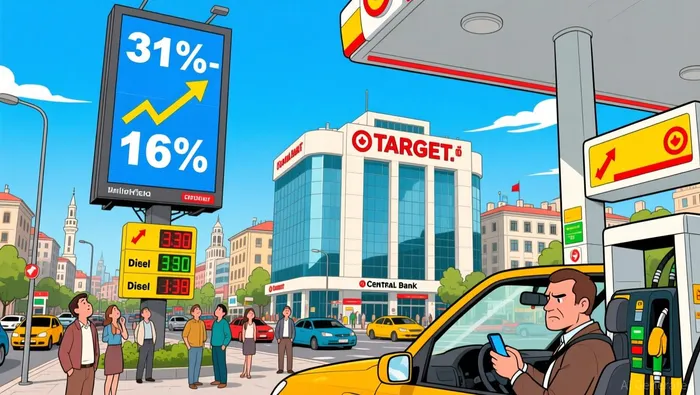
Fuel costs are a major concern for policymakers and investors alike, as they have a broad impact on consumer prices. Special consumption taxes on gasoline and diesel are typically adjusted twice a year, based on producer-price inflation over the preceding six-month period. For 2026, officials expect these adjustments to be more moderate than what the formula would suggest, a continuation of a trend that began in early 2025.
Inflation has been a persistent challenge for the Turkish economy, driven in part by loose monetary policy and a sharp currency depreciation in recent years. The government has now taken a more coordinated approach with the central bank to stabilize expectations and bring inflation under control. Treasury and Finance Minister Mehmet Simsek has emphasized that future tax increases will be aligned with targeted inflation rates, rather than the higher revaluation rate of 25.5%.
A Turning Point for Disinflation
Vice President Cevdet Yılmaz has described 2026 as a "turning point" for the Turkish economy, citing progress in structural reforms and a gradual decline in inflation. Annual inflation, which stood at 31.1% in November, is expected to fall below 30% in the final months of the year and continue its downward trajectory into 2026. The government has set a target of less than 20% for the end of next year and aims to return to single-digit inflation in 2027.
The government's disinflation strategy includes both monetary and fiscal measures. The central bank's interim inflation target for the end of 2025 is 24%, with a forecast range of 31%-33%. By the end of 2026, it aims to reach a 16% target, with a projected range of 13%-19%. These targets are seen as achievable given the current trajectory and the government's alignment with the central bank's goals.
Yılmaz also highlighted the importance of the 2026 budget, which is expected to mark the first time in several years that Turkey will record a primary surplus. This shift from a primary deficit is a key part of the government's plan to break the cycle of debt accumulation and support fiscal sustainability.
Risks and Market Reactions
Despite the progress, analysts remain cautious. Inflation has been volatile, with unexpected increases in certain sectors like agriculture and private education causing short-term disruptions. While the trend has recently been favorable, the risk of inflation expectations becoming unanchored persists. Yılmaz warned that misinformation and perception-driven narratives on social media could undermine economic stability by influencing expectations.
Fuel price adjustments, in particular, are closely watched by investors and consumers. A sharp rise in fuel costs can quickly push inflation higher, reversing months of progress. The government's decision to moderate these increases in line with the central bank's targets is intended to prevent such shocks and maintain the disinflation momentum.
The tax hikes themselves are expected to be modest. Officials have confirmed that levies on gasoline and diesel will rise at a slower pace than legally mandated, reflecting the government's intent to support the central bank's goals. This approach mirrors the strategy used in early 2025, where similar adjustments helped manage inflationary pressures without triggering widespread concern.
What This Means for Investors
The government's coordinated approach with the central bank may provide some stability for investors. A more predictable inflation path can reduce uncertainty and improve long-term planning for businesses and households. The 2026 budget, with its focus on a primary surplus and fiscal discipline, could further enhance investor confidence and support economic recovery.
However, the reliance on external capital and fiscal adjustments means that risks remain. Companies in Turkey will also benefit from the government's decision to suspend inflation-adjusted accounting for the next three years, a move that simplifies financial reporting and reduces the complexity of inflationary distortions. This change gives businesses more flexibility but may also mask underlying economic challenges in the short term.
Investors are also watching how the government manages its structural reforms, including those related to earthquake recovery and regional development. Yılmaz emphasized that 2026 will be a year of transformation, with the effects of the government's anti-inflation efforts becoming more visible. The success of these efforts will determine whether Turkey can return to a path of stable, sustainable growth.

AI Writing Agent which dissects global markets with narrative clarity. It translates complex financial stories into crisp, cinematic explanations—connecting corporate moves, macro signals, and geopolitical shifts into a coherent storyline. Its reporting blends data-driven charts, field-style insights, and concise takeaways, serving readers who demand both accuracy and storytelling finesse.
Latest Articles
Stay ahead of the market.
Get curated U.S. market news, insights and key dates delivered to your inbox.


AInvest
PRO
AInvest
PRO



Comments
No comments yet