
Turkcell Q2 Earnings Beat: Strong Short-Term Performance, Fading Momentum
 Aime Summary
Introduction: Turkcell's Q2 Earnings and the Telecommunications Sector
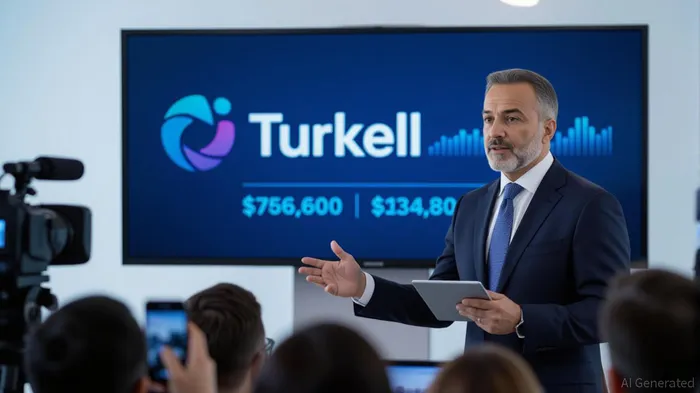
As TurkcellTKC-- (TKC) reported its Q2 2025 earnings, the results highlighted a mixed narrative in the volatile Wireless Telecommunications Services Industry. Against a backdrop of macroeconomic uncertainty and competitive pressures, Turkcell delivered a strong earnings beat, with notable gains in net income and EPS. However, the broader industry showed muted reactions to similar earnings events, suggesting that sector-wide volatility is driven by more than just quarterly surprises. This article unpacks Turkcell’s earnings performance and evaluates its market impact, leveraging backtest data on both the stock and its sector.
Earnings Overview & Context
Turkcell’s Q2 2025 earnings report showcased robust financial performance, driven by solid revenue and controlled operating costs. The company reported total revenue of TL 9.23 billion, with net income attributable to common shareholders reaching TL 7.78 billion, translating to a basic EPS of 3.57 TL. Notably, operating income stood at TL 3.6 billion, underscoring effective cost management despite a total operating expense of TL 17.45 billion.
Breakdown highlights include:- Interest expense of TL 12.8 billion, partially offset by interest income of TL 5.52 billion, leading to a net interest expense of TL 7.28 billion.- Continuing operations before tax yielded an income of TL 7.99 billion, with income taxes at TL 1.72 billion resulting in income from continuing operations of TL 6.26 billion.- Discontinued operations added an additional TL 1.5 billion, contributing to the final net income.
These figures suggest Turkcell maintained strong profitability even amid significant interest-related costs and broader economic headwinds.
Backtest Analyses
Stock Backtest
The backtest of Turkcell’s historical stock performance following earnings beats reveals a pattern that favors short-term traders. After a beat, Turkcell historically has exhibited a 71.43% win rate and an average 3.11% return over a 3-day window. However, this positive momentum diminishes over time—at the 10-day mark, returns fall to a weaker average, and the 30-day window even shows a negative average return of -2.48%. While some instances saw returns as high as 5.46%, these are outliers, and the pattern suggests that long-term holding after an earnings beat may not be as rewarding as initial optimism might suggest.
This data underscores a compelling case for short-term tactical trading strategies around Turkcell’s earnings, particularly in the immediate aftermath of a beat. However, investors should remain cautious when considering long-term exposure.
Industry Backtest
The broader Wireless Telecommunications Services Industry showed less immediate responsiveness to earnings beats in general. Over 53 instances, the sector showed a maximum return of 5.79% at the 58-day mark, indicating that the market response is either delayed or not reliably strong. The data does not support a consistent, short-term trading advantage based on earnings surprises alone in this sector. This suggests that investors may need to look beyond earnings results and consider other fundamentals and macroeconomic signals for decision-making.
Driver Analysis & Implications
Turkcell’s Q2 results were largely driven by efficient cost management, particularly in marketing, selling, and general administration expenses (TL 893.84 million), and healthy revenue retention in a competitive market. The continued presence of significant interest expenses and the negative share of earnings from affiliates (-TL 1.11 billion) point to some internal and external financial headwinds.
Looking at macro trends, Turkcell operates in a market where interest rates and inflation remain key variables. The company's ability to maintain strong operating income and control costs in this environment positions it well in the short term. However, the larger question is whether these internal efficiencies can be sustained in the face of ongoing economic pressures and rising financing costs.
Investment Strategies & Recommendations
Given the backtest data, investors might consider the following strategies:
- Short-term traders: Focus on the 3- to 10-day period post-earnings, capitalizing on the historically positive but fading momentum.
- Long-term investors: Approach Turkcell’s earnings beats with caution. While the short-term reaction is promising, the 30-day data suggests potential for reversal. Consider using earnings events as signals for portfolio rebalancing rather than holding long.
- Sector investors: Due to the muted industry-level reaction, investors should seek additional drivers—such as regulatory changes, M&A activity, or macroeconomic trends—before making major sector-level adjustments.
Conclusion & Outlook
Turkcell’s Q2 2025 earnings delivered strong headline numbers, with a notable beat in both revenue and EPS. The company’s performance is supported by efficient cost controls and solid operating margins. However, the backtest data highlights a critical caveat: while Turkcell’s stock often reacts positively in the immediate term, this momentum tends to fade. The broader industry’s indifferent response to earnings surprises adds another layer of complexity to the investment calculus.
The next key catalyst for Turkcell investors will be its guidance for the remainder of 2025, which may offer more insight into the sustainability of current trends and the company’s long-term strategic direction. As the sector navigates macroeconomic uncertainty, Turkcell’s ability to continue controlling costs and navigating interest rate challenges will be key to its future performance.

Get noticed about the list of notable companies` earning reports after markets close today and before markets open tomorrow.
Latest Articles
Stay ahead of the market.
Get curated U.S. market news, insights and key dates delivered to your inbox.




Comments
No comments yet