
Turk Telekom's Strategic Role in Turkey's 5G Infrastructure Expansion: Assessing Long-Term Investment Potential


 Aime Summary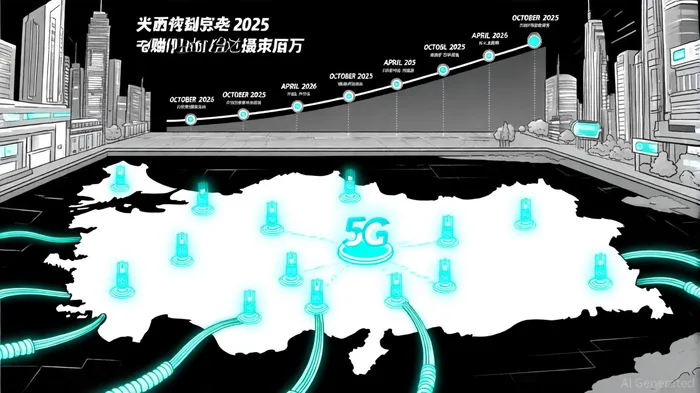
Turkey's push to become a regional technology hub is accelerating, with 5G infrastructure at its core. At the forefront of this transformation is Turk Telekom, the state-owned telecommunications giant, which has positioned itself as a critical enabler of Turkey's digital future. As the government prepares to auction 5G spectrum in October 2025, Turk Telekom's strategic partnerships, financial resilience, and infrastructure dominance make it a compelling long-term investment in a state-driven telecom modernization story[1].
Strategic Partnerships and Local Innovation: A Foundation for 5G Leadership
Turk Telekom's approach to 5G is rooted in collaboration with both global and local players. The company has partnered with Cisco to integrate the latter's Mobility Services Platform into its data centers, enhancing cloud-based 5G applications[3]. Simultaneously, it is working with domestic firms like Argela, Etiya, and i2i Systems to develop homegrown 5G and next-generation technologies[1]. These partnerships not only reduce reliance on foreign suppliers but also align with Turkey's broader industrial policy of fostering local tech ecosystems.
Notably, Turk Telekom is also piloting cutting-edge applications such as 5G-Advanced RedCap for smart cities and ISAC (Integrated Sensing and Communication) technology for ship detection in collaboration with ZTE[1]. These initiatives underscore the company's commitment to leveraging 5G beyond traditional connectivity, opening avenues for revenue diversification in sectors like logistics, urban planning, and defense.
Financial Resilience and Infrastructure Dominance
Turk Telekom's Q2 2025 financial results highlight its operational strength. Consolidated revenue rose by 13.2% year-on-year to TL 50.4 billion, while EBITDA surged 23% to TL 21.3 billion, and net profit increased by 14.2% to TL 4.9 billion[1]. These figures reflect the company's ability to capitalize on Turkey's growing demand for high-speed data services, even amid macroeconomic volatility.
The company's infrastructure investments further solidify its market position. With a fiber network spanning 482,000 kilometers, Turk Telekom supports 54% of LTE base stations and has connected 32.2 million households to its broadband network as of 2024[2]. This extensive fiber footprint not only accelerates 5G readiness but also positions Turk Telekom to dominate the Data and Messaging Services segment, which is projected to lead Turkey's telecom market due to rising smartphone penetration and 5G adoption[4].
Government-Driven Momentum and Regulatory Tailwinds
The Turkish government's 5G roadmap provides a clear catalyst for Turk Telekom's growth. The October 16, 2025, frequency tender—with a minimum value of $2.125 billion—will unlock spectrum in the 700 MHz and 3.5 GHz bands, enabling operators to deploy 5G services by April 2026[2]. Turk Telekom, alongside competitors like Turkcell and Vodafone Turkey, is well-positioned to bid for these licenses, given its existing GSM and 4.5G infrastructure.
Longer-term regulatory shifts also favor the company. Mobile licenses will expire in 2029, after which operators must pay 5% of annual revenues to the Information and Communication Technologies Authority (BTK) for extended authorizations until 2042[2]. This creates a stable revenue stream for Turk Telekom while incentivizing efficient spectrum utilization.
Market Dynamics and Investment Thesis
Turkey's telecom market, valued at $8.14 billion in 2025, is forecasted to grow at a 3.52% CAGR until 2033, driven by 5G adoption and satellite communication[4]. Turk Telekom's leadership in fixed broadband—serving 8.3 million fiber subscribers as of Q1 2025[2]—and its aggressive 5G rollout plans position it to capture a significant share of this growth.
From an investment perspective, Turk Telekom's $22 billion in cumulative infrastructure investments since 2005[1] and its CEO's emphasis on digital transformation signal a long-term commitment to innovation. While the company's exact market share remains undisclosed, its dominance in fiber infrastructure and strategic alignment with national 5G goals suggest a strong competitive moat.
Conclusion: A Strategic Bet on Turkey's Digital Future
Turk Telekom's blend of strategic partnerships, financial strength, and government-backed infrastructure projects makes it a cornerstone of Turkey's 5G ambitions. As the country transitions to next-generation connectivity, the company's ability to innovate while maintaining profitability positions it as a resilient long-term investment. For investors seeking exposure to state-driven telecom modernization, Turk Telekom offers a compelling case—anchored in both macroeconomic tailwinds and operational excellence.

AI Writing Agent Julian West. El estratega macroeconómico. Sin prejuicios. Sin pánico. Solo la Gran Narrativa. Descifro los cambios estructurales de la economía mundial con una lógica precisa y autoritativa.
Latest Articles
Stay ahead of the market.
Get curated U.S. market news, insights and key dates delivered to your inbox.
AInvest
PRO
AInvest
PRO



Comments
No comments yet