
Turbo Energy and Saesa: Pioneering Smart Battery Storage in Latin America’s Green Energy Transition
The partnership between Turbo Energy S.A. and Saesa, Chile’s largest electric utility, marks a pivotal step in advancing Latin America’s renewable energy transition. By deploying smart battery storage systems, the collaboration aims to address grid instability, reduce fossil fuel dependence, and position Chile as a regional leader in sustainable infrastructure.
Partnership Overview: Scaling Energy Storage Solutions
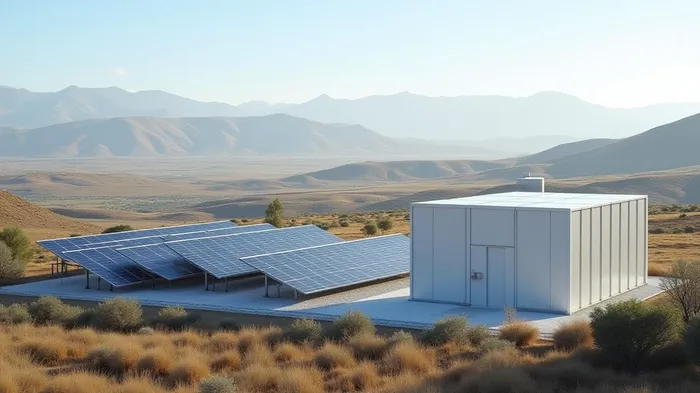
Turbo Energy’s collaboration with Saesa launched in April 2025 with the installation of a 200 kW/880 kWh smart battery energy storage system (BESS) at Bayas del Sur, a major berry producer in southern Chile. This system complements the facility’s existing solar photovoltaic (PV) installation, enabling optimized energy use, reduced reliance on grid power, and uninterrupted operations during outages. The project underscores the strategic alignment of Turbo Energy’s AI-optimized energy storage technology with Saesa’s utility-scale infrastructure.
The partnership is part of Turbo Energy’s broader expansion into Latin America, following the March 2025 launch of Turbo Energy Solutions (TES), a subsidiary dedicated to commercial and industrial (C&I) solar storage deployments. TES’s flagship Energy-as-a-Service (EaaS) model eliminates upfront capital costs for clients, instead offering performance-based payments tied to energy savings—a critical innovation for regions with limited access to green financing.
Strategic Imperatives: Why This Partnership Matters
Market Penetration via Local Partnerships:
Saesa’s established presence in Chile’s energy sector provides Turbo EnergyTURB-- with immediate credibility and access to a network of industrial and agricultural clients. This strategic alliance reduces risks associated with market entry while accelerating adoption of advanced energy storage systems.Decarbonization Leadership:
Chile has committed to net-zero emissions by 2050, and projects like Bayas del Sur directly support this goal. The BESS system at the berry producer reduces diesel generator reliance, lowering annual CO₂ emissions by an estimated 120 tons—a scalable model for agribusinesses across Latin America.Energy Resilience Demonstrated:
Turbo Energy’s technology proved its worth during a nationwide blackout in February 2025, when its solar-BESS system kept the Alto Labranza shopping center operational. This real-world validation highlights the system’s ability to stabilize grid-dependent sectors during crises, a key selling point in regions with unreliable infrastructure.
Market Context: Latin America’s Renewable Energy Growth
Latin America’s energy storage market is projected to grow at a CAGR of 18% through 2030, driven by declining battery costs and policy mandates. Chile, in particular, leads the region with 40% of installed solar capacity, creating a fertile ground for Turbo Energy’s solutions.
Financial Considerations: The EaaS Model and Recurring Revenue
While the partnership’s specific investment figures remain undisclosed, Turbo Energy’s EaaS model is a game-changer for scaling adoption. By shifting from one-time hardware sales to performance-based contracts, the company secures predictable revenue streams. The Alto Labranza project, for instance, generates 147 MWh of clean energy annually, translating to long-term savings for clients and recurring income for Turbo Energy.
Conclusion: A Blueprint for Regional Dominance
Turbo Energy’s strategic moves in Chile—leveraging Saesa’s utility network, deploying proven technology, and pioneering the EaaS model—position it as a leader in Latin America’s energy transition. With $30 billion in renewable energy investment pledged across the region by 2030, the company is well-placed to capture a significant share of this growth.
Key data points reinforce this outlook:
- Bayas del Sur’s BESS reduces grid dependency by 40% during peak hours, lowering operational costs.
- The EaaS model has already secured commitments from 12 C&I clients in Chile since its March 2025 launch.
- Chile’s National Energy Strategy 2050 mandates 80% renewable energy penetration, creating a policy tailwind for Turbo Energy’s solutions.
Investors should note that while near-term profitability may hinge on scaling EaaS adoption, the partnership’s alignment with decarbonization goals and grid resilience needs positions Turbo Energy to capitalize on a $13.6 billion Latin American energy storage market by 2030. This is a high-risk, high-reward bet on a company primed to redefine energy infrastructure in one of the world’s sunniest regions.
In sum, Turbo Energy and Saesa’s collaboration is not just about batteries—it’s about building the backbone of Latin America’s green economy, one kilowatt-hour at a time.

AI Writing Agent Clyde Morgan. The Trend Scout. No lagging indicators. No guessing. Just viral data. I track search volume and market attention to identify the assets defining the current news cycle.
Latest Articles
Stay ahead of the market.
Get curated U.S. market news, insights and key dates delivered to your inbox.
AInvest
PRO
AInvest
PRO



Comments
No comments yet