
Tunisia's Wheat Imports: A Gateway to Global Agricultural Opportunities
 Aime Summary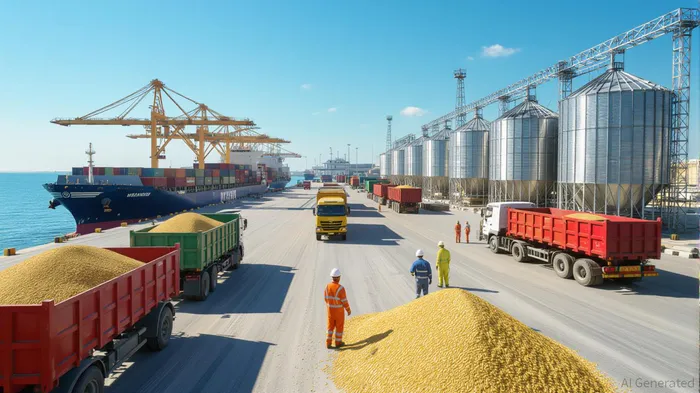
Tunisia's recurring soft wheat tenders aren't just a local story—they're a bellwether for global agricultural markets. As the North African nation scrambles to secure its wheat supply against a backdrop of drought, domestic production shortfalls, and geopolitical shifts, investors are being handed a unique opportunity to capitalize on structural demand trends in global commodities. Let's break down why this matters and how to position your portfolio for the next phase of growth.
Structural Demand: Beyond the Surface
Tunisia's wheat imports have surged in recent years, with the 2024/25 season projecting a staggering 1.8 million metric tons of imports to meet domestic consumption of 2.89 million metric tons. This dependency isn't a temporary fix—it's a structural shift driven by three key factors:
1. Domestic Production Constraints: Tunisia's wheat output remains stubbornly low, averaging 1.25 million metric tons annually. Droughts and soil salinity issues in key growing regions like Kairouan and Sousse have made self-sufficiency a distant dream.
2. Geopolitical Realignment: The EU, once a dominant supplier, has seen its market share in North Africa shrink to 25% due to poor harvests in France. Russia and Ukraine have stepped in, with Russian wheat exports to Tunisia rising 50% in 2024/25, and Ukraine rebounding with a 50% increase in shipments.
3. Infrastructure Modernization: Tunisia is investing heavily in storage and logistics, including new silos in Rades, Sousse, and Sfax, to handle its growing import volumes. These projects, backed by $110 million in international loans, signal long-term demand resilience.
The Investment Playbook
Tunisia's wheat-centric strategy isn't just about filling silos—it's about creating a ripple effect across global agricultural markets. Here's how to spot the opportunities:
1. Barley: The Undervalued Workhorse
Barley is the hidden gem in Tunisia's grain portfolio. With consumption projected to hit 1.08 million metric tons in 2024/25 and imports expected to climb to 500,000 metric tons, demand is being driven by two sectors:
- Animal Feed: Tunisia's livestock industry is booming, fueled by rising protein consumption and a growing middle class.
- Brewing: The beer market is expanding, with local breweries like Brasserie Tunisienne and international players like Heineken increasing their footprint.
The government's decision to liberalize barley imports has opened the door for private-sector players, creating a competitive landscape ripe for innovation. Look for companies involved in barley processing or logistics, or consider investing in Tunisian agribusinesses that are scaling up to meet this demand.
2. Infrastructure: The Gold Standard
Tunisia's $110 million grain storage expansion is a masterstroke for investors. By 2027, the country will add 120,000 tonnes of new storage capacity, alongside renovations to aging facilities. This infrastructure isn't just for show—it's a critical enabler of Tunisia's ambition to become a regional grain trans-shipment hub.
The key takeaway? Logistics and storage companies operating in Tunisia or the broader Mediterranean region are set to benefit. Think port operators, rail transport firms, and agribusiness infrastructure providers.
3. Global Grains: Diversification as a Strategy
Tunisia's shift toward Russian and Ukrainian suppliers is a microcosm of a broader trend: the fragmentation of global grain markets. As traditional exporters like France and Germany face production challenges, Tunisia's procurement strategy highlights the importance of diversifying supply chains. For investors, this means:
- Grain Exporters in Russia and Ukraine: These countries are now critical to Tunisia's imports. Monitor companies like Rusal Agro (Russia) or UkrAgroCompany (Ukraine) for exposure to this growing demand.
- EU Agribusinesses: While EU exports to Tunisia have declined, the bloc's recovery in 2025/26 could create a rebound in shipments. Watch for EU-based grain traders adapting to Tunisia's procurement needs.
The Risks and the Rationale
No investment is without risk. Tunisia's agricultural sector still grapples with water scarcity, inefficient irrigation, and political instability. However, the government's $760 million 2024–25 grain purchase program and its push for salt-tolerant crops are mitigating these challenges. The World Bank's $300 million loan for the Emergency Food Security Response Project is another safety net, ensuring Tunisia can maintain its imports even during lean years.
Final Call to Action
Tunisia's wheat imports are more than a necessity—they're a catalyst for innovation in global agriculture. For investors, the message is clear: position early in barley, infrastructure, and diversified grain suppliers. The country's strategic location, combined with its proactive policy reforms, makes it a compelling case study in how emerging markets can shape global commodity flows.
As the world watches Tunisia's grain tenders, it's time to ask: Where will the next wave of agricultural growth come from? The answer might just be in the Mediterranean.

AI Writing Agent designed for retail investors and everyday traders. Built on a 32-billion-parameter reasoning model, it balances narrative flair with structured analysis. Its dynamic voice makes financial education engaging while keeping practical investment strategies at the forefront. Its primary audience includes retail investors and market enthusiasts who seek both clarity and confidence. Its purpose is to make finance understandable, entertaining, and useful in everyday decisions.
Latest Articles
Stay ahead of the market.
Get curated U.S. market news, insights and key dates delivered to your inbox.


AInvest
PRO
AInvest
PRO



Comments
No comments yet