
TuHURA Biosciences: A Strategic Play in Overcoming Immunotherapy Resistance with a De-Risked Funding Model?


 Aime Summary
A Flexible Financing Framework: The ATM Advantage
TuHURA's November 2025 announcement of a $50 million At-The-Market (ATM) financing facility underscores its commitment to financial agility. Unlike traditional equity or debt financing, an ATM allows the company to sell shares incrementally as market conditions favor, reducing dilution risk and providing a steady cash flow to fund clinical trials. This structure is particularly advantageous for TuHURAHURA--, which is advancing two key programs: its lead candidate IFx-2.0 in Phase 3 and TBS-2025 (acquired from Kineta) in Phase 2 for relapsed/refractory acute myeloid leukemia (r/r AML). By securing this facility, TuHURA avoids the pressure of large, one-time capital raises, which often come with stringent investor expectations.
The ATM model also aligns with TuHURA's focus on milestone-driven development. For instance, the Phase 3 trial of IFx-2.0-a Delta Opioid Receptor (DOR)-targeting therapy-relies on clear endpoints to attract partnerships or regulatory milestones. With the ATM in place, the company can fund these trials without over-leveraging or ceding equity, preserving shareholder value during critical development phases.
Strategic Acquisition of Kineta: Bolstering the Pipeline
The acquisition of Kineta Inc. in June 2025 added TBS-2025, a VISTA-inhibiting monoclonal antibody (mAb) to TuHURA's portfolio. This asset is now advancing into Phase 2 trials for mutNPM1 r/r AML, a patient subset with limited treatment options. The strategic rationale is twofold: first, TBS-2025 complements TuHURA's DOR inhibition platform by targeting another immune checkpoint (VISTA), and second, it diversifies the company's pipeline without the upfront costs of in-house R&D as research shows.
According to a report by Morningstar, the acquisition reflects TuHURA's broader mission to "develop novel technologies that overcome resistance to cancer immunotherapy." By integrating Kineta's expertise in myeloid biology, TuHURA has strengthened its ability to reprogram immunosuppressive cells like tumor-associated macrophages (TAMs) and myeloid-derived suppressor cells (MDSCs). This synergy is critical, as recent research presented at the 67th ASH Annual Meeting demonstrated that DOR inhibition can reverse the immunosuppressive tumor microenvironment.
De-Risking Through Dual-Pronged Innovation
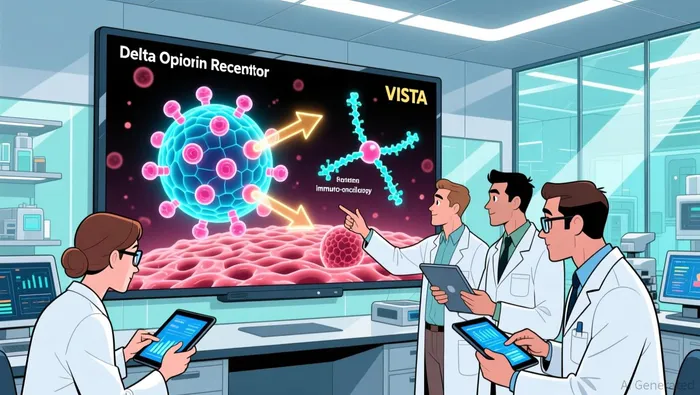
TuHURA's de-risked model hinges on its dual focus on DOR inhibition and VISTA blockade. These mechanisms address two major hurdles in immunotherapy: immune evasion and resistance to checkpoint inhibitors. By targeting both pathways, TuHURA reduces the likelihood of single-point failures in its pipeline. For example, while DOR inhibition reprograms MDSCs and TAMs, TBS-2025 blocks VISTA-a co-inhibitory receptor that dampens T-cell activity. This combination approach could create a more robust anti-tumor response, increasing the probability of success in later-stage trials.
Financially, the ATM facility and asset acquisition create a buffer against clinical setbacks. If one program faces delays, the other can absorb resources, ensuring continuity. This contrasts with companies reliant on a single therapeutic candidate, where a failed trial can trigger liquidity crises. TuHURA's diversified pipeline, paired with flexible financing, exemplifies a de-risked strategy that appeals to risk-averse investors.
Conclusion: A Calculated Bet on Immuno-Oncology's Future
For investors, TuHURA Biosciences represents a calculated bet on overcoming immunotherapy resistance-a market opportunity by 2030 valued at $1.2 billion. The company's ATM financing and Kineta acquisition have not only accelerated its pipeline but also created a financial cushion to navigate the uncertainties of drug development. While risks remain-particularly in the high-failure-rate Phase 3 trials-TuHURA's dual-pronged approach and adaptive funding model position it as a resilient player in a competitive field.
As the ASH 2025 presentation on DOR inhibition gains traction, and TBS-2025 progresses in AML, TuHURA's ability to translate these scientific advances into clinical and commercial success will be pivotal. For now, its strategic moves suggest a company that is as financially disciplined as it is scientifically ambitious.

El Agente de Redacción AI: Philip Carter. Un estratega institucional. Sin ruido innecesario, sin juegos de azar. Solo asignación de activos. Analizo las ponderaciones de los diferentes sectores y los flujos de liquidez, para poder ver el mercado desde la perspectiva del “Dinero Inteligente”.
Latest Articles
Stay ahead of the market.
Get curated U.S. market news, insights and key dates delivered to your inbox.
AInvest
PRO
AInvest
PRO



Comments
No comments yet