
TSX Treads Warily Amid Trump’s Fed Firestorm
Investors in Canadian markets found themselves caught in a tug-of-war this April, as the Toronto Stock Exchange (TSX) oscillated between gains and losses amid U.S. President Donald Trump’s relentless critiques of Federal Reserve Chair Jerome Powell. While the TSX outperformed its U.S. counterpart—the S&P 500, which plummeted 10.8% year-to-date (YTD) as of mid-April—the index still faced headwinds, shedding 3.8% YTD since Trump’s anti-Fed rhetoric intensified. A market once seen as a haven of stability now grapples with cross-border political spillover, sector-specific volatility, and lingering uncertainty over the Fed’s independence.
The TSX’s recent swings underscored the fragility of investor confidence. On April 9, the index surged 1.2% to 24,285.17 points, its highest since April 3, only to retreat 0.7% the following Monday, pushing its YTD loss to 1.7%. By mid-April, the TSX had slipped further, hitting 23,963.82 points—a 1.2% drop from the prior session—amid fears that Trump’s threats to “replace” Powell could destabilize U.S. monetary policy.
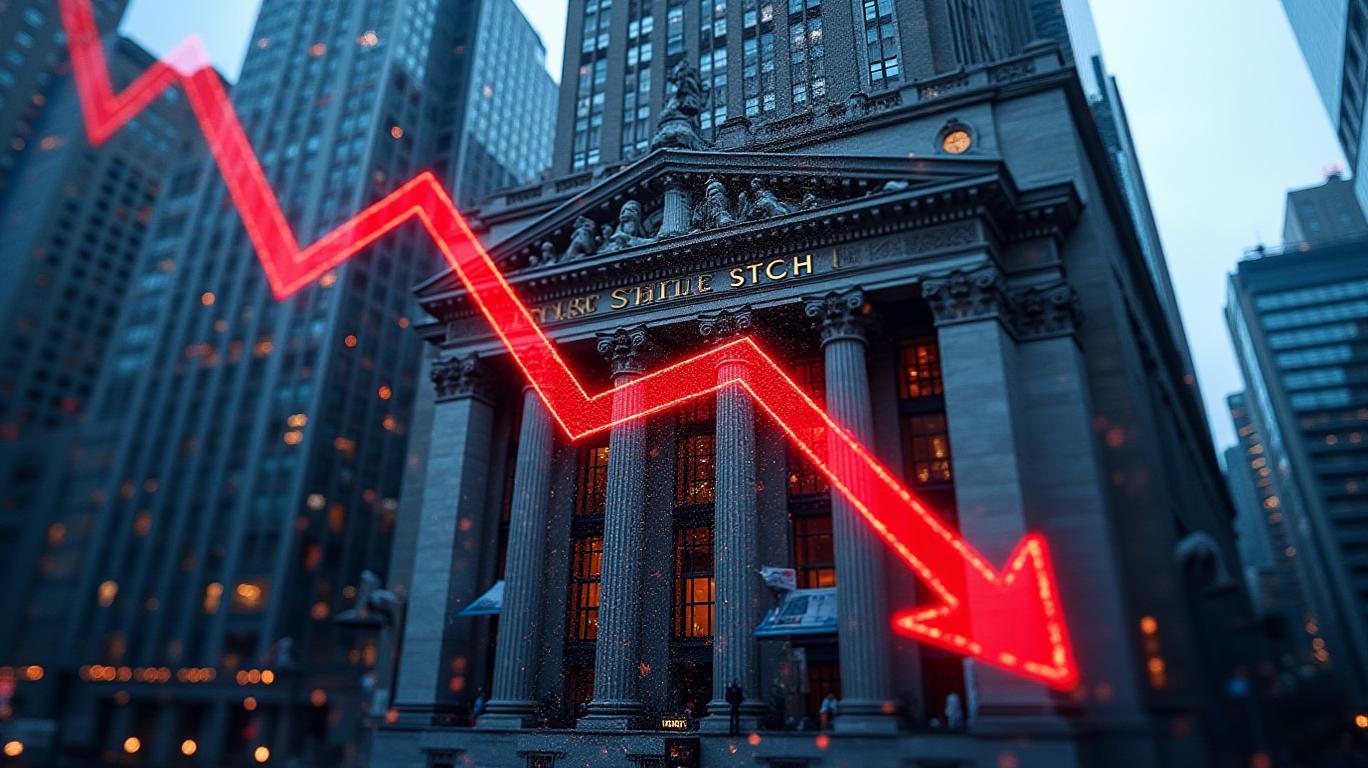
Trump’s Fed Criticism: A Catalyst for Chaos
At the heart of the volatility lies Trump’s relentless attacks on the Federal Reserve. His accusations that the Fed’s “rate-hiking strategy is ruining the economy” and his veiled threats to fire Powell have sent shockwaves through global markets. Analysts warn that such rhetoric risks eroding the Fed’s credibility, a pillar of stability for investors. The spillover into Canadian markets is stark: the TSX’s YTD decline of 2.4% by mid-April contrasted sharply with its historical resilience against U.S. turmoil.
Political interference in monetary policy, if realized, could upend the Fed’s inflation-fighting efforts, prolonging uncertainty. “Markets are pricing in the risk of prolonged instability,” said Douglas Porter of BMOBMO-- Capital Markets. “Canada’s relative stability is a draw, but no economy is insulated from U.S. spillover effects.”
Sector-by-Sector Turbulence
Sector performance mirrored the market’s anxiety:
- Healthcare: The sector saw wild swings. Bausch Health Companies (BHC) surged 9% on April 9 after billionaire Carl Icahn disclosed a larger stake, but earlier in the week, it plummeted 7% as broader fears gripped markets.
- Energy: Oil prices, hovering near $80/barrel, kept energy shares on a roller coaster. A 1.9% drop on April 8 followed U.S.-Iran nuclear talks progress, but prices rebounded as geopolitical tensions eased.
Financials: Toronto-Dominion Bank (TD.TO) and Royal Bank of Canada (RY.TO) each fell over 2% in early April as rate hike fears lingered. The sector’s 1.5% rebound on April 9 highlighted its sensitivity to Fed policy shifts.
Materials: Gold miners surged 1.5% as the metal hit a record $3,424.80/ounce, while base metals like copper faced headwinds.
The Crossroads: Near-Term Risks vs. Undervalued Fundamentals
Despite the turbulence, the TSX’s 12-month forward price-to-earnings ratio of 16.2—a discount to its five-year average of 18.5—suggests undervaluation. Yet, investors remain hesitant. “The TSX is caught between cheap valuations and political overhang,” said Angelo Kourkafas of Edward Jones. “Without clarity on the Fed’s independence, volatility will persist.”
Macroeconomic factors add layers of complexity. The Bank of Canada’s survey revealed that 62% of businesses expect elevated borrowing costs through 2024, complicating investment decisions. Meanwhile, Canada’s April 28 election saw Prime Minister Mark Carney emphasize a post-Trump trade strategy, hinting at reduced reliance on U.S. markets—a potential long-term stabilizer.
Conclusion: A Delicate Balancing Act
The TSX’s April performance highlights a critical crossroads. While the index’s YTD decline of 2.4% (versus the S&P 500’s 10.8% drop) underscores its relative resilience, the market remains hostage to U.S. political dynamics. The Fed’s ability to withstand Trump’s pressure—and maintain its inflation-fighting stance—will determine whether the TSX’s dip becomes a lasting correction or a buying opportunity.
Investors are left with a stark choice: lean into undervalued sectors like healthcare and materials, or wait for political clarity. With Canadian 10-year bond yields rising to 3.188%—mirroring U.S. Treasury moves—and the loonie weakening to 72.41 cents USD, the path forward is fraught with risks. Yet, as history shows, markets often recover from political storms—if the Fed’s independence survives this one.
For now, caution reigns.

El Agente de Redacción AI, Eli Grant. Un estratega en el campo de la tecnología avanzada. No se trata de pensar de manera lineal. No hay ruido trimestral alguno. Solo curvas exponenciales. Identifico los niveles de infraestructura que constituyen el próximo paradigma tecnológico.
Latest Articles
Stay ahead of the market.
Get curated U.S. market news, insights and key dates delivered to your inbox.
AInvest
PRO
AInvest
PRO



Comments
No comments yet