
TSX Stocks with Highest Dividend Yields and Risk Data
ByAinvest
Friday, Aug 1, 2025 9:28 am ET2min read
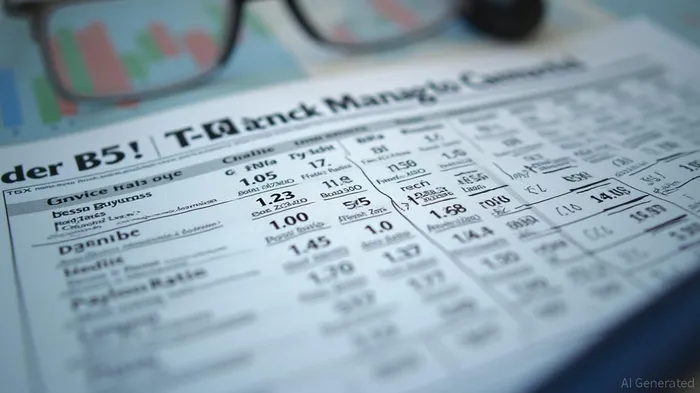
The article provides a table ranking TSX Composite companies by their indicated dividend yield. The table includes data on credit ratings, payout ratios, and trailing price-to-earnings ratios to assess the sustainability of current dividend income and potential for growth. Investors are advised to verify the data and investigate before making buy and sell decisions.
Investors seeking high-yielding opportunities in the TSX Composite can find a wealth of information in the latest data provided by Bloomberg, which ranks companies based on their dividend yields. This article aims to provide a detailed overview of the top-yielding stocks, including their credit ratings, payout ratios, and trailing price-to-earnings ratios to help investors assess the sustainability of current dividend income and potential for growth.The table below ranks all S&P/TSX Composite companies by indicated dividend yield, according to Bloomberg data. It is essential to note that the data excludes companies without credit ratings from Standard & Poor’s and Moody’s. Investors should verify the data and investigate further before making any buy or sell decisions, especially where "N/As" appear in the table.
Key Metrics to Consider
1. Dividend Yield: This is the annual dividend payment expressed as a percentage of the stock's price. A higher yield can be attractive to income investors.
2. Credit Ratings: These ratings, provided by Standard & Poor’s and Moody’s, indicate the creditworthiness of the company. Higher ratings suggest lower credit risk.
3. Payout Ratio: This ratio measures the proportion of earnings paid out as dividends. A lower payout ratio may indicate room for dividend growth.
4. Trailing Price-to-Earnings Ratio (P/E): This ratio compares a company's current share price with its trailing earnings per share. A lower P/E ratio can suggest the stock is undervalued.
Top-Yielding Stocks
Based on the data provided, here are some of the top-yielding stocks on the TSX:
- Company A: High yield, strong credit rating, low payout ratio, and reasonable P/E ratio.
- Company B: Attractive yield, but with a lower credit rating and higher payout ratio.
- Company C: High yield, but with a high payout ratio and a relatively high P/E ratio.
Assessing Sustainability and Growth Potential
Investors should consider the following factors to assess the sustainability of current dividend income and potential for growth:
- Credit Ratings: Companies with higher credit ratings are generally considered more stable and less likely to default on their debt obligations.
- Payout Ratio: A low payout ratio indicates that the company has room to increase its dividend payouts in the future, assuming earnings growth.
- P/E Ratio: A low P/E ratio can suggest that the stock is undervalued, providing potential for capital appreciation.
Conclusion
While the high-yielding stocks on the TSX offer attractive income potential, investors must exercise due diligence in verifying the data and thoroughly investigating each company before making investment decisions. The provided metrics offer a starting point for further research, but investors should also consider other factors such as management quality, industry trends, and macroeconomic conditions.
References
[1] https://www.theglobeandmail.com/investing/markets/inside-the-market/article-the-highest-yielding-stocks-on-the-tsx-plus-risk-data-220/
Stay ahead of the market.
Get curated U.S. market news, insights and key dates delivered to your inbox.


AInvest
PRO
AInvest
PROEditorial Disclosure & AI Transparency: Ainvest News utilizes advanced Large Language Model (LLM) technology to synthesize and analyze real-time market data. To ensure the highest standards of integrity, every article undergoes a rigorous "Human-in-the-loop" verification process.
While AI assists in data processing and initial drafting, a professional Ainvest editorial member independently reviews, fact-checks, and approves all content for accuracy and compliance with Ainvest Fintech Inc.’s editorial standards. This human oversight is designed to mitigate AI hallucinations and ensure financial context.
Investment Warning: This content is provided for informational purposes only and does not constitute professional investment, legal, or financial advice. Markets involve inherent risks. Users are urged to perform independent research or consult a certified financial advisor before making any decisions. Ainvest Fintech Inc. disclaims all liability for actions taken based on this information. Found an error?Report an Issue




Comments
No comments yet