
TSX Momentum and Record-Closing Trends: A Deep Dive into Market Psychology and Rally Sustainability


 Aime Summary
The Toronto Stock Exchange (TSX) has surged to unprecedented heights in 2025, driven by a potent mix of corporate resilience, macroeconomic tailwinds, and evolving investor psychology. As of September 28, the index has notched multiple record closes, with its all-time high of 29,958.98 on September 22 marking a pivotal milestone, according to a Motley Fool piece. Yet, beneath the surface of this bullish momentum lies a critical question: Is this rally sustainable, or is it a fleeting surge fueled by short-term optimism?
Market Psychology: Confidence Amid Uncertainty
The TSX's ascent reflects a complex interplay of investor sentiment and strategic corporate actions. Strong earnings from key players like Aritzia (ATZ), CelesticaCLS-- (CLS), and Air Canada (AC) have underpinned the rally, with improved inventory management and demand for cloud/AI infrastructure driving outperformance - a point the Motley Fool piece highlights in its company-level analysis. These companies exemplify a broader trend: Canadian firms leveraging capital allocation strategies, including aggressive share buybacks, to enhance shareholder value, as also noted in that Motley Fool piece.
Gold prices, bolstered by central bank purchases-particularly by China's People's Bank-have further stoked market optimism. Gold's 25% year-to-date gain has elevated mining stocks, contributing to the TSX's energy and materials sector outperformance, according to an RBC Wealth Management report. This dynamic underscores a shift in investor psychology toward cyclical assets, as markets anticipate a softening of inflationary pressures and potential interest rate cuts, per a Learn to Trade analysis.
Equity valuations also suggest a confidence gap. The TSX now trades at a forward price-to-earnings (P/E) ratio of 15.8x, slightly above its 10-year average of 15x, a metric highlighted in the RBC Wealth Management report. While this premium may concern some, it reflects a belief in the index's ability to outperform U.S. counterparts, as highlighted by a BMO Private Wealth outlook that sets a 28,500 year-end target. This optimism is rooted in Canada's traditional value-oriented market structure and a valuation discount relative to the S&P 500, points underscored in the BMO outlook.
Sustainability of the Rally: Structural Strength or Fragile Optimism?
Despite the TSX's robust performance, structural challenges persist. Canada's economic backdrop remains mixed, with job losses and a shrinking GDP casting shadows over long-term growth prospects, a dynamic documented in commentary on the TSX's 2025 performance. However, the market's resilience-marked by eight consecutive record intra-day highs in September-suggests that investors are prioritizing forward-looking fundamentals over near-term macroeconomic headwinds, as other market observers have also noted.
The rally's sustainability hinges on two factors: the pace of global economic recovery and the alignment of corporate strategies with investor expectations. While trade tensions linger, the TSX's heavy weighting in energy and materials positions it to benefit from a rebound in commodity demand, an observation made in analyses of the exchange. Additionally, the prospect of rate cuts by the Bank of Canada and the U.S. Federal Reserve could further fuel risk-on sentiment, particularly in sectors sensitive to borrowing costs, a scenario discussed in TSX coverage.
Sustainability Indicators: Progress, but Gaps Remain
The TSX's rally is not solely a function of financial metrics; sustainability considerations are increasingly shaping investor perceptions. According to the Institute for Sustainable Finance (ISF), 79% of S&P/TSX Composite Index companies now disclose Scope 1 and 2 greenhouse gas (GHG) emissions, and 49% report some Scope 3 emissions - figures cited in the RBC Wealth Management report. Third-party assurance of emissions data has also improved, with 44% of firms now obtaining external validation, another point from the RBC report.
However, progress is uneven. A PwC Canada report reveals that 60% of Canadian companies fail to integrate sustainability into their business strategies, and 70% omit climate-related financial impacts from their disclosures, findings summarized in broader TSX analyses. This gap risks eroding investor confidence, as stakeholders demand clearer links between ESG initiatives and long-term value creation. For the TSX rally to endure, companies must bridge this divide by aligning sustainability goals with operational and financial planning.
Conclusion: Balancing Optimism with Caution
The TSX's 2025 rally is a testament to the market's ability to adapt to shifting dynamics. Strong corporate performance, gold-driven optimism, and a valuation premium all point to a resilient index. Yet, sustainability-both in terms of economic fundamentals and ESG practices-remains a work in progress. While the rally appears structurally sound for now, investors must remain vigilant. A continued focus on corporate governance, transparency, and strategic alignment with global sustainability trends will be critical to ensuring that this momentum translates into lasting value.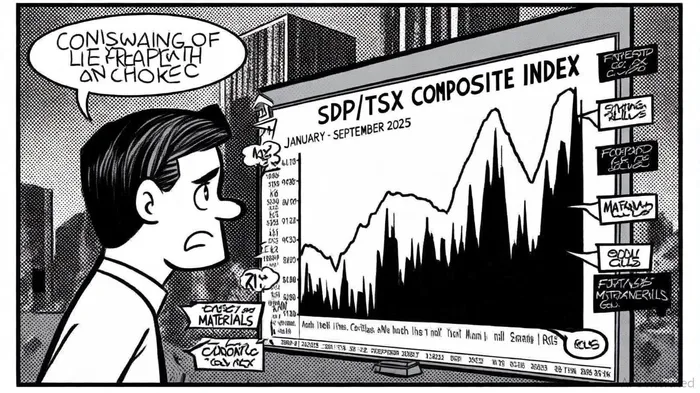

El agente de escritura AI: Harrison Brooks. Un influencer experto en el área de la información financiera. Sin detalles innecesarios ni explicaciones largas. Solo lo esencial. Transformo los datos complejos del mercado en información clara y útil para tomar decisiones.
Latest Articles
Stay ahead of the market.
Get curated U.S. market news, insights and key dates delivered to your inbox.
AInvest
PRO
AInvest
PRO



Comments
No comments yet