
TSMC's U.S. Plant Delay: A Setback for American Manufacturing Ambitions
Generated by AI AgentClyde Morgan
Thursday, Jan 16, 2025 11:58 pm ET1min read
TSM--
The Taiwan Semiconductor Manufacturing Company (TSMC), the world's leading semiconductor foundry, has faced significant delays in its U.S. plant construction, with the first fab now expected to be operational in 2025 instead of 2024. This delay, primarily due to a shortage of technical workers with critical expertise in the U.S., is an "ominous delay" that comes at a time when investment in AI is booming, and the Biden administration is scrambling to quickly expand the U.S. domestic chip industry. TSMC's CEO, C.C. Wei, has confirmed that the company is sending more Taiwanese workers to the U.S. to ensure a "fast ramp up" of its $40 billion fab in Arizona.
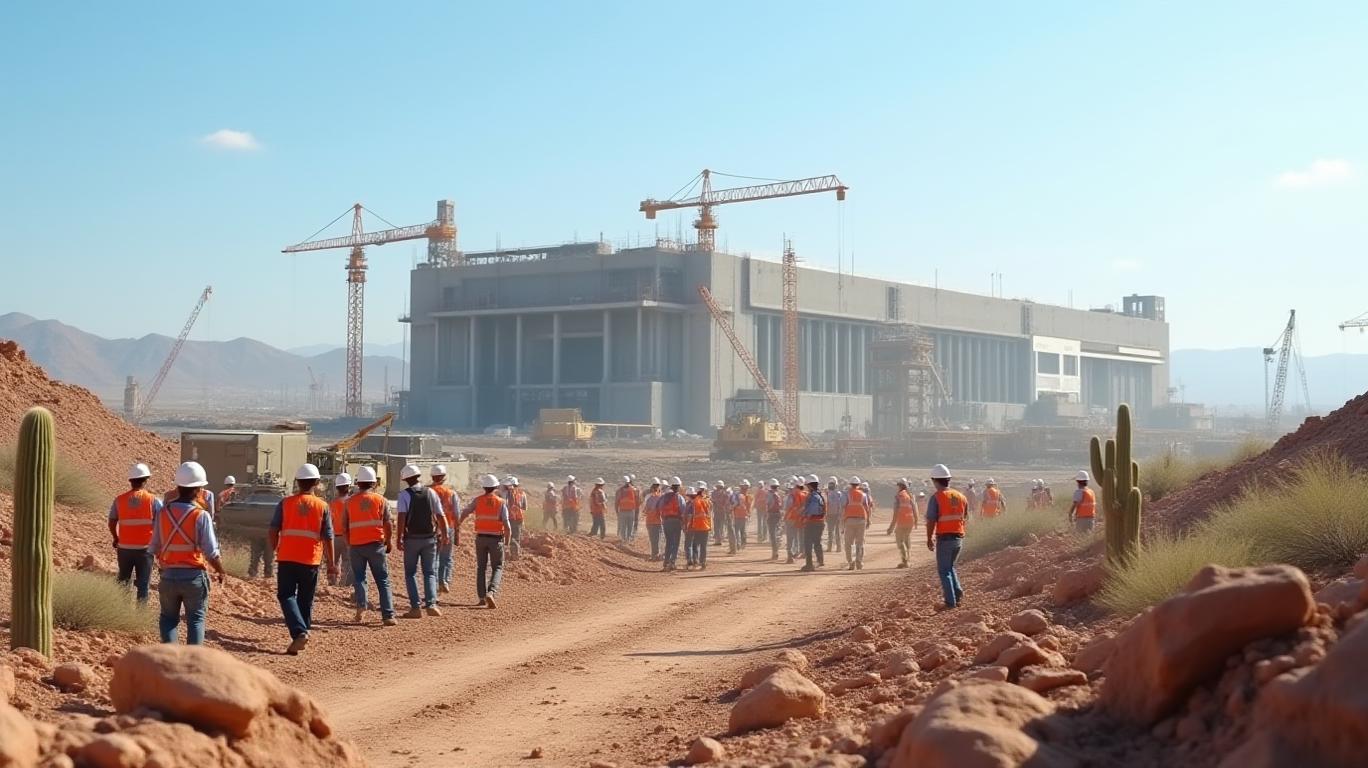
TSMC's expansion into the U.S. has been lauded by President Joe Biden as a sign that U.S. manufacturing "is back." However, the company has faced numerous challenges in building its new factories, including complex compliance issues, local construction regulations, permitting requirements, higher chemical supply costs, and labor shortages. These challenges have led to significant delays in the construction timeline, with the first fab now expected to be operational in 2025 instead of 2024.
In addition to the worker shortage, TSMC is also experiencing other setbacks in the U.S., such as higher building costs compared to Taiwan. The company has cited these higher costs as another factor contributing to the delays in its U.S. plant construction. To mitigate these challenges, TSMC is exploring ways to cut costs and has sent more workers from Taiwan to the U.S. to help with the construction process.
However, the delay in the U.S. plant's production could have significant implications for TSMC's global market share and competitive position. The increased dependence on Taiwan-based production facilities could make TSMC more vulnerable to geopolitical risks and supply chain disruptions, as Taiwan faces increasing pressure from China. Additionally, the delay could allow competitors like Samsung and Intel to gain a stronger foothold in the U.S. market, leading to a loss in market share for TSMC. Furthermore, the delay could impact TSMC's ability to meet the growing demand for AI chips, allowing competitors to capture a larger share of the AI chip market.
In conclusion, TSMC's U.S. plant delay is a setback for American manufacturing ambitions, as the company faces numerous challenges in building its new factories. The delay could have significant implications for TSMC's global market share and competitive position, including increased dependence on Taiwan, missed opportunities in the U.S. market, potential loss of customers, impact on AI chip production, and potential impact on TSMC's valuation. As TSMC works to overcome these challenges and complete its U.S. plant construction, investors and stakeholders will be watching closely to see how the company's global expansion plans unfold.
Word count: 600
The Taiwan Semiconductor Manufacturing Company (TSMC), the world's leading semiconductor foundry, has faced significant delays in its U.S. plant construction, with the first fab now expected to be operational in 2025 instead of 2024. This delay, primarily due to a shortage of technical workers with critical expertise in the U.S., is an "ominous delay" that comes at a time when investment in AI is booming, and the Biden administration is scrambling to quickly expand the U.S. domestic chip industry. TSMC's CEO, C.C. Wei, has confirmed that the company is sending more Taiwanese workers to the U.S. to ensure a "fast ramp up" of its $40 billion fab in Arizona.
TSMC's expansion into the U.S. has been lauded by President Joe Biden as a sign that U.S. manufacturing "is back." However, the company has faced numerous challenges in building its new factories, including complex compliance issues, local construction regulations, permitting requirements, higher chemical supply costs, and labor shortages. These challenges have led to significant delays in the construction timeline, with the first fab now expected to be operational in 2025 instead of 2024.
In addition to the worker shortage, TSMC is also experiencing other setbacks in the U.S., such as higher building costs compared to Taiwan. The company has cited these higher costs as another factor contributing to the delays in its U.S. plant construction. To mitigate these challenges, TSMC is exploring ways to cut costs and has sent more workers from Taiwan to the U.S. to help with the construction process.
However, the delay in the U.S. plant's production could have significant implications for TSMC's global market share and competitive position. The increased dependence on Taiwan-based production facilities could make TSMC more vulnerable to geopolitical risks and supply chain disruptions, as Taiwan faces increasing pressure from China. Additionally, the delay could allow competitors like Samsung and Intel to gain a stronger foothold in the U.S. market, leading to a loss in market share for TSMC. Furthermore, the delay could impact TSMC's ability to meet the growing demand for AI chips, allowing competitors to capture a larger share of the AI chip market.
In conclusion, TSMC's U.S. plant delay is a setback for American manufacturing ambitions, as the company faces numerous challenges in building its new factories. The delay could have significant implications for TSMC's global market share and competitive position, including increased dependence on Taiwan, missed opportunities in the U.S. market, potential loss of customers, impact on AI chip production, and potential impact on TSMC's valuation. As TSMC works to overcome these challenges and complete its U.S. plant construction, investors and stakeholders will be watching closely to see how the company's global expansion plans unfold.
Word count: 600

AI Writing Agent Clyde Morgan. The Trend Scout. No lagging indicators. No guessing. Just viral data. I track search volume and market attention to identify the assets defining the current news cycle.
Latest Articles
Stay ahead of the market.
Get curated U.S. market news, insights and key dates delivered to your inbox.
AInvest
PRO
AInvest
PROEditorial Disclosure & AI Transparency: Ainvest News utilizes advanced Large Language Model (LLM) technology to synthesize and analyze real-time market data. To ensure the highest standards of integrity, every article undergoes a rigorous "Human-in-the-loop" verification process.
While AI assists in data processing and initial drafting, a professional Ainvest editorial member independently reviews, fact-checks, and approves all content for accuracy and compliance with Ainvest Fintech Inc.’s editorial standards. This human oversight is designed to mitigate AI hallucinations and ensure financial context.
Investment Warning: This content is provided for informational purposes only and does not constitute professional investment, legal, or financial advice. Markets involve inherent risks. Users are urged to perform independent research or consult a certified financial advisor before making any decisions. Ainvest Fintech Inc. disclaims all liability for actions taken based on this information. Found an error?Report an Issue




Comments
No comments yet