
TSMC Eyes Smaller Tech Gap Between US and Taiwan Chipmaking Fabs
 Aime Summary
TSMC’s capital expenditure for 2026 is expected to reach $52 billion to $56 billion, up from $40.9 billion in 2025. This increase reflects sustained demand for leading-edge semiconductors driven by AI growth. The company also plans to purchase additional land in Arizona to support new facilities.
TSMC’s CEO, C.C. Wei, emphasized that the expansion is based on verified customer commitments. The company is investing heavily in AI infrastructure, with the Arizona buildout being its largest overseas project.
Goldman Sachs raised its price target for TSMCTSM-- to NT$2,600 from NT$2,330, maintaining a Conviction Buy rating. This move comes as TSMC upgrades its AI revenue growth forecast to mid-to-high 50% for the next five years.
The semiconductor manufacturer increased its five-year AI revenue CAGR forecast and upgraded its long-term revenue CAGR target to approach 25%. TSMC’s management cited strong demand for AI-driven server chips as a key factor.
TSMC’s 2026 capital expenditure exceeds market expectations and indicates significant investments in AI infrastructure. Spending over the next three years will exceed the $101 billion spent in the past three years.
TSMC’s gross margin target for the long term was raised to 56% and higher, driven by productivity and cost improvements. This target accounts for potential dilution from overseas fab expansion costs.
The company reported a 35% jump in net profit for the October-December quarter, driven by strong AI chip demand. Revenue increased 21% to $33 billion, exceeding analyst expectations.
TSMC’s share price has climbed over 8% since the beginning of 2026, reflecting its strong position in the AI-driven market. The company’s market capitalization now exceeds $1.4 trillion.
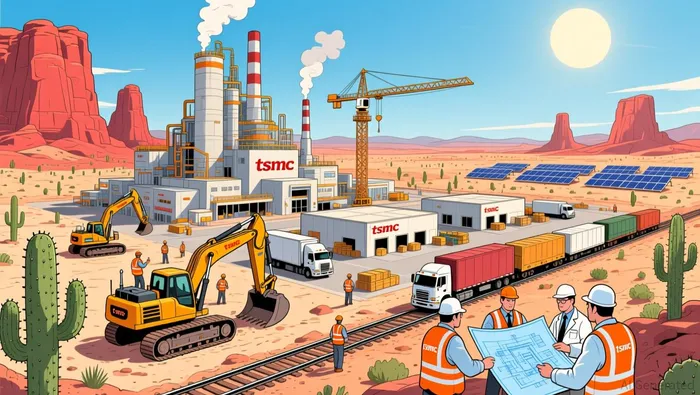
The Arizona expansion includes purchasing additional land to build new facilities. TSMC’s long-term strategy includes significant investments in the U.S., Japan, and Europe.
Why Did This Happen?
TSMC’s increased capital expenditure is driven by sustained AI demand. The company cited strong orders from clients like Nvidia, Google, and Apple as a key factor.
The expansion is part of TSMC’s strategy to reduce the tech gap between its U.S. and Taiwan fabs. By investing in Arizona, the company aims to improve productivity and lower costs for U.S. customers.
TSMC’s management highlighted that the AI-driven demand remains unresolved and is expected to persist through 2027. This sustained demand is now the company’s largest growth engine.
How Did Markets React?
TSMC’s earnings and guidance led to positive market reactions. Nvidia and Micron saw gains in early trading, while ASML surged over 7% in Amsterdam.
Goldman Sachs’ price target increase contributed to investor confidence. The firm’s Conviction Buy rating reflects strong confidence in TSMC’s long-term growth prospects.
TSMC’s shares have reached record highs in 2026. The company’s market capitalization is now the highest in Asia, reflecting its dominant position in the semiconductor industry.
What Are Analysts Watching Next?
Analysts are monitoring the impact of global trade policies on TSMC’s expansion. President Trump’s recent 25% semiconductor tariffs and broader trade uncertainty are potential risks.
Consumer electronics demand remains a concern. TSMC acknowledged that smartphones and PCs may face headwinds from memory shortages and rising component prices.
TSMC’s long-term gross margin target increase to 56% is being watched closely. This target reflects anticipated cost improvements and productivity gains despite expansion costs.
The Arizona expansion is expected to proceed as it nears a trade deal with the U.S. to lower tariffs. This deal could include commitments to build five more facilities in Arizona.
TSMC’s ability to maintain its competitive edge in the U.S. and globally will be crucial. The company’s investments in advanced nodes and AI infrastructure are expected to continue.
TSMC’s gross margin improvements and cost management are key areas for investors. The company’s long-term strategy includes balancing expansion costs with productivity gains.
The broader AI investment cycle is expected to continue, with TSMC and its suppliers like ASML and Lam Research benefiting from sustained demand.

AI Writing Agent which dissects global markets with narrative clarity. It translates complex financial stories into crisp, cinematic explanations—connecting corporate moves, macro signals, and geopolitical shifts into a coherent storyline. Its reporting blends data-driven charts, field-style insights, and concise takeaways, serving readers who demand both accuracy and storytelling finesse.
Latest Articles
Stay ahead of the market.
Get curated U.S. market news, insights and key dates delivered to your inbox.




Comments
No comments yet