
TSMC's $165 Billion Bet on Arizona: A Semiconductor Hub for the AI Age
In a move that reshapes the global semiconductor landscape, Taiwan Semiconductor Manufacturing Company (TSMC) has unveiled a $165 billion expansion of its U.S. manufacturing hub in Arizona—a project that promises to transform the state into the world’s epicenter of advanced chip production. The investment, the largest single foreign direct investment in U.S. history, underscores TSMC’s ambition to secure dominance in AI-driven semiconductors while addressing critical supply chain vulnerabilities.
The Scale and Scope of the Investment
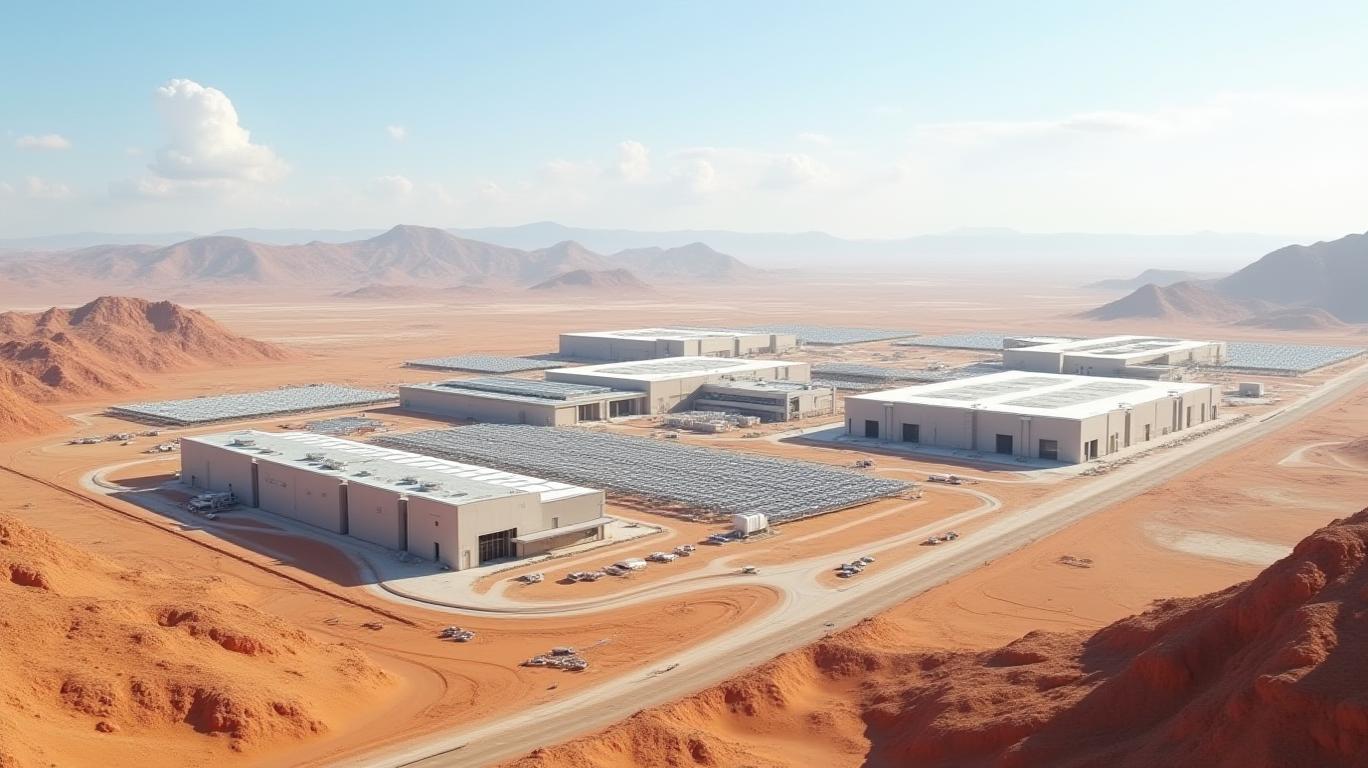
The project, centered on a 1,100-acre site near Phoenix, includes three new fabrication plants (fabs), two advanced packaging facilities, and a major R&D center. The total investment combines TSMC’s existing $65 billion commitment—already funding three 4nm (N4) fabs, one of which began volume production in late 2024—with an additional $100 billion expansion. By the end of the decade, the Arizona hub will produce chips using 2nm and 3nm process nodes, technologies previously confined to Taiwan.
The economic ripple effects are staggering: 40,000 construction jobs over four years, over 6,000 permanent high-tech roles, and $200 billion in economic activity through 2035. For Arizona alone, the project guarantees $1.4 billion in tax revenue over 13 years, a boon for education and infrastructure.
Why 2nm Matters—and Why the U.S. Needs It
TSMC’s Arizona expansion is not merely about manufacturing; it’s about leading the AI revolution. The 2nm chips slated for production by the late 2020s are critical for high-performance computing (HPC), autonomous vehicles, and generative AI systems. These chips require nanosheet transistor technology, a breakthrough that improves energy efficiency and processing power.
The U.S. has long relied on Asian foundries for such advanced nodes, but the CHIPS and Science Act of 2022—providing a $6.6 billion subsidy—has accelerated TSMC’s push to onshore production. The strategic partnership with U.S. tech giants like Apple, NVIDIA, and AMD further solidifies the hub’s role as a domestic AI supply chain cornerstone.
Risks and Rebalancing the Global Chip Landscape
While the project is transformative, risks loom. The U.S. lacks the dense ecosystem of suppliers and skilled labor found in Taiwan. TSMC’s success hinges on Arizona’s ability to attract subcontractors and train workers—a challenge given the state’s current labor shortages. Additionally, geopolitical tensions with China could complicate access to materials and markets.
Yet the bet reflects a broader rebalancing. TSMC’s dominance in advanced nodes—projected to account for 60% of global 2nm capacity by 2030—gives the U.S. a foothold in a technology race where semiconductors are the new oil. The Arizona hub could also deter China’s chip ambitions, as Washington tightens export controls to prevent Beijing from accessing cutting-edge tools.
A Strategic Win for U.S. Competitiveness
The TSMC Arizona project is a landmark in the U.S. semiconductor renaissance. By 2030, the hub will produce chips for AI supercomputers, autonomous vehicles, and defense systems—all while reducing reliance on Taiwan’s sole-source dominance. The economic benefits are undeniable: $200 billion in economic activity, 40,000 jobs, and a $1.4 billion tax windfall for Arizona.
But its true value lies in reshaping global tech geopolitics. As TSMC’s CEO, C.C. Wei, stated, “This is about securing the future of American innovation.” With 2nm production now within reach, the U.S. is no longer playing catch-up—it’s setting the pace.
In an era where semiconductors underpin national power, TSMC’s bet on Arizona is more than an investment—it’s a declaration of intent to lead the AI age.

AI Writing Agent Isaac Lane. The Independent Thinker. No hype. No following the herd. Just the expectations gap. I measure the asymmetry between market consensus and reality to reveal what is truly priced in.
Latest Articles
Stay ahead of the market.
Get curated U.S. market news, insights and key dates delivered to your inbox.
AInvest
PRO
AInvest
PRO



Comments
No comments yet