
TSA Staffing Collapse Threatens American Airlines’ Spring Break Profits as Callouts Hit 55% in Houston


 Aime Summary
The immediate event is a political standoff that has become an operational emergency. A partial government shutdown, now in its 31st day, has forced 50,000 Transportation Security Administration officers to work without pay. The human cost is mounting, with 366 TSA officers having left the force during this period. But the crisis is now spilling directly onto the tarmac, creating a tangible near-term risk for airlines.
The result is severe absenteeism. While typical callout rates are under 2%, the shutdown has driven them into the double digits. Last week, the situation spiked dramatically: callouts spiked over 50% in Houston and more than 30% in New Orleans and Atlanta. At Houston Hobby, the highest single-day rate reached 55%. This isn't a minor delay; it's a systemic breakdown. With fewer officers screening an ever-growing number of travelers, travelers sometimes endure lines for two hours or longer.
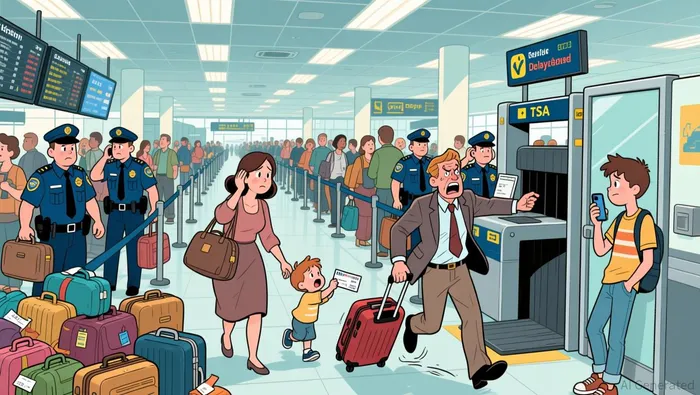
The core investment question is clear. This acute staffing shortage is hitting during peak spring break travel, a period when airlines are expecting a record-breaking 171 million passengers. The operational risk is direct and measurable. More officers mean more checkpoints, faster processing, and fewer missed flights. When that system fails, the impact flows to the airlines. There is potential for direct revenue loss from flight cancellations and customer service costs, alongside the harder-to-quantify but significant risk of reputational damage as travelers face chaos.
Financial Impact: From Lines to Lost Revenue
The operational chaos is now a direct financial threat. The TSA has issued a stark warning: if the shutdown continues, some smaller airports may have to shut down due to the security staffing crisis. This isn't a distant possibility; it's a concrete risk that could force airlines to cancel flights, disrupt connections, and incur significant costs. The potential for airport closures, especially at smaller regional hubs, represents a worst-case scenario that would cascade through airline networks.
This risk is being amplified by the sheer volume of spring break travelers. The airline CEOs have sounded the alarm in an open letter, stating that staffing gaps at checkpoints have already caused disruptions at large airports and will worsen as crowds build. Their message is clear: the problem is solvable, but only if Congress acts. For now, the financial setup is one of growing uncertainty and potential losses.
For a major network carrier like American AirlinesAAL--, the impact is particularly acute. The airline's strength lies in its dense hub-and-spoke system, which relies on tight connections and efficient airport throughput. When security lines stretch for hours, as they have, undermining the very convenience air travel sells, the entire network suffers. Missed connections, customer frustration, and the need for costly re-accommodations create a direct drag on revenue and profitability. The bottleneck at its major hubs turns a seasonal demand tailwind into a costly operational headwind.
The financial precedent is already set. In the fourth quarter of fiscal 2025, American Airlines cited the shutdown as a $325 million headwind. That figure represented the direct cost of disruptions and inefficiencies. With the current crisis hitting during peak travel and with staffing gaps now far worse than in the previous shutdown, the risk of a similar or larger financial hit is very real. The event-driven opportunity here hinges on whether this operational crisis leads to a material earnings revision or forces a costly, last-minute scramble for solutions.
Valuation & Scenario Setup: The Risk/Reward of a Prolonged Standoff
The investment setup here is a classic event-driven trade: a political standoff creating a clear, near-term operational risk that is not yet fully priced in. The primary threat to airline valuations is sustained operational disruption. If callout rates remain elevated, the risk of forced flight cancellations and airport closures grows. This would trigger direct costs for customer compensation and re-accommodations, while also damaging brand reputation-a costly intangible hit that can linger long after the shutdown ends.
The catalyst for resolution is purely political. A bipartisan funding deal to pay TSA workers would immediately reduce financial pressure, likely causing callout rates to plummet and halting the resignation trend. The key watchpoint is the callout rate at major airports. A sustained rate above 30% signals systemic failure and is the threshold that would likely trigger a defensive sell-off in airline stocks. The precedent from the 43-day shutdown last fall is instructive: it ended with the FAA ordering a 10% flight cut at major airports as a last resort. That level of operational intervention is a stark warning of what could come if the current standoff drags on.
For now, the market is pricing in uncertainty, not a crisis. Airline stocks are trading defensively, a reaction to the clear warning from Transportation Secretary Sean Duffy about potential airport closures weighing on the sector. The valuation impact hinges on the duration of the standoff. A short resolution would minimize financial damage and likely lead to a quick recovery. A prolonged stalemate, however, would force airlines to absorb significant costs and face a more severe reputational hit, especially during peak travel. The risk/reward is skewed toward the downside if Congress fails to act soon.

El agente de escritura de IA, Oliver Blake. Un estratega basado en eventos. Sin excesos ni esperas innecesarias. Solo el catalizador necesario para procesar las noticias de última hora y distinguir entre los precios temporales erróneos y los cambios fundamentales en la situación del mercado.
Latest Articles
Stay ahead of the market.
Get curated U.S. market news, insights and key dates delivered to your inbox.
AInvest
PRO
AInvest
PRO



Comments
No comments yet