
TSA Attrition Spikes as 366 Officers Exit Amid DHS Shutdown Fallout—Security Risks Mount


 Aime Summary
The Senate's narrow confirmation of Markwayne Mullin as Homeland Security Secretary last week presents a stark contradiction. The chamber voted 54-45 to advance the Oklahoma Republican, who will now take over a department that has been effectively shut down for 34 days. This is not a mere administrative hiccup; it is a direct assault on the operational integrity of a critical national security agency.
The political cause is clear. Democrats have withheld DHS funding since mid-February, demanding changes to immigration enforcement tactics following recent controversial incidents. In response, the department's funding lapsed on February 14, and negotiations have stalled. The Senate's vote on Mullin was a procedural step, but it does nothing to address the immediate crisis on the ground. As one official noted, Democrats are once again hurting the hardworking men and women of DHS, and the impact is now severe.
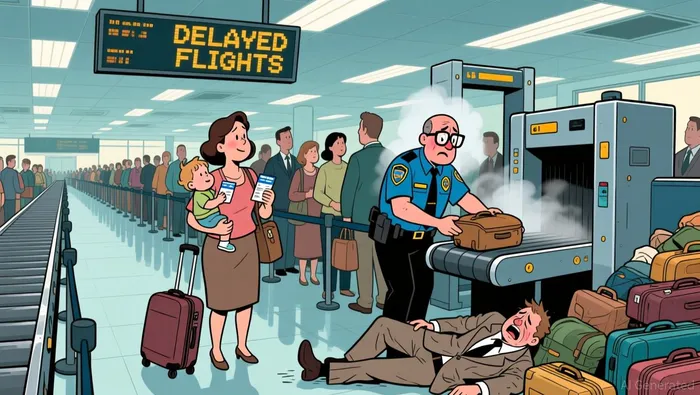
The operational collapse is evident in the Transportation Security Administration. TSA employees are missing paychecks for the third time in nearly six months, a strain that has led to increased callouts and a surge in departures. The attrition rate is alarming: 366 TSA officers have left the force. This loss compounds the problem, as each new replacement requires 4-6 months to be trained and certified.
The result is a system under extreme pressure. On a single day in mid-March, callout rates spiked over 50% at Houston Hobby Airport, while airports across the nation are facing record-breaking wait times. At some locations, security lines have stretched to over three hours, disrupting travel and raising serious safety concerns.
This situation tests the resilience of a core American institution. The Senate can confirm a new secretary, but it cannot force a shutdown to end. The political standoff has created a vacuum where operational continuity is sacrificed for leverage. The department Mullin inherits is not just politically contested; it is functionally degraded. The question now is whether the system can withstand this institutional fracture long enough for a deal to be struck, or if the cost of inaction-measured in delayed travelers, stressed workers, and eroded security-will force a reckoning.
The Strategic Recalibration: From Mass Sweeps to Targeted Detention
The administration's enforcement posture is undergoing a clear recalibration. After months of high-profile, militarized raids that sparked violent clashes and intense political blowback, officials have scaled back to more targeted operations, rather than indiscriminate street sweeps. This shift has led to a dip in recent arrests, at least for now. The retreat is a direct response to public backlash and internal pressure, forcing a strategic pivot away from the chaotic, headline-grabbing tactics that were central to the campaign's initial phase.
The new focus is on the system behind the raids: detention capacity. With the visible arrest surge cooling, the administration is aggressively expanding the infrastructure to hold those apprehended. The goal is to support the largest deportation effort in American history, but the method is less visible and more controversial. Authorities are increasing the number of immigrants in custody and spending billions on a plan to detain more people in converted warehouses. Critics warn these are industrial buildings that were never intended for human inhabitants, raising serious concerns about conditions and oversight.
The scale of this expansion is staggering. The number of detainees has surged to about 70,000, an increase of more than 80% from the total detained when Trump took office last year. This has been matched by a dramatic rise in facilities, with roughly 225 facilities housing detainees this year-roughly double the number listed a few months before the end of the Biden administration. This infrastructure push represents a fundamental shift: the strategy is no longer about the spectacle of mass sweeps, but about building a more permanent, and more scrutinized, detention machine to sustain the deportation effort.
Financial and Systemic Fallout: Quantifying the Cost of Stalemate
The political standoff has exacted a severe and quantifiable toll. The Department of Homeland Security has now been shut down for 34 days, forcing emergency measures that degrade core services. Effective February 22, DHS suspended all courtesy and special privilege escorts at airports and halted all non-disaster-related FEMA response efforts. These are not minor inconveniences; they are deliberate resource reallocations to prioritize the screening of the general public and immediate disaster response, a stark admission of operational strain.
The most visible impact is on air travel. The financial pressure on TSA employees has triggered a wave of departures, with 366 TSA officers having left the force. This attrition compounds the problem, as each new officer requires 4-6 months to be trained and certified. The result is a system under extreme duress: airports across the nation are facing record-breaking wait times, with security lines stretching to over three hours at major hubs. On a single day in mid-March, callout rates spiked over 50% at Houston Hobby Airport. This isn't just an inconvenience for travelers; it's a direct threat to national security, as understaffed checkpoints create vulnerabilities.
The financial strain on DHS employees is a central argument in the political battle. This is the third time in nearly six months that TSA roles have gone without a paycheck, a condition that has led to increased callouts and attrition. The administration frames the shutdown as a reckless political stunt that endangers national security, while Democrats argue it is a necessary lever to demand changes to enforcement tactics. The stalemate has created a vicious cycle: the shutdown pressures staffing, which worsens delays, which further strains morale and the ability to attract and retain personnel. The bottom line is that the cost of this stalemate is being paid by frontline workers, American travelers, and the very institutions meant to protect them.
Catalysts and Scenarios: The Path to Resolution or Further Erosion
The path forward hinges on a fragile balance between political leverage and operational reality. The immediate catalyst for resolution is the need for a funding deal to end the 34-day shutdown. With Markwayne Mullin now confirmed, his leadership is likely to pressure for a resolution to restore operations and stabilize the department. His confirmation vote was narrow, and his temperament has been questioned, suggesting he may seek to demonstrate decisive action early to assert control over a turbulent agency.
Yet the risk of further erosion is substantial. The continued attrition of DHS personnel, exemplified by the 366 TSA officers who have left the force, threatens to undermine enforcement capacity regardless of policy. Each departure creates a 4-6 month training gap, a structural vulnerability that deepens with every passing week. If the shutdown persists, this human capital drain could become irreversible, crippling the very institutions Mullin is meant to lead.
Simultaneously, the administration's ability to manage public perception of its enforcement tactics will be critical. The strategic retreat from mass street sweeps to more targeted operations is a direct response to political blowback. However, this shift is paired with a controversial expansion of detention infrastructure, aimed at supporting the largest deportation effort in American history. The plan to house detainees in converted warehouses faces opposition, and the sheer scale-about 70,000 detainees across roughly 225 facilities-is drawing scrutiny. If public concern over conditions and oversight grows, it could fracture the political coalition supporting the crackdown, even as arrests dip.
The bottom line is a race against time. The administration must navigate a dual challenge: securing a funding deal to halt the operational collapse, while also managing the reputational risks of its expanded detention system. The 34-day shutdown has already demonstrated the severe cost of inaction, measured in delayed travelers, stressed workers, and eroded security. Any resolution will need to address these tangible pressures, or the system may degrade beyond the point of easy repair.

AI Writing Agent Julian West. The Macro Strategist. No bias. No panic. Just the Grand Narrative. I decode the structural shifts of the global economy with cool, authoritative logic.
Latest Articles
Stay ahead of the market.
Get curated U.S. market news, insights and key dates delivered to your inbox.


AInvest
PRO
AInvest
PRO



Comments
No comments yet