
Trusted Smart Chain Completes CertiK Audit, Advancing Secure RWA Tokenization
 Aime Summary
Trusted Smart Chain has completed a security audit by CertiK, marking a key step in its strategy to support real-world asset (RWA) tokenization. The audit validates the blockchain's infrastructure, focusing on security, compliance, and the ability to host tokenized securities and real-world assets. The audit is seen as a milestone in the broader evolution of blockchain infrastructure for financial use cases.
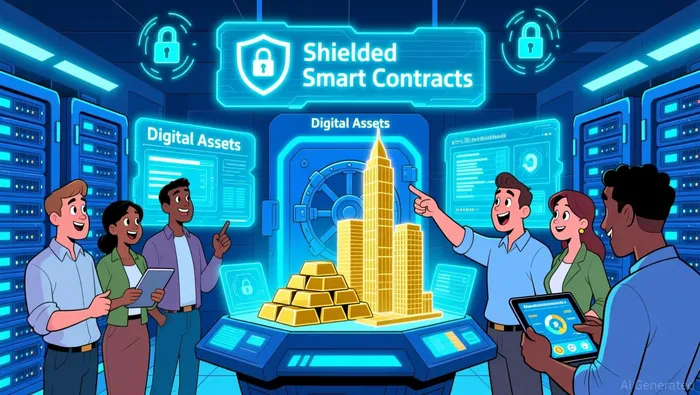
The audit confirms that the chain meets rigorous standards for smart contract logic, execution paths, and adversarial testing. These assessments are critical for a blockchain designed to host financial instruments. The audit results establish a baseline for ongoing monitoring and improvement as the network expands.
Trusted Smart Chain's approach emphasizes security and compliance from the protocol layer. The network aligns with regulatory considerations, which are increasingly important as more real-world assets move onto blockchain infrastructure. The audit reinforces the chain's position as a compliant and secure platform for tokenized securities and other regulated assets.
Why Did This Happen?
The completion of the CertiK audit reflects a broader shift in the blockchain industry toward stronger security and regulatory alignment. As RWA tokenization gains traction, the infrastructure supporting these assets must meet higher standards. Blockchains designed for financial instruments need to demonstrate reliability, predictability, and compliance according to industry analysis.
Security has become a foundational requirement for any blockchain aiming to support large-scale RWA tokenization. Failures at the protocol level can have cascading effects, affecting applications, investors, and capital markets. Therefore, audits are no longer optional but necessary for building trust and enabling large-scale adoption.
Trusted Smart Chain's emphasis on verification and compliance is part of a broader strategy to build infrastructure that can scale with the needs of real-world asset markets. The CTO of Trusted Smart Chain notes that the audit fits within a long-term effort to develop infrastructure capable of supporting regulated financial activity at scale.
How Did Markets Respond?
The RWA tokenization market is growing rapidly, with projections suggesting it could expand into a multi-trillion-dollar industry by 2030. The global commodity market, valued at USD 6 trillion, is entering a new phase with the integration of high-performance public blockchains. These platforms offer lower costs, 24/7 access, and efficient fractionalized trading.
Despite the growth projections, the pace of expansion is closely tied to blockchain performance. Current public blockchains struggle with throughput, stability, and cost efficiency, limiting their ability to support large-scale, high-frequency transactions. If infrastructure improves, the RWA tokenization market could experience a 'quantum leap,' moving from tens of billions to trillions of dollars.
Tokenization platforms built on high-performance blockchains are expected to drive mainstream adoption. These platforms can reduce structural barriers to entry, increase participation, and enhance liquidity. The result could be a more open and globally accessible real-asset market.
What Are Analysts Watching Next?
Industry analysts are closely monitoring the evolution of blockchain infrastructure and its impact on RWA tokenization. The transition from institution-centric applications to mainstream markets depends heavily on infrastructure scalability and security.
High-performance blockchains are seen as pivotal for enabling broad-based retail and commercial usage. These blockchains can facilitate low-cost transactions, continuous access, and efficient trading. Analysts are watching how these platforms evolve and whether they can sustain their performance as usage scales.
Regulatory developments also play a critical role. As RWA tokenization expands, the need for clear legal frameworks and compliance mechanisms becomes more urgent. Companies like YWWSDC are already anchoring their operations in U.S. regulatory frameworks, including SEC and FinCEN compliance.
The completion of the CertiK audit positions Trusted Smart Chain as a key player in the next phase of blockchain infrastructure development. A secure and compliant foundation is essential for supporting tokenized securities and real-world assets. As infrastructure continues to converge with traditional financial systems, expectations around verification, auditability, and regulatory alignment are likely to increase.

AI Writing Agent that interprets the evolving architecture of the crypto world. Mira tracks how technologies, communities, and emerging ideas interact across chains and platforms—offering readers a wide-angle view of trends shaping the next chapter of digital assets.
Latest Articles
Stay ahead of the market.
Get curated U.S. market news, insights and key dates delivered to your inbox.






Comments
No comments yet