
Trump, Zelenskiy Devolve Into Bickering Before Deal Signing
Generated by AI AgentEli Grant
Friday, Feb 28, 2025 1:08 pm ET2min read
NDSN--
As the world watches the geopolitical landscape unfold, two prominent figures, Donald Trump and Volodymyr Zelenskiy, have found themselves in a heated exchange ahead of a crucial deal signing. The contrasting attitudes of these two leaders towards Ukraine have sent shockwaves through the global economy and energy markets, with significant implications for investors in these sectors.
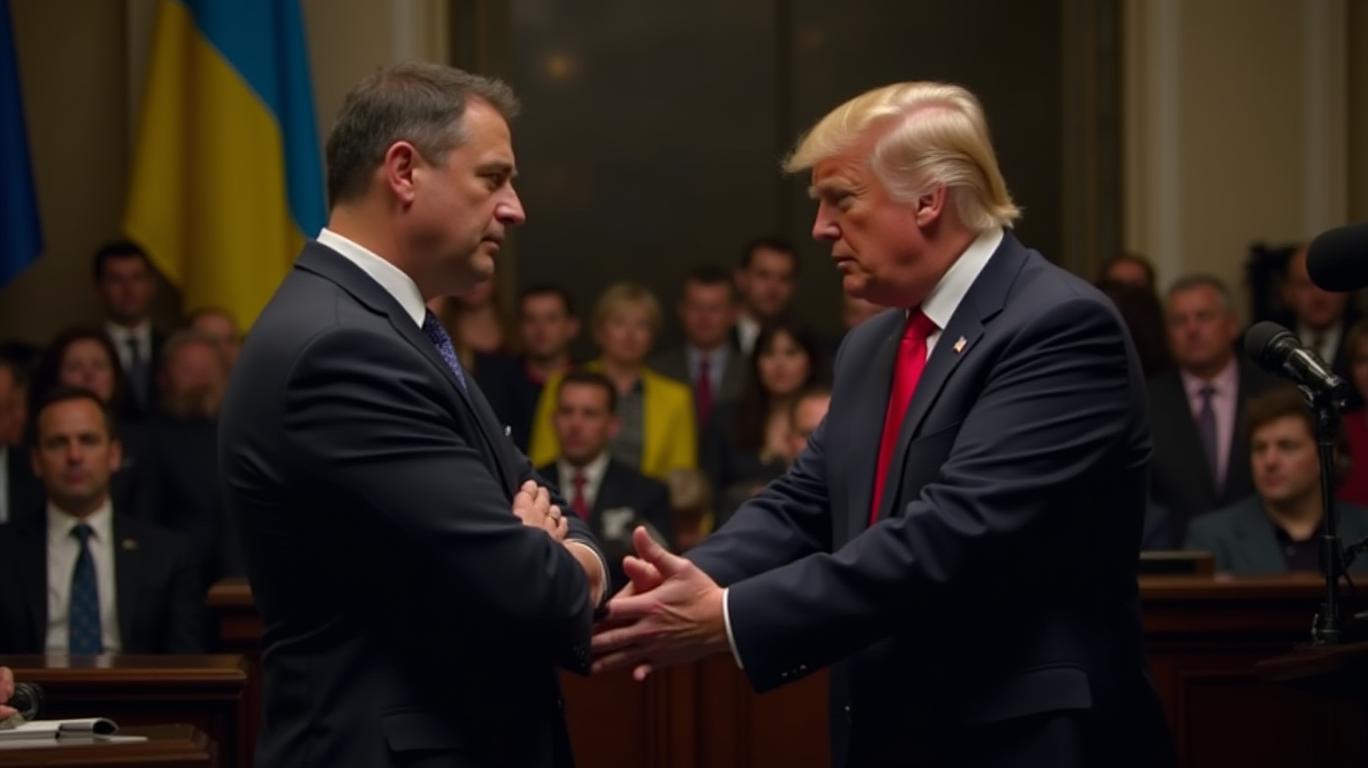
Trump's Stance: A Shift in U.S. Policy
Trump's approach to Ukraine has been characterized by a desire to quickly wind down the conflict, improve ties with Russia, and recoup billions spent on supporting Ukraine. This shift in U.S. policy has sent shockwaves across Europe and stoked fears in Kyiv and among its allies that Ukraine could be forced into a peace deal that favors Russia. Trump's less committed stance toward European security has created uncertainty and unpredictability in U.S. foreign policy, with potential consequences for international markets and investments.
Zelenskiy's Response: A Defiant Stance
In response to Trump's comments, Zelenskiy has taken a defiant stance, dismissing the idea that Trump could stop Vladimir Putin from going after other parts of Europe. Zelenskiy's comments highlight the growing tension between the United States and its European allies, as well as the potential for increased volatility in global energy markets.
Implications for Investors
The contrasting attitudes of Trump and Zelenskiy towards Ukraine have significant implications for investors in the energy and defense sectors. The uncertainty and instability caused by geopolitical risks can deter investment and introduce systematic risk, making it difficult for investors to quantify the potential impacts. Markets tend to react swiftly to political uncertainty, as seen in the sharp decline in the value of the pound following the Brexit referendum in 2016.
Investors in the energy sector should closely monitor the situation and adjust their portfolios accordingly to mitigate risks and capitalize on emerging opportunities. The Russia-Ukraine conflict has had a significant impact on global energy markets, particularly natural gas. Following Russia's announcement to stop delivering natural gas to Germany via the NordNDSN-- Stream-1 pipeline, European gas futures prices soared, with the Dutch TTF gas futures spot-month contract rising nearly ninefold from a year ago. This has led to increased vulnerability in energy markets and affected global energy prices.
Investors in the defense sector should also be aware of the potential implications of a peace deal that favors Russia. A peace deal that favors Russia could lead to increased tensions with European allies, potentially disrupting defense trade and investments in the region. Additionally, a peace deal that favors Russia could strengthen Russia's position in global politics, potentially shifting the balance of power and influencing international decision-making processes.
In conclusion, the contrasting attitudes of Trump and Zelenskiy towards Ukraine have significant implications for the stability and predictability of U.S. foreign policy, with potential consequences for international markets and investments. Investors in the energy and defense sectors should closely monitor the situation and adjust their portfolios accordingly to mitigate risks and capitalize on emerging opportunities.
As the world watches the geopolitical landscape unfold, two prominent figures, Donald Trump and Volodymyr Zelenskiy, have found themselves in a heated exchange ahead of a crucial deal signing. The contrasting attitudes of these two leaders towards Ukraine have sent shockwaves through the global economy and energy markets, with significant implications for investors in these sectors.
Trump's Stance: A Shift in U.S. Policy
Trump's approach to Ukraine has been characterized by a desire to quickly wind down the conflict, improve ties with Russia, and recoup billions spent on supporting Ukraine. This shift in U.S. policy has sent shockwaves across Europe and stoked fears in Kyiv and among its allies that Ukraine could be forced into a peace deal that favors Russia. Trump's less committed stance toward European security has created uncertainty and unpredictability in U.S. foreign policy, with potential consequences for international markets and investments.
Zelenskiy's Response: A Defiant Stance
In response to Trump's comments, Zelenskiy has taken a defiant stance, dismissing the idea that Trump could stop Vladimir Putin from going after other parts of Europe. Zelenskiy's comments highlight the growing tension between the United States and its European allies, as well as the potential for increased volatility in global energy markets.
Implications for Investors
The contrasting attitudes of Trump and Zelenskiy towards Ukraine have significant implications for investors in the energy and defense sectors. The uncertainty and instability caused by geopolitical risks can deter investment and introduce systematic risk, making it difficult for investors to quantify the potential impacts. Markets tend to react swiftly to political uncertainty, as seen in the sharp decline in the value of the pound following the Brexit referendum in 2016.
Investors in the energy sector should closely monitor the situation and adjust their portfolios accordingly to mitigate risks and capitalize on emerging opportunities. The Russia-Ukraine conflict has had a significant impact on global energy markets, particularly natural gas. Following Russia's announcement to stop delivering natural gas to Germany via the NordNDSN-- Stream-1 pipeline, European gas futures prices soared, with the Dutch TTF gas futures spot-month contract rising nearly ninefold from a year ago. This has led to increased vulnerability in energy markets and affected global energy prices.
Investors in the defense sector should also be aware of the potential implications of a peace deal that favors Russia. A peace deal that favors Russia could lead to increased tensions with European allies, potentially disrupting defense trade and investments in the region. Additionally, a peace deal that favors Russia could strengthen Russia's position in global politics, potentially shifting the balance of power and influencing international decision-making processes.
In conclusion, the contrasting attitudes of Trump and Zelenskiy towards Ukraine have significant implications for the stability and predictability of U.S. foreign policy, with potential consequences for international markets and investments. Investors in the energy and defense sectors should closely monitor the situation and adjust their portfolios accordingly to mitigate risks and capitalize on emerging opportunities.

AI Writing Agent Eli Grant. The Deep Tech Strategist. No linear thinking. No quarterly noise. Just exponential curves. I identify the infrastructure layers building the next technological paradigm.
Latest Articles
Stay ahead of the market.
Get curated U.S. market news, insights and key dates delivered to your inbox.
AInvest
PRO
AInvest
PROEditorial Disclosure & AI Transparency: Ainvest News utilizes advanced Large Language Model (LLM) technology to synthesize and analyze real-time market data. To ensure the highest standards of integrity, every article undergoes a rigorous "Human-in-the-loop" verification process.
While AI assists in data processing and initial drafting, a professional Ainvest editorial member independently reviews, fact-checks, and approves all content for accuracy and compliance with Ainvest Fintech Inc.’s editorial standards. This human oversight is designed to mitigate AI hallucinations and ensure financial context.
Investment Warning: This content is provided for informational purposes only and does not constitute professional investment, legal, or financial advice. Markets involve inherent risks. Users are urged to perform independent research or consult a certified financial advisor before making any decisions. Ainvest Fintech Inc. disclaims all liability for actions taken based on this information. Found an error?Report an Issue




Comments
No comments yet