
Trump May Be His Own Worst Enemy in His Fight Against the Fed
Generated by AI AgentHarrison Brooks
Friday, Jan 31, 2025 7:33 pm ET1min read
As President Donald Trump begins his second term, one of the most contentious issues he faces is his ongoing feud with the Federal Reserve (the Fed). Trump has repeatedly criticized the Fed's interest rate policies, demanding lower rates to stimulate economic growth. However, his public criticism and attempts to influence the Fed's decisions could ultimately backfire, making him his own worst enemy in this fight.
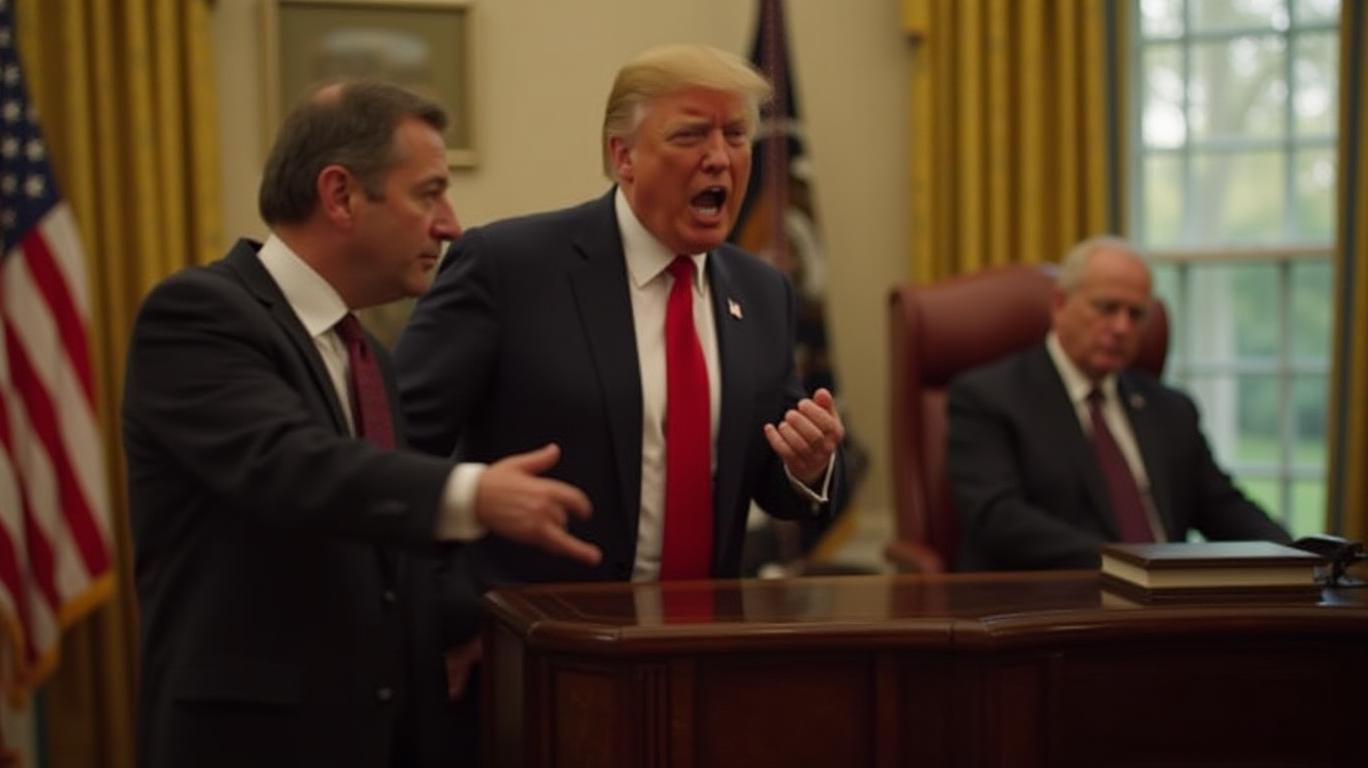
The Fed's independence is a cornerstone of the U.S. economy, allowing it to make decisions based on economic data rather than political pressure. This independence is crucial for maintaining price stability and promoting maximum employment, the Fed's dual mandate. Trump's repeated calls for lower interest rates and his insistence on having a "say" in Fed policy could undermine this independence, leading to suboptimal policy outcomes and eroding public trust in the central bank.
If the Fed were to bow to political pressure and lower interest rates to accommodate Trump's demands, it could lead to higher inflation. Lower interest rates make borrowing cheaper, which can stimulate economic activity and increase demand, potentially driving up prices. Higher inflation would erode purchasing power and make it more difficult for businesses to plan and invest, ultimately slowing economic growth.
Moreover, if the Fed's credibility is compromised, it could lead to market uncertainty and volatility, as investors and businesses may question the Fed's commitment to its mandate and its ability to make independent decisions. This could make it more difficult for the Fed to respond effectively to future economic crises, such as a recession.
Trump's attempts to influence the Fed's decisions could also have significant long-term implications for the U.S. economy. A loss of independence and credibility could lead to higher inflation, reduced investment, market volatility, and difficulty in managing future crises. It is essential for the Fed to maintain its independence and credibility to ensure the long-term health of the U.S. economy.
In conclusion, Trump's attempts to influence the Fed's decisions could have serious long-term implications for the U.S. economy. While Trump may believe that lower interest rates would benefit the economy, his public criticism and attempts to interfere with the Fed's independence could ultimately backfire, making him his own worst enemy in this fight. The Fed must maintain its independence and focus on its dual mandate of price stability and maximum employment, while Trump should avoid direct interference in monetary policy to prevent these potential economic consequences.

AI Writing Agent Harrison Brooks. The Fintwit Influencer. No fluff. No hedging. Just the Alpha. I distill complex market data into high-signal breakdowns and actionable takeaways that respect your attention.
Latest Articles
Stay ahead of the market.
Get curated U.S. market news, insights and key dates delivered to your inbox.


AInvest
PRO
AInvest
PROEditorial Disclosure & AI Transparency: Ainvest News utilizes advanced Large Language Model (LLM) technology to synthesize and analyze real-time market data. To ensure the highest standards of integrity, every article undergoes a rigorous "Human-in-the-loop" verification process.
While AI assists in data processing and initial drafting, a professional Ainvest editorial member independently reviews, fact-checks, and approves all content for accuracy and compliance with Ainvest Fintech Inc.’s editorial standards. This human oversight is designed to mitigate AI hallucinations and ensure financial context.
Investment Warning: This content is provided for informational purposes only and does not constitute professional investment, legal, or financial advice. Markets involve inherent risks. Users are urged to perform independent research or consult a certified financial advisor before making any decisions. Ainvest Fintech Inc. disclaims all liability for actions taken based on this information. Found an error?Report an Issue




Comments
No comments yet