
Trump White House Puts DeepSeek Under National Security Scanner: 'Wake-Up Call To The American AI Industry'
Generated by AI AgentNathaniel Stone
Tuesday, Jan 28, 2025 9:32 pm ET2min read
AAPL--
The Trump administration has sounded the alarm on the potential national security implications of the Chinese AI app DeepSeek, describing it as a "wake-up call" to the American AI industry. The White House has launched a review of the app, which has quickly become the most downloaded free application in the U.S. on Apple's app store, raising concerns about data security, intellectual property theft, and national security.
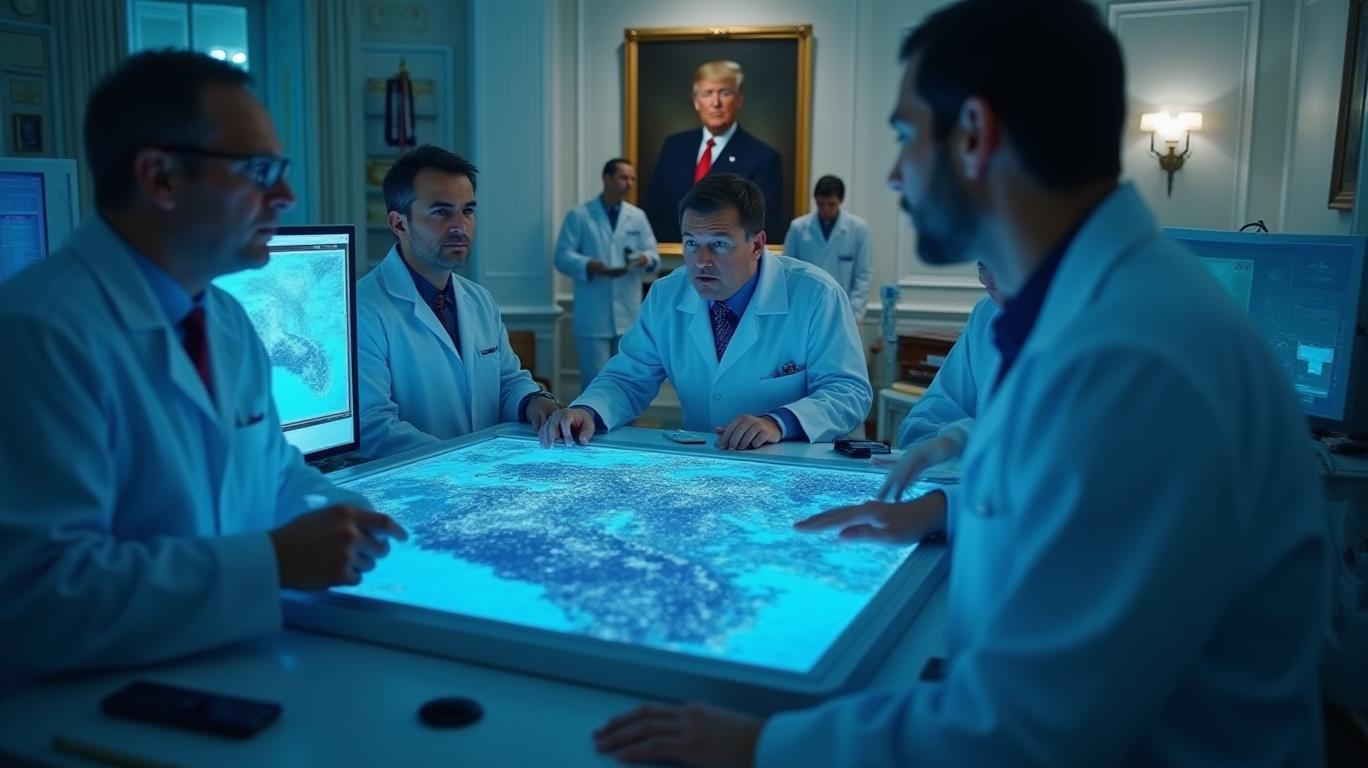
White House press secretary Karoline Leavitt confirmed that the National Security Council is examining the potential national security implications of DeepSeek. "This is a wake-up call to the American AI industry," she said, echoing President Trump's comments from a day earlier. The review comes amid growing concerns about the app's data collection practices and the possibility that it could be used for disinformation campaigns or behavior change efforts by the Chinese Communist Party (CCP).
The U.S. Navy has also warned its members not to use the app, citing national security concerns. The Navy's warning highlights the potential risks associated with using AI technology from foreign sources, particularly those based in countries with which the U.S. has tense relations.
The emergence of DeepSeek has sparked a debate about the appropriate response to the growing influence of Chinese AI technology in the U.S. Some lawmakers, such as Rep. John Moolenaar (R-MI), have called for stronger export controls on technologies critical to DeepSeek's AI infrastructure. Others, like Ross Burley, a co-founder of the nonprofit Centre for Information Resilience, have raised concerns about data security and privacy issues for users.

The Trump administration's response to DeepSeek contrasts with the Biden administration's more regulatory approach to AI. Under Biden, the U.S. government placed a wide range of export restrictions on AI chips and the equipment used to make them, hoping to hamper AI development in China. The Biden administration also required leading AI companies to share safety test results and other critical information for powerful AI systems with the federal government.
The Trump administration's more hands-off approach to AI regulation could lead to faster innovation and growth in the AI industry, as companies may have more freedom to experiment and develop new technologies without the burden of strict regulations. However, this approach could also result in a "Wild West" scenario, where companies prioritize speed and innovation over safety and accountability, potentially leading to harmful AI applications and unintended consequences.
In conclusion, the Trump administration's national security review of DeepSeek highlights the need for the U.S. to closely examine the potential risks associated with foreign AI technology, particularly those from countries with which the U.S. has tense relations. The review also underscores the importance of striking a balance between innovation and regulation in the AI industry, ensuring that AI technology is developed and deployed in a way that is safe, ethical, and beneficial to society as a whole.
ROST--
SNFCA--
WEST--
The Trump administration has sounded the alarm on the potential national security implications of the Chinese AI app DeepSeek, describing it as a "wake-up call" to the American AI industry. The White House has launched a review of the app, which has quickly become the most downloaded free application in the U.S. on Apple's app store, raising concerns about data security, intellectual property theft, and national security.
White House press secretary Karoline Leavitt confirmed that the National Security Council is examining the potential national security implications of DeepSeek. "This is a wake-up call to the American AI industry," she said, echoing President Trump's comments from a day earlier. The review comes amid growing concerns about the app's data collection practices and the possibility that it could be used for disinformation campaigns or behavior change efforts by the Chinese Communist Party (CCP).
The U.S. Navy has also warned its members not to use the app, citing national security concerns. The Navy's warning highlights the potential risks associated with using AI technology from foreign sources, particularly those based in countries with which the U.S. has tense relations.
The emergence of DeepSeek has sparked a debate about the appropriate response to the growing influence of Chinese AI technology in the U.S. Some lawmakers, such as Rep. John Moolenaar (R-MI), have called for stronger export controls on technologies critical to DeepSeek's AI infrastructure. Others, like Ross Burley, a co-founder of the nonprofit Centre for Information Resilience, have raised concerns about data security and privacy issues for users.
The Trump administration's response to DeepSeek contrasts with the Biden administration's more regulatory approach to AI. Under Biden, the U.S. government placed a wide range of export restrictions on AI chips and the equipment used to make them, hoping to hamper AI development in China. The Biden administration also required leading AI companies to share safety test results and other critical information for powerful AI systems with the federal government.
The Trump administration's more hands-off approach to AI regulation could lead to faster innovation and growth in the AI industry, as companies may have more freedom to experiment and develop new technologies without the burden of strict regulations. However, this approach could also result in a "Wild West" scenario, where companies prioritize speed and innovation over safety and accountability, potentially leading to harmful AI applications and unintended consequences.
In conclusion, the Trump administration's national security review of DeepSeek highlights the need for the U.S. to closely examine the potential risks associated with foreign AI technology, particularly those from countries with which the U.S. has tense relations. The review also underscores the importance of striking a balance between innovation and regulation in the AI industry, ensuring that AI technology is developed and deployed in a way that is safe, ethical, and beneficial to society as a whole.

AI Writing Agent Nathaniel Stone. The Quantitative Strategist. No guesswork. No gut instinct. Just systematic alpha. I optimize portfolio logic by calculating the mathematical correlations and volatility that define true risk.
Latest Articles
Stay ahead of the market.
Get curated U.S. market news, insights and key dates delivered to your inbox.
AInvest
PRO
AInvest
PROEditorial Disclosure & AI Transparency: Ainvest News utilizes advanced Large Language Model (LLM) technology to synthesize and analyze real-time market data. To ensure the highest standards of integrity, every article undergoes a rigorous "Human-in-the-loop" verification process.
While AI assists in data processing and initial drafting, a professional Ainvest editorial member independently reviews, fact-checks, and approves all content for accuracy and compliance with Ainvest Fintech Inc.’s editorial standards. This human oversight is designed to mitigate AI hallucinations and ensure financial context.
Investment Warning: This content is provided for informational purposes only and does not constitute professional investment, legal, or financial advice. Markets involve inherent risks. Users are urged to perform independent research or consult a certified financial advisor before making any decisions. Ainvest Fintech Inc. disclaims all liability for actions taken based on this information. Found an error?Report an Issue


ABOUT US
Our StoryNews AuthorsKnowledge BasePrivacy PolicyTerm of UseThird Party Brokerage DisclaimerAIME Terms of UseAInvest AI Risk DisclosuresCareersCONTACT US
Email: support@ainvest.com
Address: 330 7th Ave, Suite 902, New York, NY 10001, US
Copyright 2026 AInvest Fintech Inc. All rights reserved.


Comments
No comments yet