
Trump warned U.S. automakers not to raise prices in response to tariffs - WSJ
ByAinvest
Thursday, Mar 27, 2025 9:21 pm ET1min read
Trump warned U.S. automakers not to raise prices in response to tariffs - WSJ
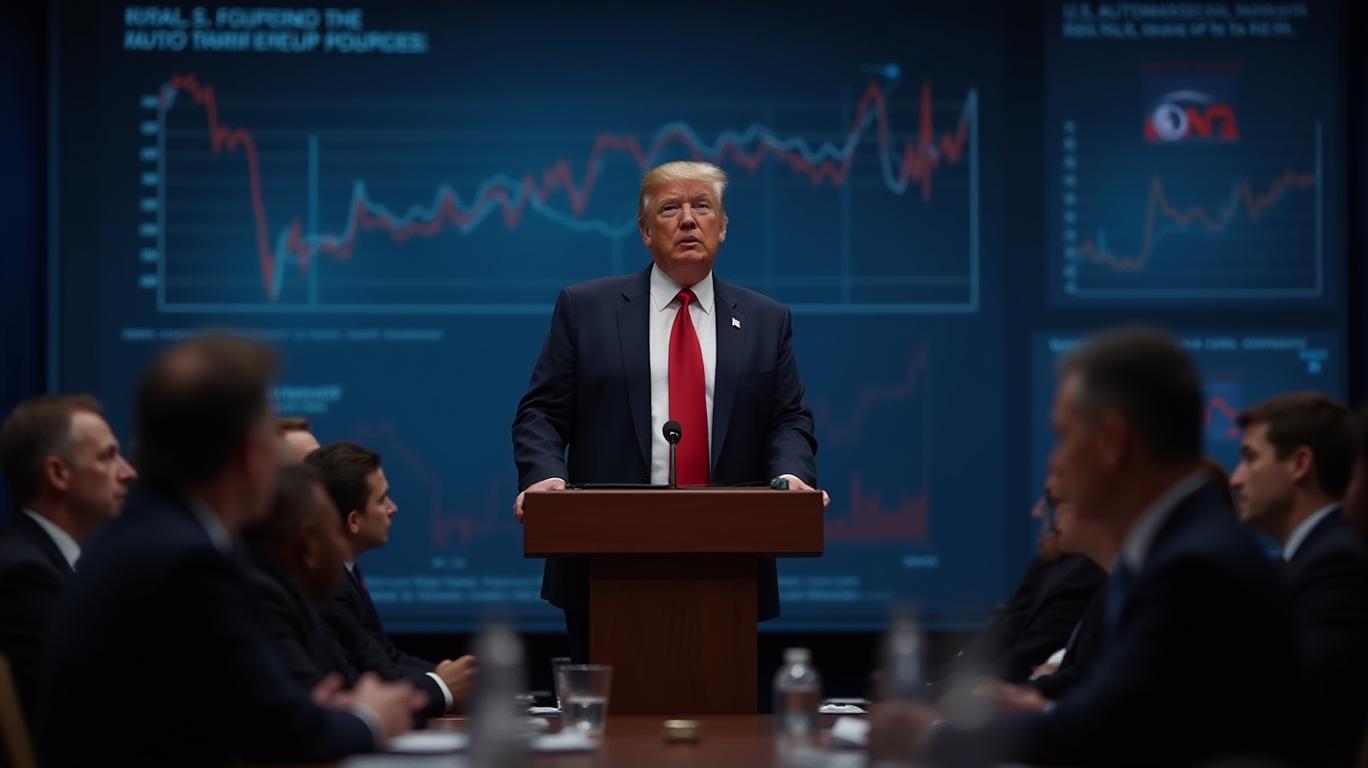
President Trump's latest trade policy move has sent shockwaves through the automotive industry. On Wednesday, he announced a 25% tariff on all foreign-made vehicles, effective April 2, marking a significant escalation in his ongoing trade war. The tariffs are part of Trump's broader strategy to protect domestic industries and jobs, but they have sparked immediate concerns about potential price increases and market disruptions.Trump has been vocal about his intention to make the U.S. more self-sufficient in manufacturing, and these tariffs are a direct reflection of that goal. However, the president has also warned automakers not to pass on the increased costs to consumers. In a statement, he emphasized that he expects automakers to absorb the tariff costs, ensuring that the burden is not placed on the American consumer.
The market reaction has been swift and negative. Shares of major automakers, including General Motors (GM), Ford (F), and Stellantis (STLA), have seen significant declines since the announcement. Ferrari (RACE) has also been affected, with its stock falling by 1% in early trading. JPMorgan analyst Ryan Brinkman noted that the tariffs could have a more significant impact on Ferrari due to its high reliance on the U.S. market, where it derives over 40% of its sales.
The tariffs have also raised concerns about the potential for retaliatory measures from trading partners. The European Union has already announced counter-tariffs on $28 billion in U.S. goods, and Canada has responded with new duties on about $20 billion of U.S. goods. These responses could further exacerbate the trade tensions and potentially lead to higher costs for consumers.
While Trump has expressed his intent to keep prices stable, many analysts believe that automakers may ultimately pass on the costs to consumers. The increased production costs due to the tariffs could lead to higher vehicle prices, potentially stunting consumer demand. This could have a significant impact on the overall economy, as the automotive industry is a major contributor to GDP.
In conclusion, Trump's latest tariff announcement has sent a clear message to the automotive industry and the broader economy. While the president's goal of protecting domestic manufacturing is commendable, the potential for price increases and retaliatory measures raises concerns about the long-term impact on consumers and the overall market. The coming weeks will be crucial in determining how the industry and the broader economy adapt to this new trade landscape.
Stay ahead of the market.
Get curated U.S. market news, insights and key dates delivered to your inbox.


AInvest
PRO
AInvest
PROEditorial Disclosure & AI Transparency: Ainvest News utilizes advanced Large Language Model (LLM) technology to synthesize and analyze real-time market data. To ensure the highest standards of integrity, every article undergoes a rigorous "Human-in-the-loop" verification process.
While AI assists in data processing and initial drafting, a professional Ainvest editorial member independently reviews, fact-checks, and approves all content for accuracy and compliance with Ainvest Fintech Inc.’s editorial standards. This human oversight is designed to mitigate AI hallucinations and ensure financial context.
Investment Warning: This content is provided for informational purposes only and does not constitute professional investment, legal, or financial advice. Markets involve inherent risks. Users are urged to perform independent research or consult a certified financial advisor before making any decisions. Ainvest Fintech Inc. disclaims all liability for actions taken based on this information. Found an error?Report an Issue




Comments
No comments yet