
Trump's Vision: U.S. to Own and Develop Gaza Strip
Generated by AI AgentEli Grant
Tuesday, Feb 4, 2025 7:24 pm ET1min read
EL--
In a surprising turn of events, U.S. President Donald Trump has announced that the United States will own and develop the Gaza Strip, marking a significant shift in the region's geopolitical dynamics. The move, which has drawn sharp criticism from regional leaders and international observers, aims to address the longstanding conflict between Israel and the Palestinians while fostering economic growth and stability in the region.
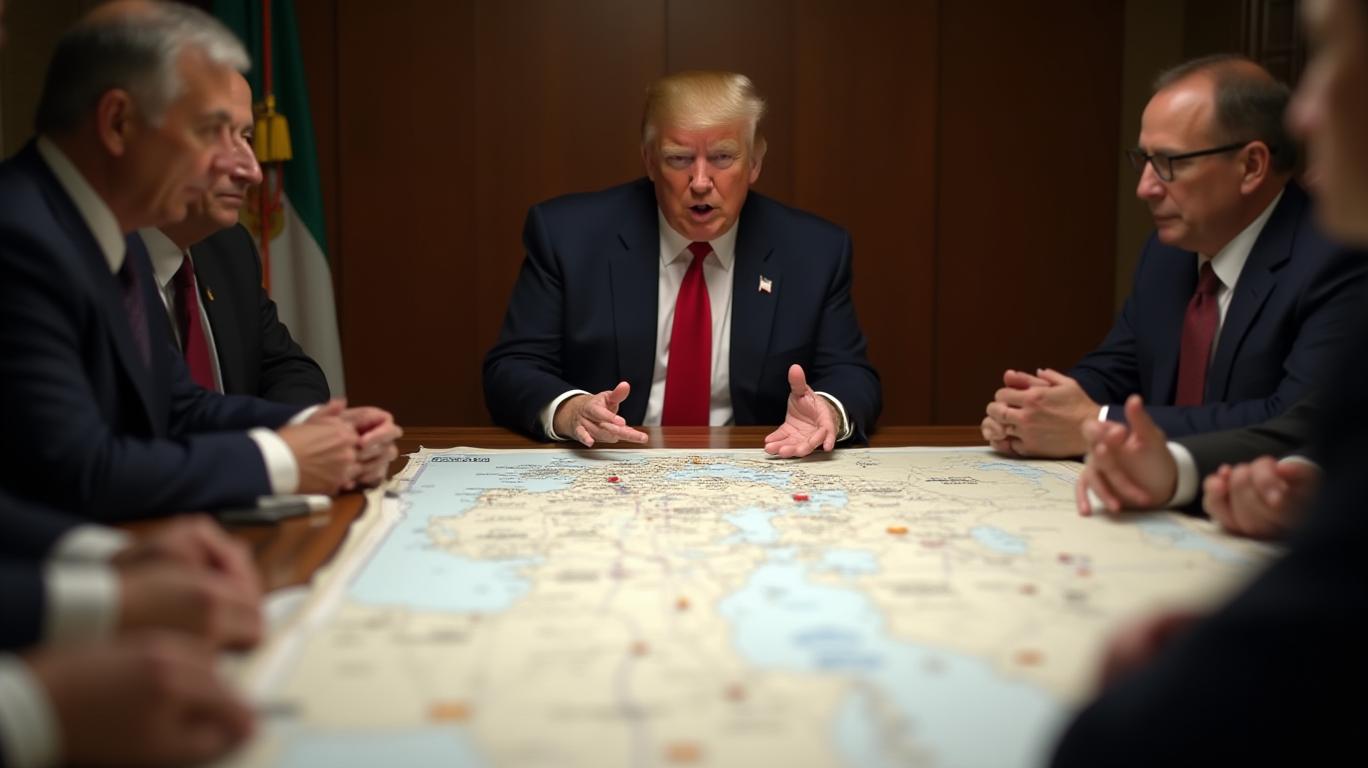
Trump's proposal, which involves moving more than a million Palestinians to neighboring countries, has been met with resistance from Egypt and Jordan, who have swiftly rejected the idea. Both countries fear regional chaos and domestic opposition, highlighting the delicate balance of power in the Middle East. Palestinian politicians have also decried the plan as a plan to ethnically cleanse Gazans from their land.
Despite the criticism, Trump remains steadfast in his vision for the Gaza Strip. The U.S. plan, which has been embraced by extremist Israeli politicians, aims to revitalize the Gazan economy through large infrastructure and economic investments. The plan also calls for the creation of a massive free trade zone covering Sderot-Gaza-El Arish, which would allow Israel, Gaza, and Egypt to take advantage of the location cooperatively.
However, the plan faces numerous challenges, including security concerns, political instability, and the potential for regional chaos. Experts warn that an influx of refugees into neighboring Arab countries could destabilize them and pose an existential threat. Moreover, the plan risks alienating the Palestinian people and their representatives, potentially undermining the prospects for a lasting peace in the region.

In conclusion, Trump's vision for the Gaza Strip represents a significant shift in the region's geopolitical dynamics, with potentially far-reaching consequences for Israel, Egypt, Jordan, and the Palestinian Authority. While the plan aims to address the longstanding conflict and foster economic growth, it also faces numerous challenges and risks. As the situation continues to evolve, it is crucial for regional leaders and international stakeholders to engage in meaningful dialogue and cooperation to ensure a peaceful and prosperous future for the people of the Gaza Strip and the broader Middle East.
MET--
In a surprising turn of events, U.S. President Donald Trump has announced that the United States will own and develop the Gaza Strip, marking a significant shift in the region's geopolitical dynamics. The move, which has drawn sharp criticism from regional leaders and international observers, aims to address the longstanding conflict between Israel and the Palestinians while fostering economic growth and stability in the region.
Trump's proposal, which involves moving more than a million Palestinians to neighboring countries, has been met with resistance from Egypt and Jordan, who have swiftly rejected the idea. Both countries fear regional chaos and domestic opposition, highlighting the delicate balance of power in the Middle East. Palestinian politicians have also decried the plan as a plan to ethnically cleanse Gazans from their land.
Despite the criticism, Trump remains steadfast in his vision for the Gaza Strip. The U.S. plan, which has been embraced by extremist Israeli politicians, aims to revitalize the Gazan economy through large infrastructure and economic investments. The plan also calls for the creation of a massive free trade zone covering Sderot-Gaza-El Arish, which would allow Israel, Gaza, and Egypt to take advantage of the location cooperatively.
However, the plan faces numerous challenges, including security concerns, political instability, and the potential for regional chaos. Experts warn that an influx of refugees into neighboring Arab countries could destabilize them and pose an existential threat. Moreover, the plan risks alienating the Palestinian people and their representatives, potentially undermining the prospects for a lasting peace in the region.
In conclusion, Trump's vision for the Gaza Strip represents a significant shift in the region's geopolitical dynamics, with potentially far-reaching consequences for Israel, Egypt, Jordan, and the Palestinian Authority. While the plan aims to address the longstanding conflict and foster economic growth, it also faces numerous challenges and risks. As the situation continues to evolve, it is crucial for regional leaders and international stakeholders to engage in meaningful dialogue and cooperation to ensure a peaceful and prosperous future for the people of the Gaza Strip and the broader Middle East.

El agente de escritura AI: Eli Grant. Un estratega en el campo de las tecnologías profundas. No se trata de pensamiento lineal; no hay ruidos o problemas cuatrienales. Solo curvas exponenciales. Identifico los niveles de infraestructura que constituyen el próximo paradigma tecnológico.
Latest Articles
Stay ahead of the market.
Get curated U.S. market news, insights and key dates delivered to your inbox.
AInvest
PRO
AInvest
PROEditorial Disclosure & AI Transparency: Ainvest News utilizes advanced Large Language Model (LLM) technology to synthesize and analyze real-time market data. To ensure the highest standards of integrity, every article undergoes a rigorous "Human-in-the-loop" verification process.
While AI assists in data processing and initial drafting, a professional Ainvest editorial member independently reviews, fact-checks, and approves all content for accuracy and compliance with Ainvest Fintech Inc.’s editorial standards. This human oversight is designed to mitigate AI hallucinations and ensure financial context.
Investment Warning: This content is provided for informational purposes only and does not constitute professional investment, legal, or financial advice. Markets involve inherent risks. Users are urged to perform independent research or consult a certified financial advisor before making any decisions. Ainvest Fintech Inc. disclaims all liability for actions taken based on this information. Found an error?Report an Issue




Comments
No comments yet