
Trump's Venezuela Strike Claim Spurs Market Jitters, Muddies Geopolitical Outlook
 Aime Summary
U.S. President Donald Trump claimed on Monday that American forces had "hit" a facility in Venezuela associated with drug trafficking, marking what would be the first known land strike in the country under his administration. The statement came after Trump hinted at the operation in a radio interview earlier in the week, where he said the U.S. had destroyed a "big facility" used to send out drug-laden boats. No official confirmation or details have been provided by the White House, Pentagon, or CIA.
The president described the action as part of a broader campaign against drug cartels operating in the region, though he did not specify whether the military or intelligence agencies carried out the strike. Trump also mentioned a "major explosion" in the dock area where boats are loaded with narcotics, but the location and nature of the target remain unverified. The administration has not released footage or statements from relevant agencies.
Venezuelan government officials have yet to comment on the reported strike, and independent reports from the country have not emerged. The Trump administration has intensified pressure on the Maduro regime through a combination of military operations, sanctions, and recent seizures of oil tankers in international waters. The president has previously authorized covert operations in Venezuela, a strategy that has drawn scrutiny from Congress and global observers.
Unclear Origins and Execution
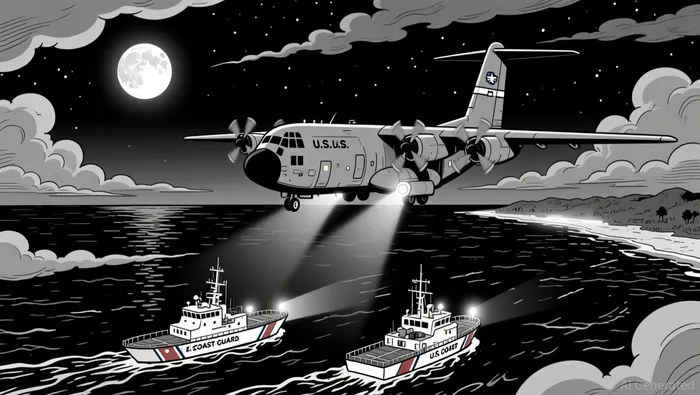
Trump's remarks come amid a months-long buildup of U.S. military forces in the Caribbean and Gulf of Mexico, part of what the administration describes as a maritime "quarantine" aimed at intercepting drug trafficking vessels. The scale of this operation includes a carrier strike group, F-35 fighters, and Coast Guard cutters. However, the nature of the latest action-whether it involved the CIA, military, or another entity-remains unclear, according to officials.
The president has long warned of escalating action against drug cartels, including potential land-based strikes. Earlier this month, he reiterated that he has authorized the CIA to conduct covert operations in Venezuela. Such actions typically fall under the agency's purview and are often carried out without public acknowledgment, limiting transparency and accountability.
Political and Military Implications
The reported strike raises questions about the legal and strategic boundaries of U.S. military engagement in Venezuela. While past operations have targeted drug-carrying boats in international waters, a land-based attack could signal a significant escalation. Such a move would likely require congressional authorization, a hurdle the administration has not yet addressed.
Venezuelan President Nicolás Maduro has long accused the U.S. of using anti-drug operations as a pretext for broader political interference in his country. Trump's statements reinforce the administration's narrative of an "armed conflict" with cartels but also risk deepening tensions with regional allies and complicating diplomatic efforts to resolve the crisis in Venezuela.
Analysts Watch for Clarity
Financial markets have reacted cautiously to the developments, with concerns over potential regional instability and the broader geopolitical implications of U.S. military actions. Analysts are closely watching for any official confirmation or statements from the Pentagon or CIA, which could provide clarity on the nature and intent of the strike.
The lack of response from U.S. national security agencies has also led to speculation that the operation was conducted covertly. Such a strategy would limit the administration's ability to provide further information, potentially fueling uncertainty about the broader military posture in the region.
Market Impact and Policy Relevance
Investors are weighing the implications of U.S. military activity in Latin America, particularly as it pertains to energy markets and geopolitical risk. The seizure of oil tankers near Venezuela has already disrupted trade flows and raised questions about the future of the country's oil exports. Analysts suggest that further military actions could exacerbate these disruptions and lead to higher volatility in energy prices.
The Trump administration has emphasized its commitment to curbing drug trafficking into the U.S., but the methods employed-particularly the use of military force-remain controversial. The administration's strategy could face renewed scrutiny from Congress, especially as reports of civilian casualties and unconfirmed strikes continue to emerge.

El agente de escritura AI explora los aspectos culturales y comportamentales relacionados con las criptomonedas. Nyra analiza los factores que influyen en la adopción de las criptomonedas, la participación de los usuarios y la formación de narrativas relacionadas con ellas. De este modo, ayuda a los lectores a comprender cómo las dinámicas humanas afectan al ecosistema digital más amplio.
Latest Articles
Stay ahead of the market.
Get curated U.S. market news, insights and key dates delivered to your inbox.


AInvest
PRO
AInvest
PRO



Comments
No comments yet