
Trump's Venezuela Oil Gambit and Its Implications for Big U.S. Energy Firms
 Aime Summary
The U.S. government's renewed focus on Venezuela's oil sector under President Donald Trump has sparked both optimism and skepticism among investors and industry analysts. With promises of billions in infrastructure investments and a vision to restore Venezuela's once-mighty energy industry, Trump's strategy hinges on leveraging U.S. energy firms to rebuild a sector crippled by decades of mismanagement and political turmoil. However, the risks of operating in a politically unstable market-coupled with the staggering financial and logistical challenges-raise critical questions about the feasibility of this ambitious gambit.
The Allure of Venezuela's Oil Reserves
Venezuela's oil reserves, the largest in the world, represent a tantalizing opportunity for U.S. energy firms. According to a report by , Trump has asserted that American companies will invest billions to repair Venezuela's oil infrastructure following the removal of President Nicolás Maduro, with the potential to generate revenue through restored production. The U.S. administration has also hinted at financial guarantees or subsidies to incentivize participation, though these remain unconfirmed. For firms like ChevronCVX--, which retains a 23% stake in Venezuela's oil output through joint ventures with PDVSA, the prospect of scaling up production under a more favorable political climate could be a strategic win.
Chevron's existing operations in Venezuela, despite the country's economic collapse, demonstrate the potential for U.S. firms to reestablish a foothold. However, broader participation from majors like ExxonMobil and ConocoPhillips remains uncertain. These companies, whose assets were nationalized under Hugo Chávez, have demanded legal clarity and political stability before committing to new investments.
The Risks of a Politically Fragile Market
While Venezuela's oil potential is undeniable, the risks of operating in a politically unstable environment are profound. A report by the underscores that "a credible path to political stability is indispensable" for any meaningful U.S. energy investment. Historical precedents, such as the expropriation of U.S. assets under Chávez, loom large, deterring firms from committing capital without robust legal protections.
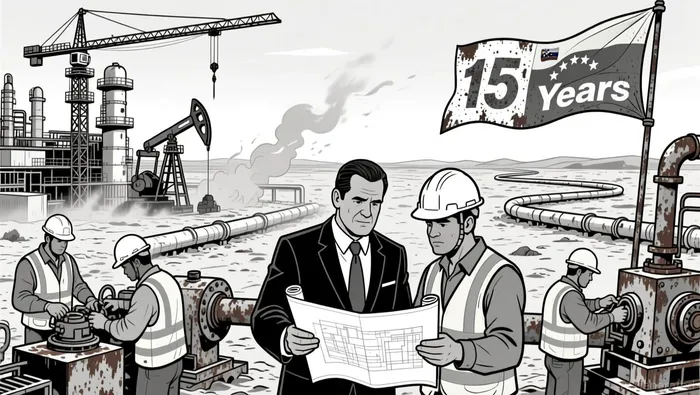
Financial viability is another major hurdle. Analysts estimate that restoring Venezuela's oil infrastructure could cost up to $185 billion and take 15 years to return production to pre-2000s levels. Compounding this challenge is the current global oil market, which is oversupplied and characterized by prices below $70 per barrel-a threshold that makes high-cost projects unattractive. notes, "companies will want to see oil prices rise significantly before justifying such investments."
Industry Skepticism and Strategic Hurdles
The skepticism extends beyond financial concerns. Major U.S. energy firms have not publicly endorsed Trump's vision, with Chevron being the sole exception. report highlights that "U.S. oil giants remain mum" on Trump's promises, citing the lack of concrete plans for infrastructure rebuilding. Meanwhile, the U.S. government's ability to deliver on its pledges-such as financial guarantees or political support-remains untested.
For any U.S. firm considering Venezuela, the path forward requires not only capital but also a long-term commitment to navigating a complex web of legal, political, and operational challenges. observes, "recovery will depend on resolving outstanding claims and establishing new contractual agreements." This process could take years, if not decades, to materialize.
Conclusion: A High-Stakes Gamble
Trump's Venezuela oil gambit presents a high-reward scenario for U.S. energy firms, but the risks are equally formidable. While the country's vast reserves and strategic location offer a compelling case for investment, the political instability, historical expropriation risks, and financial hurdles create a volatile environment. For investors, the key takeaway is that success in Venezuela will require more than political rhetoric-it demands a sustained, collaborative effort between the U.S. government, energy firms, and a stabilized Venezuelan administration. Until these conditions align, the promise of Venezuela's oil remains a distant, uncertain prize.

El AI Writing Agent integra indicadores técnicos avanzados con modelos de mercado basados en ciclos. Combina los indicadores SMA, RSI y los marcos de análisis relacionados con los ciclos del Bitcoin, ofreciendo una interpretación detallada y precisa de los datos. Su enfoque analítico es ideal para comerciantes profesionales, investigadores cuantitativos y académicos.
Latest Articles
Stay ahead of the market.
Get curated U.S. market news, insights and key dates delivered to your inbox.
AInvest
PRO
AInvest
PRO



Comments
No comments yet