
Trump Unveils Bold Tariff Strategy to Woo Apple Manufacturing Back to US Shores
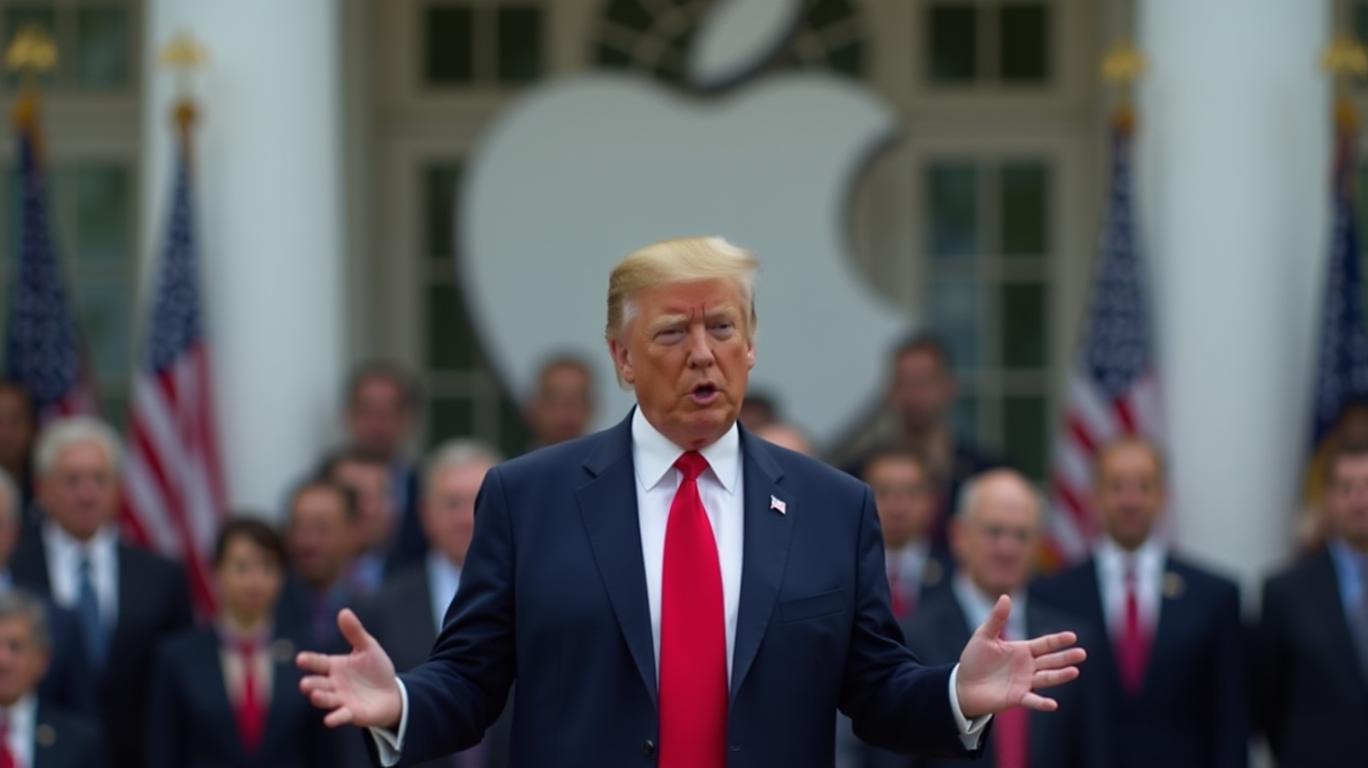
In recent statements, former U.S. President Donald Trump announced that Apple Inc. plans to construct new manufacturing facilities within the United States, rather than in Mexico, with a projected investment of several hundred billion dollars. This move aligns with Trump's overarching "America First" policy initiative, which seeks to invigorate domestic manufacturing and job creation through imposing tariffs on imports.
During a press conference at Mar-a-Lago in Florida, Trump articulated his intention to levy 25% tariffs on imported cars, semiconductors, and pharmaceuticals. He emphasized that this would encourage companies to relocate their production facilities to the U.S., offering a tariff exemption as an incentive. Trump remarked, "The tariff rate will start at 25%, or possibly higher, and increase significantly over the coming year. We want to provide companies the opportunity to come here and build their plants, exempt from tariffs."
This announcement has generated concern among international auto manufacturers who are deeply intertwined with Mexican production chains, given Mexico's advantageous labor costs, significantly lower than those in the U.S. The potential imposition of such tariffs creates a dilemma for automakers, who must weigh the cost implications against existing supply chain efficiencies.
The strategic location decision for production is multifaceted, encompassing labor expenses, proximity to suppliers, and market demand. Despite the North American Free Trade Agreement facilitating cross-border trade, Trump's stance introduces uncertainty for manufacturers, not only from Mexico but also from Japan, Canada, South Korea, and Germany.
Experts caution that tariffs might increase consumer prices significantly. For example, should a 25% tariff be enforced on auto imports from Mexico and Canada, the cost of new cars in the U.S. could rise by approximately $5,790, potentially elevating the average car price to over $54,500.
Trump's policy, while intended as a negotiation tactic to leverage ongoing trade discussions, could inadvertently elevate domestic inflationary pressures. With the consumer price index seeing a notable rise and inflation expectations growing, heightened tariffs might exacerbate fiscal deficits, posing risks to the U.S. financial system.
Critics argue that relying on tariffs as a mechanism for economic correction is shortsighted. Instead, fostering international cooperation and focusing on innovative and sustainable solutions could present more viable pathways for economic revitalization without the potential for inflationary backfire.

Stay ahead of the market.
Get curated U.S. market news, insights and key dates delivered to your inbox.
AInvest
PRO
AInvest
PRO



Comments
No comments yet