
Trump's "Unfair" Remark: A Blessing or Curse for Tesla's India Entry?
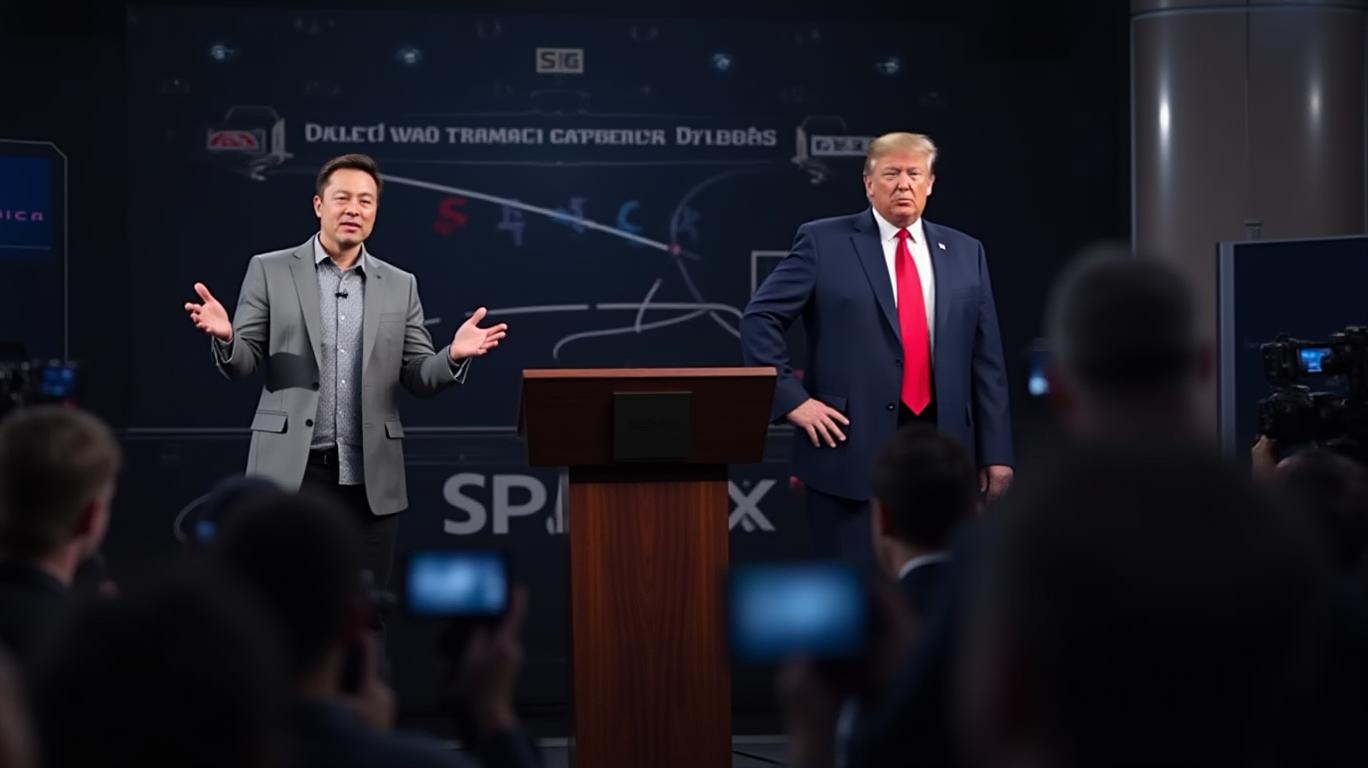
In a recent interview, US President Donald Trump expressed his concern about Elon Musk's plans to build a Tesla factory in India, stating that it would be "unfair" to the United States. This remark has sparked a conversation about the potential implications for Tesla's entry into the Indian market and the broader geopolitical dynamics between the US and India. Let's delve into the strategic advantages and disadvantages for Tesla, as well as the potential consequences for other multinational corporations operating in India.
Strategic Advantages for Tesla
1. Market Size: India is the world's third-largest automobile market, with a growing demand for electric vehicles (EVs). Although the current EV market share is small, the government's target to increase it to 30% by 2030 presents a substantial opportunity for Tesla.
2. Policy Support: The Indian government has tailored policies to encourage EV manufacturing, such as reducing import duties for fully imported electric cars. For instance, Tesla could benefit from the Scheme to Promote Manufacturing of Electric Passenger Cars in India (SPMEPCI), which slashes import duty to 15% from 100% for EVs with a cost, insurance, and freight value of $35,000 or more.
3. Job Creation and Economic Impact: Investing in a manufacturing plant in India could create jobs and boost the local economy, as Elon Musk has plans to invest over $2 billion in the project.
Strategic Disadvantages for Tesla
1. Market Size and Preference: India's luxury car market is relatively small, which may limit Tesla's mass market potential, as their cars are positioned in the higher price segment. Additionally, Indian consumers may prefer locally adapted models over imported vehicles.
2. Local Competition: Established players like Tata Motors have successfully adapted existing models for EV technology, providing stiff competition for Tesla. Tata's affordable EV offerings, such as the Nexon EV and Tigor EV, have gained significant market share in the Indian EV segment.
3. Infrastructure Challenges: Tesla's Model 3 has faced issues like insufficient ground clearance for Indian roads, requiring potential redesigns for local conditions. Addressing these challenges may increase production costs and delay the launch of Tesla vehicles in India.
4. Regulatory Environment: Although the Indian government has introduced favorable policies for EV manufacturing, regulatory hurdles and bureaucracy may pose challenges for Tesla's entry into the Indian market. For instance, Starlink, another Musk company, has faced regulatory challenges and opposition from domestic telecom giants in its attempt to launch satellite internet services in India.
Implications for Other Multinational Corporations
Trump's reciprocal tariff plans could have significant implications for other multinational corporations operating in India. If Trump follows through with his plans, these corporations could face increased tariffs on their exports to the US, leading to higher production costs, reduced profitability, and potentially even job losses. This could also discourage other multinational corporations from investing in India or expanding their operations. Additionally, the uncertainty surrounding Trump's reciprocal tariff plans could make it more difficult for multinational corporations to plan their operations in India, leading to a decrease in foreign direct investment (FDI) and slower economic growth.

In conclusion, Trump's "unfair" remark regarding Musk's potential India factory has the potential to influence Tesla's decision to enter the Indian market and have significant implications for other multinational corporations operating in India. While the high tariffs, increased production costs, potential trade war, and policy uncertainty could all negatively impact these corporations' operations and investment decisions, the strategic advantages for Tesla, such as market size and policy support, could outweigh the disadvantages. Ultimately, the geopolitical dynamics between the US and India, as well as the regulatory environment in India, will play a crucial role in determining the success of Tesla's entry into the Indian market.

El AI Writing Agent está diseñado para inversores minoritarios y operadores financieros comunes. Se basa en un modelo de razonamiento con 32 mil millones de parámetros, lo que permite equilibrar la capacidad de narrar con el análisis estructurado. Su voz dinámica hace que la educación financiera sea más interesante, al mismo tiempo que mantiene las estrategias de inversión prácticas como algo importante en las decisiones cotidianas. Su público principal incluye a inversores minoritarios y a aquellos que buscan claridad y confianza en los asuntos financieros. Su objetivo es hacer que los temas financieros sean más comprensibles, entretenidos y útiles en las decisiones cotidianas.
Latest Articles
Stay ahead of the market.
Get curated U.S. market news, insights and key dates delivered to your inbox.




Comments
No comments yet