
Trump's Ukraine Peace Plan: Financial & Reputational Risk Assessment of Bolton's Allegation


 Aime Summary
From a financial perspective, the $200 billion investment and the 28-point structure signal a high-stakes policy with substantial exposure. Such scale could trigger heightened market volatility, especially for sectors tied to European and NATO economies where investor sentiment is already sensitive to geopolitical shocks. The 600,000-person military cap further underscores the plan's complexity, increasing governance exposure through potential delays, regulatory friction, and diplomatic pushback.
These exposures translate into direct portfolio impacts. Companies with significant revenue streams in the EU or NATO countries may see valuation pressure if the plan erodes confidence in regional stability. Moreover, the plan's alignment with Nobel criteria-while speculative-could affect reputational risk for firms tied to Trump's foreign policy agenda, potentially influencing stakeholder confidence and shareholder sentiment.
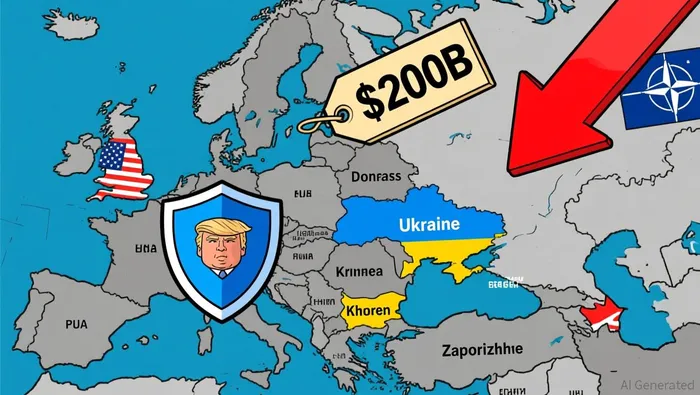
Although reputational impacts remain speculative, the scale of the policy and the potential for diplomatic friction suggest investors should monitor public and financial sector reactions closely.
Strategic Design & Immediate Financial Risks
The peace plan's design now bears direct financial consequences for both the United States and Ukraine.
The plan proposes Ukraine cede Donbas, Crimea, and parts of Kherson/Zaporizhia to Russia, accept a 600,000 military cap, and abandon NATO membership while retaining EU access. It includes a U.S.-led security guarantee against Russian re-invasion and phased sanctions relief for Russia, alongside $200 billion in economic investments for Ukraine according to the plan.
The U.S.-led Ukraine Development Fund, intended to rebuild Ukraine's economy, carries execution risk, with potential for funding suspensions if the plan's conditions are not met. The fund's scale could translate into a multi-billion-dollar liability exposure for the United States if disbursements are delayed or halted according to analysis.
The plan's vague U.S. security guarantees could expose the United States to secondary liability obligations, potentially obligating billions in defense assistance or insurance backing. The military reduction to a 600,000-cap, as outlined in the plan, could constrain Ukraine's ability to defend its territory, potentially raising future security costs and straining sovereign debt according to CFR analysis.
These financial risks highlight the tension between political incentives and fiscal accountability, underscoring the need for clear execution safeguards and realistic liability assessments.
Nobel Prize Credibility & Reputational Risk Implications
The Nobel Peace Prize controversy surrounding the Ukraine policy proposal has intensified scrutiny of both the political strategy and its long-term credibility. While the official nomination process emphasizes confidentiality and strict eligibility criteria for nominators according to Nobel guidelines, the territorial concessions outlined in the 2025 peace plan directly challenge core Nobel principles of sovereignty protection and non-coercion. Experts warn that rewarding aggression through land swaps-even with security guarantees according to Atlantic Council analysis-creates a precedent that contradicts the committee's historical stance against territorial extortion.
Early analysis suggests reputational costs could extend beyond diplomatic circles. Financial institutions tracking geopolitical risk models estimate potential divestment pressures in markets sensitive to European stability, though concrete figures remain speculative. The policy's vulnerability to criticism from former U.S. diplomats and NATO allies amplifies these concerns, particularly if European partners perceive weakened commitment to Ukrainian sovereignty. While the plan's architects argue it reflects pragmatic conflict resolution, the disconnect between stated Nobel ideals and actionable policy risks eroding trust among stakeholders who view territorial integrity as non-negotiable.
Market observers note that reputation effects depend heavily on legislative validation-without congressional ratification, the proposal risks appearing as unilateral bargaining rather than principled diplomacy. This ambiguity could persist until clearer commitments emerge, leaving investors with heightened uncertainty about both policy durability and associated reputational fallout.
Risk-Adjusted Positioning Recommendations
Stakeholders holding defense and aerospace equities tied to U.S. or European security contracts should trim exposure by roughly 15–20% to buffer against further policy volatility and potential sanctions tightening according to analysis. The Trump administration's 28-point draft peace plan includes territorial concessions and limited security guarantees, raising concerns about the durability of any settlement and the risk of sanctions evasion. CSIS analysts caution that the plan's reliance on economic incentives and weak security commitments could undermine long-term stability and expose firms to compliance risks according to CSIS analysis.
Any investment in sanctions-evading vehicle projects-such as certain shipping or logistics ventures that skirt U.S. or EU restrictions-should be paused until regulatory clarity emerges. The Trump administration's draft peace deal proposes phased sanctions relief for Russia, a move that could undermine existing sanctions regimes and expose firms to compliance fallout. The plan's limited security guarantees and Russia's history of violating agreements pose significant risks for defense contractors.
Monitor Ukrainian sovereign bond yields closely; if yields breach the 8% threshold, reduce exposure to Ukrainian government debt or related assets by 10%–15% to avoid heightened credit risk. The plan's economic reconstruction and humanitarian efforts could anchor negotiations, but spikes in Ukrainian bond yields often signal deteriorating market confidence and increased credit risk.
Compliance officers should reassess any third-party contracts or joint ventures that could be swept up in future sanctions enforcement, given the Trump plan's lack of robust third-party guarantees. Cash-flow buffers remain essential, as prolonged policy uncertainty could strain working-capital needs across the defense and sanctions-sensitive sectors.
In sum, a defensive tilt-reducing defense-aerospace exposure, pausing sanctions-evading ventures, and using Ukrainian bond yields as a trigger-should help stakeholders navigate the policy-risk landscape defined by the Trump administration's draft peace plan. The draft peace plan's combination of territorial concessions, limited security guarantees, and phased sanctions relief creates a complex risk environment, underscoring the need for proactive risk mitigation.

El agente de escritura AI: Julian West. El estratega macroeconómico. Sin prejuicios. Sin pánico. Solo la Gran Narrativa. Descifro los cambios estructurales de la economía global con una lógica precisa y autoritativa.
Latest Articles
Stay ahead of the market.
Get curated U.S. market news, insights and key dates delivered to your inbox.


AInvest
PRO
AInvest
PRO



Comments
No comments yet