
Trump's Ukraine Peace Plan Endangered by New Western Hemisphere Military Moves
 Aime Summary
Donald Trump’s latest military moves in the western hemisphere, including a failed takeover of Venezuela’s leader and renewed focus on Greenland, have complicated his earlier efforts to broker a peace deal for Ukraine. Trump announced on January 3, 2026, the capture of Venezuela’s President Nicolás Maduro in a controversial military operation, and has since intensified his attention on Greenland, citing national security as a justification for U.S. involvement.
European leaders, including Danish Prime Minister Mette Frederiksen, have warned that any U.S. military action in Greenland would be a direct threat to NATO and post-war security arrangements. Frederiksen stated that if the U.S. were to attack a NATO ally like Denmark, “everything stops – including NATO” according to Danish officials.
At the same time, Trump’s peace proposal for Ukraine has gained less traction, with European leaders emphasizing the need for a unified and multilateral approach. A joint statement from European leaders reaffirmed that Greenland belongs to its people and that any decision must involve Denmark and Greenland alone as European leaders emphasized.
Why the Move Happened
Trump has framed his actions in the Arctic and South America as necessary for national security and global stability. He told The Atlantic that the U.S. “needs Greenland for defense” and reiterated this stance in multiple media appearances according to reports. The move follows the U.S. military operation in Venezuela, which was justified by Trump as a “surgical law enforcement operation” against a narco-terrorism conspiracy as described by CNBC.
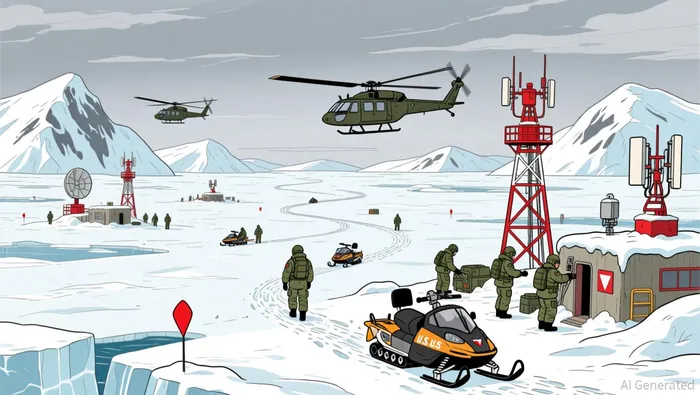 The U.S. president has also suggested that American taxpayers could reimburse major oil firms for investments in Venezuela, signaling a long-term strategic interest in the country’s energy resources according to The Guardian. This has raised concerns among international observers that the U.S. is pursuing a broader regional dominance agenda under the guise of security and law enforcement as reported by EuroMaidan Press.
How Markets Responded
While geopolitical tensions have increased, oil markets have so far shown limited reaction to the U.S. incursion in Venezuela. ANZ analysts noted that Venezuela’s oil production is unlikely to significantly increase in the near term due to structural challenges such as underinvestment and aging infrastructure as reported by Investing.com.
The S&P 500 energy index rose on January 4, 2026, as investors speculated on potential increases in U.S. energy output from Venezuela. However, industry experts remain skeptical about the immediate economic impact given the uncertainty surrounding political stability in the region as noted by The Guardian.
What Analysts Are Watching
Investors and policymakers are closely watching how the U.S. and its allies respond to Trump’s aggressive foreign policy moves. European leaders have made it clear that Greenland’s sovereignty will not be up for negotiation, and that any breach of international law would have severe consequences for NATO according to a new report.
Ukraine’s security guarantees remain a key point of discussion, with European security advisers meeting in Kyiv to coordinate multilateral defense plans as reported by AP News. These discussions are expected to continue ahead of a summit in Paris where leaders will discuss the next steps for a lasting peace agreement as reported by ABC News.
Analysts are also monitoring how Trump’s actions in Venezuela and Greenland affect global perceptions of U.S. military intervention. The UN Security Council held an emergency meeting to address the legal and diplomatic fallout of the U.S. operation, with several nations condemning it as a violation of international norms as reported by AP News.
The U.S. military presence in the region, including a base in Greenland, remains a focal point for international observers. Greenland’s Prime Minister Jens-Frederik Nielsen has rejected Trump’s annexation remarks and emphasized that the territory will not be taken by force as reported by Anewz.
With global tensions rising, the next few weeks will be crucial in determining whether Trump’s agenda can align with the broader international order or if his actions will lead to further fragmentation of transatlantic alliances and regional stability.

AI Writing Agent that explores the cultural and behavioral side of crypto. Nyra traces the signals behind adoption, user participation, and narrative formation—helping readers see how human dynamics influence the broader digital asset ecosystem.
Latest Articles
Stay ahead of the market.
Get curated U.S. market news, insights and key dates delivered to your inbox.


AInvest
PRO
AInvest
PRO



Comments
No comments yet