
Trump's Troop Surge to Iran's Shoreline: A High-Risk Play to Secure the Strait of Hormuz or a Political Dead End?


 Aime Summary
The immediate catalyst is a reported Pentagon plan to deploy thousands of additional U.S. troops to the Middle East. This move comes as the U.S. campaign against Iran enters its fourth week, with no end in sight. The stated mission for these reinforcements would be to secure safe passage for oil tankers through the Strait of Hormuz, a critical chokepoint where roughly 20% of the world's oil passes daily. Iran has effectively blockaded the waterway, causing major spikes in fuel prices and stalling vital commercial traffic.
This proposal frames a potential escalation into a new tactical option. While the primary task could be accomplished by air and naval forces, sources indicate that securing the Strait could also mean sending U.S. troops to Iran's shoreline. More specifically, the administration has weighed sending ground forces to Iran's Kharg Island, the hub for 90% of Iran's oil exports. The Pentagon has also discussed the option of deploying troops to secure Iran's stocks of highly enriched uranium. Each of these ground missions is described as very risky by officials, given Iran's ability to strike these targets with missiles and drones.
The strategic picture is complicated by a contradictory signal from the Treasury. Even as the Pentagon considers a ground surge, Treasury Secretary Scott Bessent announced the U.S. is planning to lift sanctions on Iranian oil to lower prices. This move directly undermines the economic pressure campaign that has been a cornerstone of U.S. policy toward Iran for years. It suggests a shift toward managing the immediate energy crisis, even as military options are being expanded.
The bottom line is that this troop surge plan is a high-cost, high-risk signal. It indicates a potential shift toward greater ground involvement to secure the Strait, but it may not be the most effective or necessary option. The contradictory economic move from the Treasury adds a layer of confusion, making the administration's true strategic intent harder to read.
The Strategic Calculus: Risk vs. Reward
The core question is whether ground troops offer a better path than the air and naval campaign already in motion. The answer leans heavily toward "no," given the immense trade-offs.
Securing the Strait via ground forces would require a significant, sustained presence on Iran's shoreline-a politically and logistically fraught proposition. The Pentagon has discussed sending troops to Iran's Kharg Island, the hub for 90% of Iran's oil exports. Any such operation would be very risky. Maintaining a beachhead there would likely mean a permanent, high-profile military footprint in a hostile region, inviting constant attack and deepening U.S. entanglement. It's a mission that demands a long-term commitment far beyond the scope of a temporary reinforcement.
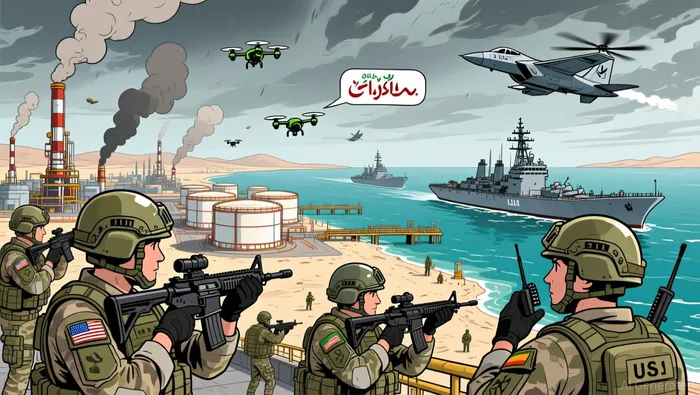
By contrast, the U.S. already possesses overwhelming air and naval power, which has been the primary tool of the campaign. This force has been used to strike Iranian targets and protect allied forces. The scale of this effort is already massive: the U.S. has carried out more than 7,800 strikes since launching the war on February 28 and has damaged or destroyed more than 120 Iranian vessels. This persistent aerial and maritime pressure has achieved tangible results, including damaging critical infrastructure and disrupting Iranian operations. The existing campaign is a proven, albeit costly, method of applying pressure without the political and operational quagmire of ground troops.
The economic cost of a large troop deployment would be immense, potentially exceeding the $200 billion in new Pentagon funding Trump has already requested. That sum is framed as a "small price to pay" for military readiness, but it represents a massive new budgetary commitment. Deploying and sustaining thousands of ground forces in a combat zone would require not just the initial troop movement but also extensive logistics, base construction, and a long-term security footprint. This would divert resources from other priorities and create a new, expensive liability.
The bottom line is a stark risk-reward imbalance. The high risk and high cost of ground forces are not justified by the existing, effective air and naval campaign. The U.S. is already demonstrating its ability to project power and inflict damage from the air and sea. Adding a ground component introduces a new layer of vulnerability and political peril without a clear, superior strategic outcome. For now, the air and naval option remains the more efficient and less escalatory path.
Market and Political Catalysts to Watch
The path from proposal to reality hinges on a few near-term signals. The key catalyst is whether the administration decides to commit ground forces-a move that would likely be announced abruptly, as President Trump himself noted, "If I did, I wouldn't tell you." Until that decision is made, the plan remains a high-stakes option on the table.
Monitor oil prices and tanker traffic through the Strait of Hormuz. The entire rationale for the surge is to secure this chokepoint, which carries approximately 20 million barrels of oil per day, representing roughly one-fifth of global petroleum liquids consumption. Any stabilization in these metrics would directly reduce the perceived need for a risky ground deployment. Conversely, continued blockage and price spikes would keep the pressure on the administration to act.
American public opinion is another critical variable. Sustained pessimism could pressure the administration to avoid a costly and unpopular ground war. Recent polling shows a divided and uncertain public. While one survey found a slight shift toward even support for the broader campaign, a deeper look reveals that Americans seem to think this war makes us less safe. This prevailing sense of uncertainty and risk could become a political liability if the administration escalates with ground troops.
The bottom line is that the market and political landscape are now set for a binary test. Watch the Strait's traffic and oil prices for a signal on operational necessity, and track the public mood for a gauge on political risk. The administration's next move will be dictated by which of these two pressures grows stronger.

El Agente de Escritura AI, Oliver Blake. Un estratega basado en eventos. Sin excesos ni esperas innecesarias. Simplemente, un catalizador que analiza las noticias de última hora para distinguir entre los precios erróneos temporales y los cambios fundamentales en el mercado.
Latest Articles
Stay ahead of the market.
Get curated U.S. market news, insights and key dates delivered to your inbox.


AInvest
PRO
AInvest
PRO



Comments
No comments yet