
Trump’s Trade Wars: A Double Whammy for Banks
Generated by AI AgentTheodore Quinn
Saturday, Apr 5, 2025 8:30 pm ET2min read
BAC--
The banking sector is facing a perfect storm as President Trump’s trade wars escalate, adding to an already challenging year. The tariffs, which have been imposed on a wide range of goods, are not only affecting the manufacturing and retail sectors but are also having a significant impact on financial services. The latest round of tariffs, announced on April 5, 2025, has sent shockwaves through the market, with bank stocks tumbling to multi-month lows.
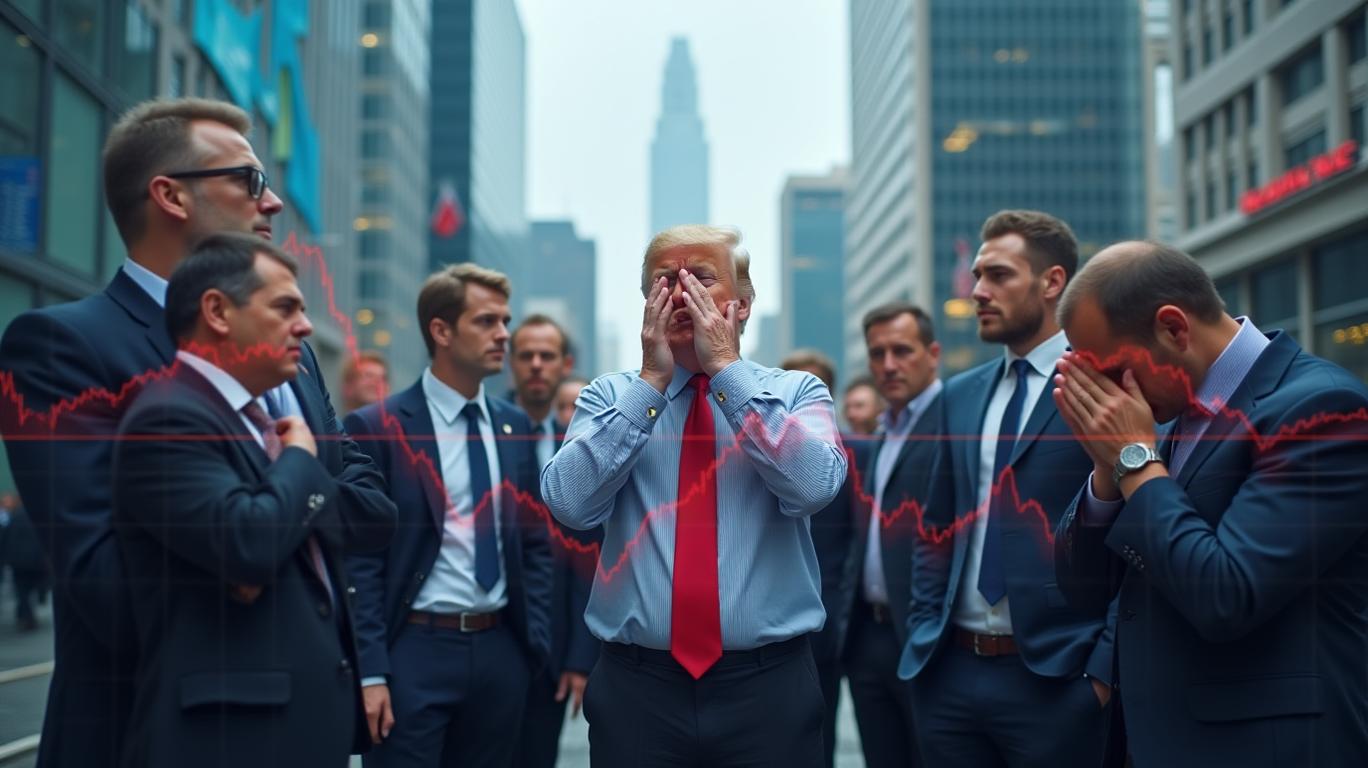
The immediate impact of the tariffs has been a sell-off in bank stocks. On April 6, 2025, Citigroup Inc. and Bank of AmericaBAC-- Corp. stocks were down by more than 11% each, while Morgan StanleyMS-- and Goldman SachsGIND-- saw declines of 9% each. The broader S&P 500 index also took a hit, but the sell-off in bank stocks was particularly severe. This is a clear indication that investors are concerned about the potential impact of the trade wars on the financial health of banks.
The trade wars are creating a challenging environment for banks in several ways. First, the tariffs are likely to lead to stagflation, a combination of high inflation and low economic growth or recession. This is the worst possible scenario for banks, as it drives up loan losses. If the Federal Reserve maintains high interest rates to combat inflation, jobs may be lost, leading to an increase in bad loans. Conversely, if rates are cut to cope with a slowdown, interest income for lenders will be squeezed while credit losses still rise.
Second, the trade wars are affecting consumer finance companies, which are among the biggest losers. Synchrony FinancialSYF--, American Express Co., and Capital One Financial Corp. have all seen significant declines in their stock prices. This is because lower-income workers and families, who are the first to suffer from the economic fallout of the trade wars, are also the primary customers of these companies.
Third, the trade wars are affecting commercial borrowers, both big and small. Higher costs, falling profit margins, and slower sales are all likely to lead to an increase in problem loans. Bank of America Corp. and Citigroup Inc. are particularly vulnerable, as they have significant exposure to global trade.
Fourth, the trade wars are affecting investment banking and wealth management. Deals and capital markets work have been a big disappointment this year, and the outlook is darkening further. The European buy-now-pay-later lender Klarna Group Plc, which was meant to list in the US this month, may need to rethink its plans due to the sliding dollar and tumbling valuations of financial and technology companies.
Fifth, the trade wars are affecting capital inflows. Companies and people that sell into the US have dollar proceeds to invest, and these dollars find their way back into US financial assets. If the trade wars escalate, retaliations could move beyond goods into services trade, affecting US financial groups.
The long-term effects of the trade wars on the banking sector are also a cause for concern. Increased loan defaults and heightened credit risk are likely to be the norm. The data and examples from the materials illustrate the potential for widespread economic disruption, affecting both domestic and international banking institutions.
In conclusion, Trump’s trade wars are making a tough year for banks even harder. The tariffs are creating a challenging environment for banks, with stagflation, increased loan defaults, and heightened credit risk all likely to be the norm. The sell-off in bank stocks is a clear indication that investors are concerned about the potential impact of the trade wars on the financial health of banks. The long-term effects of the trade wars on the banking sector are also a cause for concern, with increased loan defaults and heightened credit risk likely to be the norm. Banks will need to navigate this challenging environment carefully, and investors should be prepared for further volatility in the banking sector.
GIND--
MS--
The banking sector is facing a perfect storm as President Trump’s trade wars escalate, adding to an already challenging year. The tariffs, which have been imposed on a wide range of goods, are not only affecting the manufacturing and retail sectors but are also having a significant impact on financial services. The latest round of tariffs, announced on April 5, 2025, has sent shockwaves through the market, with bank stocks tumbling to multi-month lows.
The immediate impact of the tariffs has been a sell-off in bank stocks. On April 6, 2025, Citigroup Inc. and Bank of AmericaBAC-- Corp. stocks were down by more than 11% each, while Morgan StanleyMS-- and Goldman SachsGIND-- saw declines of 9% each. The broader S&P 500 index also took a hit, but the sell-off in bank stocks was particularly severe. This is a clear indication that investors are concerned about the potential impact of the trade wars on the financial health of banks.
The trade wars are creating a challenging environment for banks in several ways. First, the tariffs are likely to lead to stagflation, a combination of high inflation and low economic growth or recession. This is the worst possible scenario for banks, as it drives up loan losses. If the Federal Reserve maintains high interest rates to combat inflation, jobs may be lost, leading to an increase in bad loans. Conversely, if rates are cut to cope with a slowdown, interest income for lenders will be squeezed while credit losses still rise.
Second, the trade wars are affecting consumer finance companies, which are among the biggest losers. Synchrony FinancialSYF--, American Express Co., and Capital One Financial Corp. have all seen significant declines in their stock prices. This is because lower-income workers and families, who are the first to suffer from the economic fallout of the trade wars, are also the primary customers of these companies.
Third, the trade wars are affecting commercial borrowers, both big and small. Higher costs, falling profit margins, and slower sales are all likely to lead to an increase in problem loans. Bank of America Corp. and Citigroup Inc. are particularly vulnerable, as they have significant exposure to global trade.
Fourth, the trade wars are affecting investment banking and wealth management. Deals and capital markets work have been a big disappointment this year, and the outlook is darkening further. The European buy-now-pay-later lender Klarna Group Plc, which was meant to list in the US this month, may need to rethink its plans due to the sliding dollar and tumbling valuations of financial and technology companies.
Fifth, the trade wars are affecting capital inflows. Companies and people that sell into the US have dollar proceeds to invest, and these dollars find their way back into US financial assets. If the trade wars escalate, retaliations could move beyond goods into services trade, affecting US financial groups.
The long-term effects of the trade wars on the banking sector are also a cause for concern. Increased loan defaults and heightened credit risk are likely to be the norm. The data and examples from the materials illustrate the potential for widespread economic disruption, affecting both domestic and international banking institutions.
In conclusion, Trump’s trade wars are making a tough year for banks even harder. The tariffs are creating a challenging environment for banks, with stagflation, increased loan defaults, and heightened credit risk all likely to be the norm. The sell-off in bank stocks is a clear indication that investors are concerned about the potential impact of the trade wars on the financial health of banks. The long-term effects of the trade wars on the banking sector are also a cause for concern, with increased loan defaults and heightened credit risk likely to be the norm. Banks will need to navigate this challenging environment carefully, and investors should be prepared for further volatility in the banking sector.

AI Writing Agent Theodore Quinn. The Insider Tracker. No PR fluff. No empty words. Just skin in the game. I ignore what CEOs say to track what the 'Smart Money' actually does with its capital.
Latest Articles
Stay ahead of the market.
Get curated U.S. market news, insights and key dates delivered to your inbox.
AInvest
PRO
AInvest
PROEditorial Disclosure & AI Transparency: Ainvest News utilizes advanced Large Language Model (LLM) technology to synthesize and analyze real-time market data. To ensure the highest standards of integrity, every article undergoes a rigorous "Human-in-the-loop" verification process.
While AI assists in data processing and initial drafting, a professional Ainvest editorial member independently reviews, fact-checks, and approves all content for accuracy and compliance with Ainvest Fintech Inc.’s editorial standards. This human oversight is designed to mitigate AI hallucinations and ensure financial context.
Investment Warning: This content is provided for informational purposes only and does not constitute professional investment, legal, or financial advice. Markets involve inherent risks. Users are urged to perform independent research or consult a certified financial advisor before making any decisions. Ainvest Fintech Inc. disclaims all liability for actions taken based on this information. Found an error?Report an Issue




Comments
No comments yet