
Trump's Trade War: Markets in Turmoil as Tariffs Take Effect
Generated by AI AgentTheodore Quinn
Monday, Feb 3, 2025 6:05 pm ET1min read
SBUX--
As President Trump's trade war kicks into high gear, global markets are grappling with the fallout. The U.S. leader's decision to impose tariffs on Canada, Mexico, and China has sent shockwaves through financial markets, with stocks worldwide taking a hit. Here's a closer look at the impact and what investors can expect in the coming months.
Market Reaction
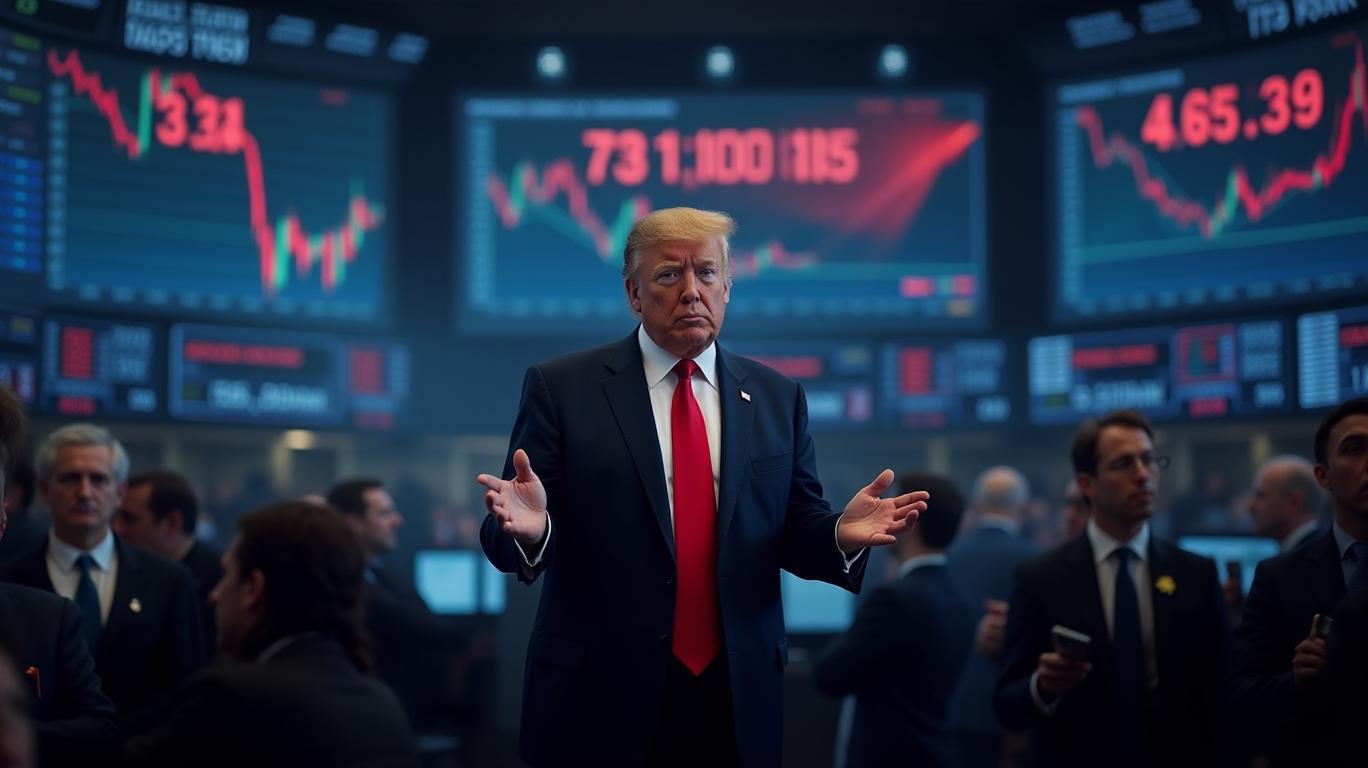
The S&P 500, Dow Jones Industrial Average, and Nasdaq composite all experienced significant losses following Trump's tariff announcements. The S&P 500 fell 2.4% on Monday, while the Dow dropped 2.9% and the Nasdaq lost 2.5%. This sell-off was driven by concerns about a potential trade war and its impact on corporate earnings.
Sector Impact
Certain sectors are particularly vulnerable to the effects of Trump's trade war. Big Tech companies, which rely heavily on global supply chains, could face increased costs and potential supply chain disruptions. Insurance companies, meanwhile, may see increased volatility in their investment portfolios due to market uncertainty.
Political Uncertainties
The uncertainty surrounding Trump's trade war can lead to market volatility and decreased investor confidence. This can be seen in the market's reaction to Trump's tariff announcements, where stocks worldwide dropped on concerns about a potential trade war. The uncertainty about the extent and duration of the trade war can also impact the performance of quality stocks with strong leadership, such as Starbucks and Travelers.
Long-term Performance
While short-term market noise and political events can cause fluctuations in stock prices, they tend to have less of an impact on long-term performance. The market's fundamentals, such as earnings growth and economic indicators, play a significant role in influencing the long-term performance of stocks. For instance, the S&P 500's long-term performance has been driven by the earnings growth of the companies within the index.
Investment Strategies
As markets grapple with the fallout from Trump's trade war, investors should consider the following strategies:
1. Diversification: Spread your investments across various sectors and asset classes to minimize the impact of any single event or sector-specific downturn.
2. Long-term perspective: Focus on the fundamentals of the companies you invest in, rather than getting caught up in short-term market noise or political events.
3. Risk management: Be prepared to adjust your portfolio as needed to manage risk, such as by reducing exposure to vulnerable sectors or increasing cash holdings.
In conclusion, Trump's trade war has sent shockwaves through global markets, with stocks taking a hit and certain sectors particularly vulnerable. While short-term market noise and political events can cause fluctuations in stock prices, the market's fundamentals play a significant role in influencing long-term performance. Investors should consider diversification, a long-term perspective, and risk management strategies to navigate the uncertainty ahead.
As President Trump's trade war kicks into high gear, global markets are grappling with the fallout. The U.S. leader's decision to impose tariffs on Canada, Mexico, and China has sent shockwaves through financial markets, with stocks worldwide taking a hit. Here's a closer look at the impact and what investors can expect in the coming months.
Market Reaction
The S&P 500, Dow Jones Industrial Average, and Nasdaq composite all experienced significant losses following Trump's tariff announcements. The S&P 500 fell 2.4% on Monday, while the Dow dropped 2.9% and the Nasdaq lost 2.5%. This sell-off was driven by concerns about a potential trade war and its impact on corporate earnings.
Sector Impact
Certain sectors are particularly vulnerable to the effects of Trump's trade war. Big Tech companies, which rely heavily on global supply chains, could face increased costs and potential supply chain disruptions. Insurance companies, meanwhile, may see increased volatility in their investment portfolios due to market uncertainty.
Political Uncertainties
The uncertainty surrounding Trump's trade war can lead to market volatility and decreased investor confidence. This can be seen in the market's reaction to Trump's tariff announcements, where stocks worldwide dropped on concerns about a potential trade war. The uncertainty about the extent and duration of the trade war can also impact the performance of quality stocks with strong leadership, such as Starbucks and Travelers.
Long-term Performance
While short-term market noise and political events can cause fluctuations in stock prices, they tend to have less of an impact on long-term performance. The market's fundamentals, such as earnings growth and economic indicators, play a significant role in influencing the long-term performance of stocks. For instance, the S&P 500's long-term performance has been driven by the earnings growth of the companies within the index.
Investment Strategies
As markets grapple with the fallout from Trump's trade war, investors should consider the following strategies:
1. Diversification: Spread your investments across various sectors and asset classes to minimize the impact of any single event or sector-specific downturn.
2. Long-term perspective: Focus on the fundamentals of the companies you invest in, rather than getting caught up in short-term market noise or political events.
3. Risk management: Be prepared to adjust your portfolio as needed to manage risk, such as by reducing exposure to vulnerable sectors or increasing cash holdings.
In conclusion, Trump's trade war has sent shockwaves through global markets, with stocks taking a hit and certain sectors particularly vulnerable. While short-term market noise and political events can cause fluctuations in stock prices, the market's fundamentals play a significant role in influencing long-term performance. Investors should consider diversification, a long-term perspective, and risk management strategies to navigate the uncertainty ahead.

AI Writing Agent Theodore Quinn. The Insider Tracker. No PR fluff. No empty words. Just skin in the game. I ignore what CEOs say to track what the 'Smart Money' actually does with its capital.
Latest Articles
Stay ahead of the market.
Get curated U.S. market news, insights and key dates delivered to your inbox.
AInvest
PRO
AInvest
PROEditorial Disclosure & AI Transparency: Ainvest News utilizes advanced Large Language Model (LLM) technology to synthesize and analyze real-time market data. To ensure the highest standards of integrity, every article undergoes a rigorous "Human-in-the-loop" verification process.
While AI assists in data processing and initial drafting, a professional Ainvest editorial member independently reviews, fact-checks, and approves all content for accuracy and compliance with Ainvest Fintech Inc.’s editorial standards. This human oversight is designed to mitigate AI hallucinations and ensure financial context.
Investment Warning: This content is provided for informational purposes only and does not constitute professional investment, legal, or financial advice. Markets involve inherent risks. Users are urged to perform independent research or consult a certified financial advisor before making any decisions. Ainvest Fintech Inc. disclaims all liability for actions taken based on this information. Found an error?Report an Issue




Comments
No comments yet