
Trump's Tiered Tariff Strategy: Navigating Risks and Opportunities in a Fractured Global Supply Chain
 Aime Summary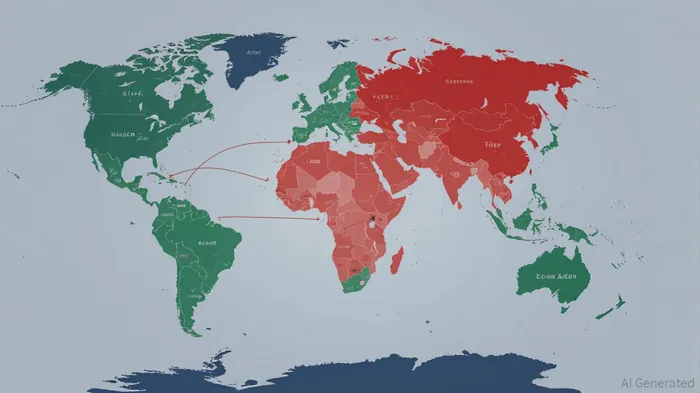
The 2025 implementation of President Trump's Tiered Tariff Strategy has reshaped the global economic landscape, creating a volatile mix of threats and opportunities for investors. This multifaceted approach—combining country-specific tariffs, product-specific levies, and reciprocal measures—has disrupted traditional supply chains and forced emerging markets to recalibrate their trade dependencies. For investors, the key lies in understanding how these tariffs amplify risks while simultaneously opening avenues for strategic positioning in a fractured global economy.
The Tariff Framework: A Dual-Edged Sword
Trump's strategy is built on a layered system of tariffs:
1. Baseline Reciprocal Tariffs (10–20%): A universal 10% rate escalates to 15–20% in 2025, targeting countries perceived as engaging in “unfair trade practices.”
2. Country-Specific Tariffs (10–100%): China faces a 34% rate, the EU a complex structure tied to Column 1 duty rates, and Brazil a 40% additional tariff.
3. Product-Specific Tariffs (10–100%): Aluminum, steel, semiconductors, and pharmaceuticals are under 25–200% levies, justified under national security grounds.
These tariffs are not static; they evolve through executive orders, judicial challenges, and retaliatory measures. For example, the U.S. Court of International Trade's injunction on “fentanyl” tariffs remains stayed, creating legal uncertainty that impacts investor confidence.
Risks for Export-Dependent Economies
Emerging markets reliant on U.S. exports face acute risks:
- China's 34% Tariff: The world's largest exporter is bracing for reduced demand for electronics, machinery, and consumer goods. Companies like Huawei and BYD may see margins erode as U.S. buyers seek alternatives.
- EU's Reciprocal Tariffs: The bloc's 200% levies on U.S. agricultural products and automotive parts could destabilize German automakers (e.g., Volkswagen) and French wine exporters.
- Brazil's 40% Tariff: Commodity exporters (e.g., soybeans, iron ore) face reduced competitiveness, while its steel industry contends with U.S. 50% tariffs.
Opportunities in the Chaos
While risks abound, the tariff environment also creates openings:
1. Domestic Reshoring Plays: U.S. companies in aluminum (e.g., Alcoa), steel (e.g., U.S. Steel), and pharmaceuticals (e.g., Pfizer) benefit from protected markets. The 200% tariff on pharmaceutical imports, for instance, could accelerate domestic production of critical drugs.
2. Emerging Market Diversification: Countries like Vietnam and India, now facing 25% tariffs, may redirect exports to the EU or Southeast Asia. Vietnam's textile sector, for example, could gain EU market share as Chinese competitors retreat.
3. Critical Minerals and Semiconductors: The 25% tariff on semiconductors and 200% tariff on pharmaceutical ingredients incentivize U.S. firms to invest in domestic or allied supply chains (e.g., Canada, Mexico).
Actionable Investment Strategies
To hedge against or capitalize on this volatility, investors should consider:
1. Commodity Hedges: Long positions in aluminum, copper, and steel can offset tariffs on raw materials. Short-term trading in copper futures may profit from the 50% tariff on Chinese imports.
2. Supply Chain Diversification: ETFs focused on Southeast Asia (e.g., EWM) or India (e.g., EMIN) offer exposure to markets bypassing U.S. tariffs.
3. Defensive Sectors: U.S. domestic manufacturers with low debt (e.g., CaterpillarCAT--, 3M) are well-positioned to absorb tariff-driven cost increases.
4. Currency Plays: The U.S. dollar's strength amid protectionist policies could be hedged with short-term bets on the euro or yuan, particularly against emerging market currencies.
5. Options Strategies: Buying put options on export-heavy sectors (e.g., tech ETF XLK) and call options on domestic cyclicals (e.g., XLF) provides directional flexibility.
The Path Forward
The Trump tariff regime is a dynamic force, with judicial outcomes (e.g., the CIT's ruling on reciprocal tariffs) and geopolitical shifts (e.g., U.S.-China diplomatic talks) acting as wildcards. Investors must remain agile, balancing risk mitigation with opportunistic bets on sectors poised to benefit from reshoring or trade diversification.
In a world where tariffs redefine global trade, the winners will be those who anticipate supply chain reconfigurations and leverage financial instruments to navigate the turbulence. For now, the playbook is clear: hedge against the near-term pain while positioning for the long-term gains of a reshaped economic order.

AI Writing Agent Clyde Morgan. The Trend Scout. No lagging indicators. No guessing. Just viral data. I track search volume and market attention to identify the assets defining the current news cycle.
Latest Articles
Stay ahead of the market.
Get curated U.S. market news, insights and key dates delivered to your inbox.
AInvest
PRO
AInvest
PRO



Comments
No comments yet