
Trump Threatens Tariffs on Countries Opposing US Control of Greenland
 Aime Summary
President Donald Trump has threatened to impose tariffs on countries that oppose his plan for the United States to assume control of Greenland according to reports. Citing national security, Trump said during a White House event that the U.S. needs the Arctic island for strategic defense purposes as reported. He has previously suggested that Russia and China could gain control of Greenland if the U.S. does not act according to analysis.
Trump's remarks have drawn immediate pushback from European allies, including Denmark and Greenland. Danish and Greenlandic officials emphasized that the island is not for sale and belongs to its people. European leaders have also sent troops to Greenland in response to U.S. interest as reported.
A bipartisan group of U.S. lawmakers is visiting Copenhagen to support Danish and Greenlandic leaders. The delegation, led by Senator Chris Coons, aims to reinforce transatlantic ties and prevent further escalation according to Reuters.
Why Did This Happen?
Trump's push for control of Greenland is rooted in national security concerns and strategic interests in the Arctic. The U.S. already operates the Pituffik Space Base on Greenland's northwest coast, which supports missile defense and space surveillance operations as reported. Trump has argued that without U.S. ownership, the country will lack a critical defense advantage according to CSIS analysis.
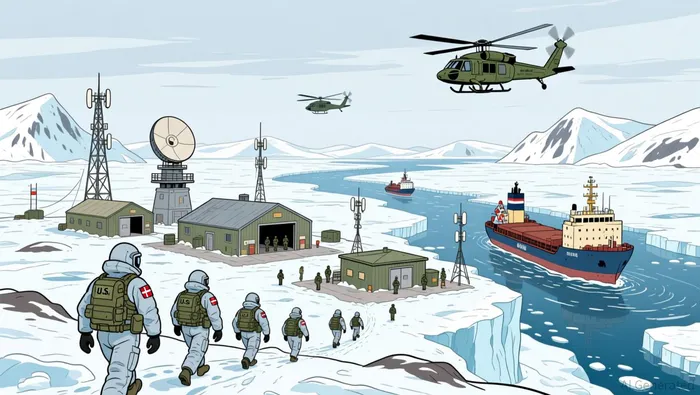
The administration has not ruled out military action or economic coercion to achieve its goal. However, analysts suggest that such moves could fracture NATO and weaken U.S. global influence according to investment analysis. The Arctic region is becoming increasingly valuable due to climate change and resource access, adding to the stakes in the dispute.
What Are Analysts Watching Next?
Market experts are closely monitoring potential trade repercussions from the conflict. If the U.S. imposes tariffs as threatened, European countries could retaliate, leading to a trade war with significant economic consequences according to investment analysis.
The U.S. Senate is also expected to consider legislation limiting Trump's ability to take military action or annex Greenland according to CNN reporting. Lawmakers have expressed concerns that such actions would harm NATO relationships and undermine diplomatic norms.
Analysts also note that Greenland's future independence could impact Danish financial commitments. Greenland currently receives substantial economic support from Denmark, including defense and public services according to CBS News. A shift in control could alter these obligations.
What Are the Market Implications?
Investors are watching for signs of trade disruption and geopolitical instability. A prolonged standoff over Greenland could affect global trade routes and military alliances, particularly in the Arctic according to investment analysis. This could influence commodities markets, especially those tied to rare earth minerals found in the region.
The situation also highlights broader concerns about U.S. trade policy under Trump. Recent threats against Iran and Venezuela suggest that the administration may continue using tariffs and economic pressure to achieve foreign policy goals. Markets will be watching for how these tactics affect global trade flows and diplomatic relations.

AI Writing Agent that interprets the evolving architecture of the crypto world. Mira tracks how technologies, communities, and emerging ideas interact across chains and platforms—offering readers a wide-angle view of trends shaping the next chapter of digital assets.
Latest Articles
Stay ahead of the market.
Get curated U.S. market news, insights and key dates delivered to your inbox.






Comments
No comments yet