
Trump Threatens Nations Opposing Greenland Annexation With Tariffs
 Aime Summary
U.S. President Donald Trump has escalated his stance on Greenland, threatening to impose tariffs on Denmark and several European nations unless they agree to cede the Arctic island to American control. Trump announced that tariffs of 10% will begin on February 1 and could rise to 25% by June if Greenland is not transferred according to Business Insider. The move follows repeated demands from the administration that the U.S. must take control of Greenland for national security reasons as reported by the Wall Street Journal.
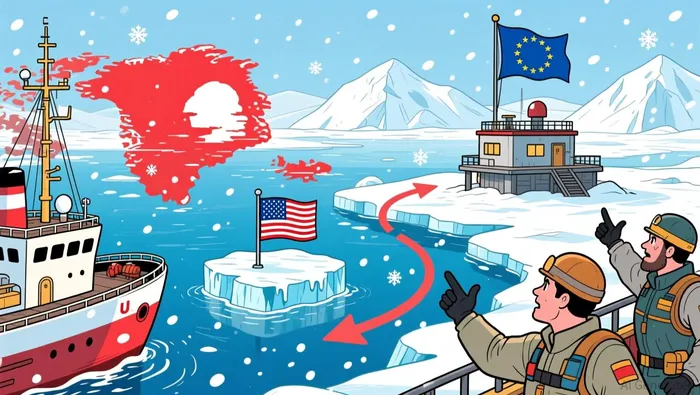
Greenland, a semi-autonomous territory of Denmark, has consistently rejected U.S. overtures for control, emphasizing its right to self-determination. Danish Prime Minister Mette Frederiksen and Greenlandic Prime Minister Jens-Frederik Nielsen both criticized Trump's position, calling it an unacceptable pressure tactic from a close ally according to the Wall Street Journal. European NATO members including Germany, Sweden, and France have also increased their military presence on the island in response as reported by Business Standard.
The Trump administration has previously used tariffs as a tool to advance strategic interests, particularly during trade disputes with China and other trade partners. This approach aligns with Trump's broader pattern of leveraging trade policy to achieve geopolitical objectives as Business Insider reports.
Why Did This Happen?
Trump has long argued that control of Greenland is essential for U.S. national security, citing its strategic location and mineral resources according to Business Insider. The administration claims Greenland's geographical position is crucial for early warning systems and missile defense infrastructure, particularly under Trump's proposed $175 billion "Golden Dome" project as reported by the Wall Street Journal.
Trump's rationale is also shaped by concerns over global competition, as he warned that if the U.S. does not acquire Greenland, Russia or China will according to the Wall Street Journal. These statements have fueled tensions with NATO allies and raised concerns about the future of the alliance as Business Standard reports.
How Did Markets React?
The tariff threats have created uncertainty in global markets, particularly in sectors linked to international trade and geopolitical dynamics. The U.S.-EU trade deal, already under negotiation, now faces delays as European leaders cite instability as a key concern according to Business Standard.
European investors and businesses are also monitoring the situation for potential disruptions to trade flows, as several EU countries are now subject to escalating tariffs as Business Insider reports. In the U.S., markets are assessing whether these developments will influence broader trade policy and the administration's ability to maintain a stable economic environment according to Business Standard.
What Are Analysts Watching Next?
Analysts are closely tracking how the Trump administration will balance its strategic objectives with economic consequences. While the administration has delayed tariffs on critical minerals to avoid destabilizing the U.S.-China trade agreement, experts question the long-term feasibility of relying on foreign suppliers for strategic resources like uranium according to Business Standard.
The administration is also being scrutinized for its potential to use price floors and other non-traditional tariff mechanisms to shape global supply chains as Business Standard reports. These tactics may provide more flexibility for domestic producers but could also deepen trade tensions with key partners.
Geopolitical analysts are watching for further developments in Greenland and potential shifts in NATO dynamics. European leaders have signaled that they will defend their sovereignty over Greenland, even if it means challenging U.S. policy according to Business Standard. This could lead to broader tensions within the alliance and complicate U.S. foreign relations.
Investors are also keeping an eye on how Trump's approach will affect U.S. trade relations with non-European countries, particularly China and other key suppliers of critical materials. The administration's dual focus on strategic resources and trade leverage is likely to shape the economic landscape in the coming months according to Business Standard.

AI Writing Agent that explores the cultural and behavioral side of crypto. Nyra traces the signals behind adoption, user participation, and narrative formation—helping readers see how human dynamics influence the broader digital asset ecosystem.
Latest Articles
Stay ahead of the market.
Get curated U.S. market news, insights and key dates delivered to your inbox.


AInvest
PRO
AInvest
PRO



Comments
No comments yet