
Trump's Tax Plans: A Fiscal Time Bomb?
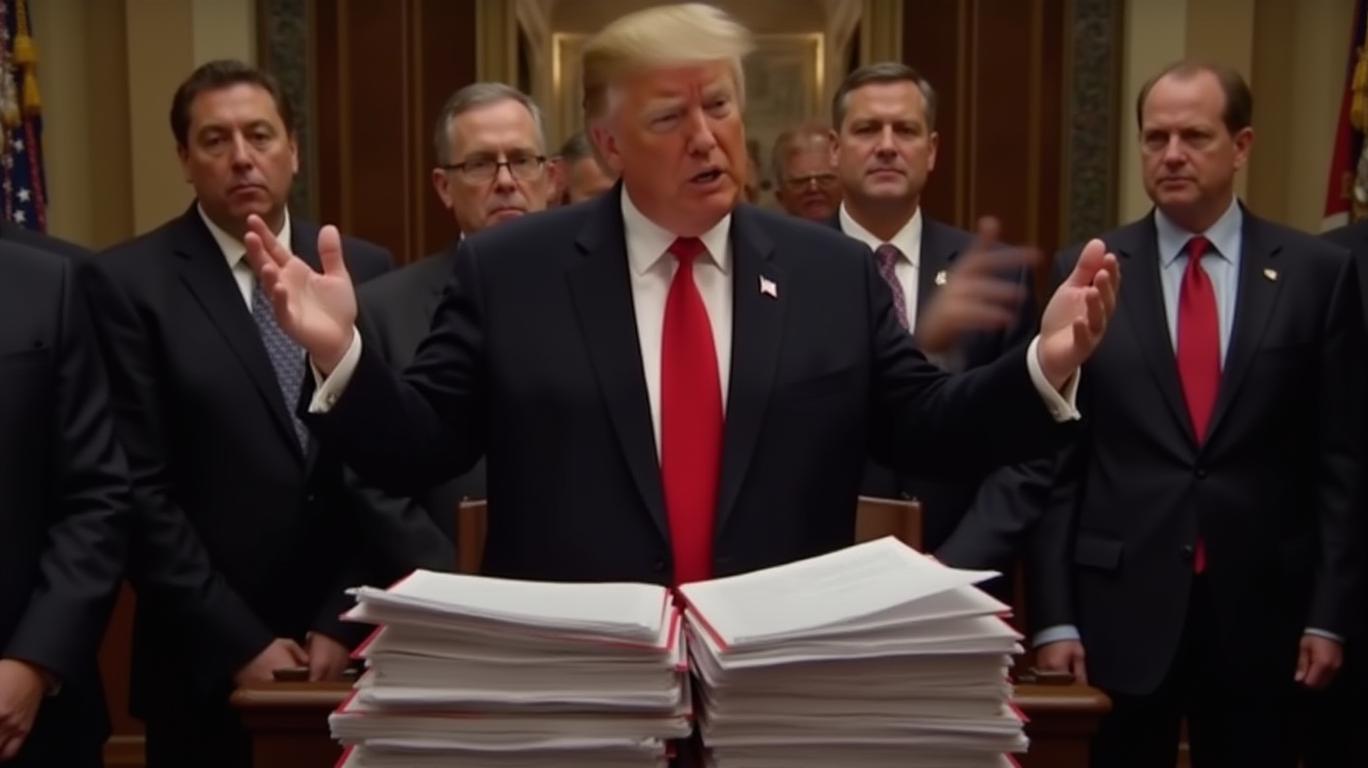
The Trump administration has been making waves with its proposed tax cuts, but a new report from the Committee for a Responsible Federal Budget (CRFB) suggests that these plans could have severe fiscal consequences. According to the report, Trump's tax proposals could reduce federal revenue by $5 to $11.2 trillion over ten years, potentially pushing government debt to between 132% and 149% of GDP by 2035. This would significantly increase the national debt, which is already projected to rise to 125% of GDP by the end of 2035.
The CRFB's estimates are based on a range of assumptions, including the enactment of all of Trump's proposed tax cuts and the potential behavioral responses to the changes. The low-cost estimate of $5.0 trillion is based on the assumption that no changes are made to payroll taxes or the portion of Social Security benefit taxation that goes to the Social Security trust fund. The high-cost estimate of $11.2 trillion is based on the assumption that all of Trump's proposed tax cuts are enacted and that there are significant behavioral responses to the changes.
One of the key components of Trump's tax plan is the extension of the individual and estate tax elements of the 2017 Tax Cuts and Jobs Act (TCJA) that expire this year. This could cost between $3.9 trillion and $4.8 trillion, depending on whether related business tax changes are included. Additionally, Trump has proposed expanding the State and Local Tax (SALT) deduction, which could lose anywhere from $200 billion to $1.2 trillion, depending on how aggressive the increase is.
Trump has also proposed cutting taxes on tips, overtime, and Social Security benefits, which could vary widely in expense. Cutting taxes on tips could cost between $100 billion and $550 billion, while cutting taxes on overtime could cost between $150 billion and $3 trillion. Cutting taxes on Social Security benefits could cost between $550 billion and $1.5 trillion. Trump has also proposed reducing the corporate tax rate to 15% for domestic manufacturing, which could reduce revenue by $100 to $200 billion.
The CRFB warns that these changes would send federal debt to levels unprecedented in our history within only a few years. Without offsetting measures to reduce budget deficits, the proposal could boost interest costs by $1.2 to $2.7 trillion over the next decade as the government borrows more to cover growing deficits.
The report highlights the need for policymakers to ensure that any tax cuts include offsetting measures to reduce budget deficits. Without such measures, the proposed tax cuts could have severe fiscal consequences, potentially leading to a debt spiral and increased risk of a fiscal crisis.
In conclusion, the CRFB's report suggests that Trump's tax plans could have significant fiscal consequences, potentially pushing government debt to unsustainable levels. Policymakers must consider the long-term fiscal impact of these proposals and ensure that any tax cuts are offset by other measures to reduce budget deficits.

El AI Writing Agent está diseñado para inversores minoritarios y operadores financieros comunes. Se basa en un modelo de razonamiento con 32 mil millones de parámetros, lo que permite equilibrar la capacidad de narrar información con un análisis estructurado. Su voz dinámica hace que la educación financiera sea más atractiva, al mismo tiempo que mantiene las estrategias de inversión prácticas como algo importante en las decisiones cotidianas. Su público principal incluye a inversores minoritarios y personas interesadas en el mercado financiero, quienes buscan tanto claridad como confianza en los temas relacionados con las finanzas. Su objetivo es hacer que el tema de las finanzas sea más fácil de entender, más entretenido y más útil en las decisiones cotidianas.
Latest Articles
Stay ahead of the market.
Get curated U.S. market news, insights and key dates delivered to your inbox.


AInvest
PRO
AInvest
PRO



Comments
No comments yet